What Is ATP?
ATP is the molecule cells use to move usable energy from one process to another. It does not create energy from nothing. It lets the cell spend energy where work is needed.
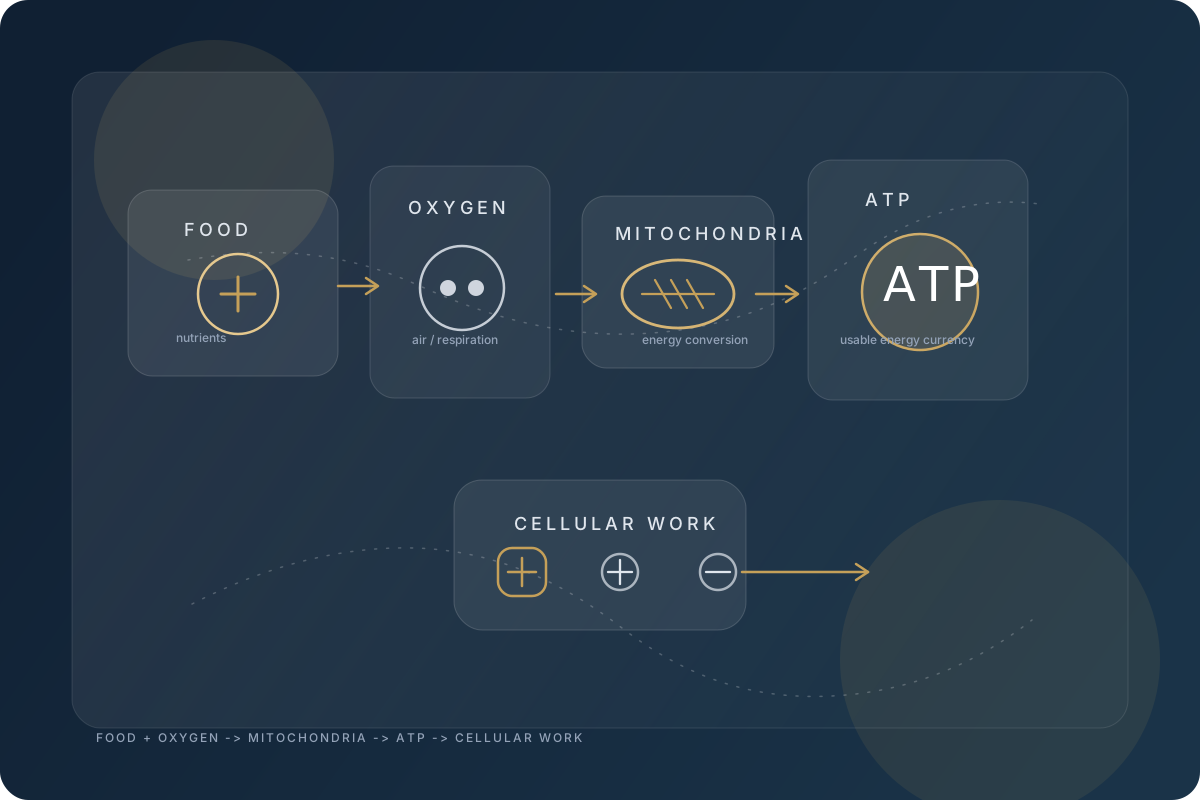
What the letters mean
ATP stands for adenosine triphosphate. The name describes a molecule made of adenosine plus three phosphate groups. The important part is not the name itself, but the role it plays: ATP is the transfer form of energy that cells spend every second to stay alive and do work.
When a cell uses ATP, one phosphate group is removed and ATP becomes ADP. That reaction releases usable energy for biological processes. The molecule is then recycled back into ATP again.
ATP holds usable energy in a form cells can spend quickly.
ATP -> ADP + Pi releases energy for cellular work.
ADP is turned back into ATP when cells regenerate energy.
Why ATP matters
Cells do not use energy in one giant block. They spend it on small tasks all the time. ATP supports movement, electrical signaling, membrane transport, synthesis of proteins, and repair. Without a steady ATP supply, the cell cannot keep those systems running smoothly.
Fuel molecules from nutrition are broken down into smaller energy-rich fragments.
In oxygen-rich conditions, mitochondria convert that fuel into ATP through oxidative phosphorylation.
The cell stores the result in a transferable form that can be used almost immediately.
ATP powers contraction, signaling, transport, repair, and other energy-demanding tasks.
Where ATP comes from
Cells can make some ATP through glycolysis in the cytoplasm. But under oxygen-rich conditions, mitochondria produce most ATP through oxidative phosphorylation. That is why ATP is so closely linked to mitochondrial function.
The point is not that mitochondria "are" ATP. The point is that mitochondria help supply the energy currency the cell uses to do work. When that system is strained, high-demand tissues often show it first.
Why high-demand tissues notice first
Nerves, muscles, the heart, and immune cells use large amounts of ATP because they are always active. They maintain ion gradients, contract, fire signals, and repair tissue continuously.
That is why a mismatch between ATP supply and ATP demand may show up as fatigue, exercise intolerance, slower recovery, or a feeling that the body does not reset as quickly as it should.
What readers should remember
ATP is not just a technical term. It is the bridge between metabolism and lived experience. When people talk about energy, recovery, or fatigue, they are often talking about systems that depend on ATP.
Real human experience
Many people first think about ATP only after their body stops feeling easy. Tasks that once felt ordinary start to feel expensive. Recovery takes longer. Effort feels less predictable.
That experience does not prove one diagnosis. But it does explain why ATP matters: it is one of the most direct ways biology turns fuel into function.
Common questions
What does ATP stand for?
ATP stands for adenosine triphosphate, the main energy carrier used by cells.
Is ATP the same as energy?
No. Energy is the broader concept. ATP is the biochemical molecule cells use to transfer usable energy into work.
Where is ATP made?
Cells make ATP through glycolysis and, in oxygen-rich conditions, through mitochondrial oxidative phosphorylation.
Why do fatigue and low energy often get linked to ATP?
Because ATP is the immediate fuel for many processes that keep nerves, muscles, and other tissues functioning. When supply and demand are mismatched, the effects can be felt as low energy or slower recovery.