All Hubs Mitochondria ATP & Energy Fatigue Inflammation Sleep Recovery Microcirculation Graphene FIR Metabolism Bioenergetics Aging

Cellular EnergyThe Universal Currency of Life

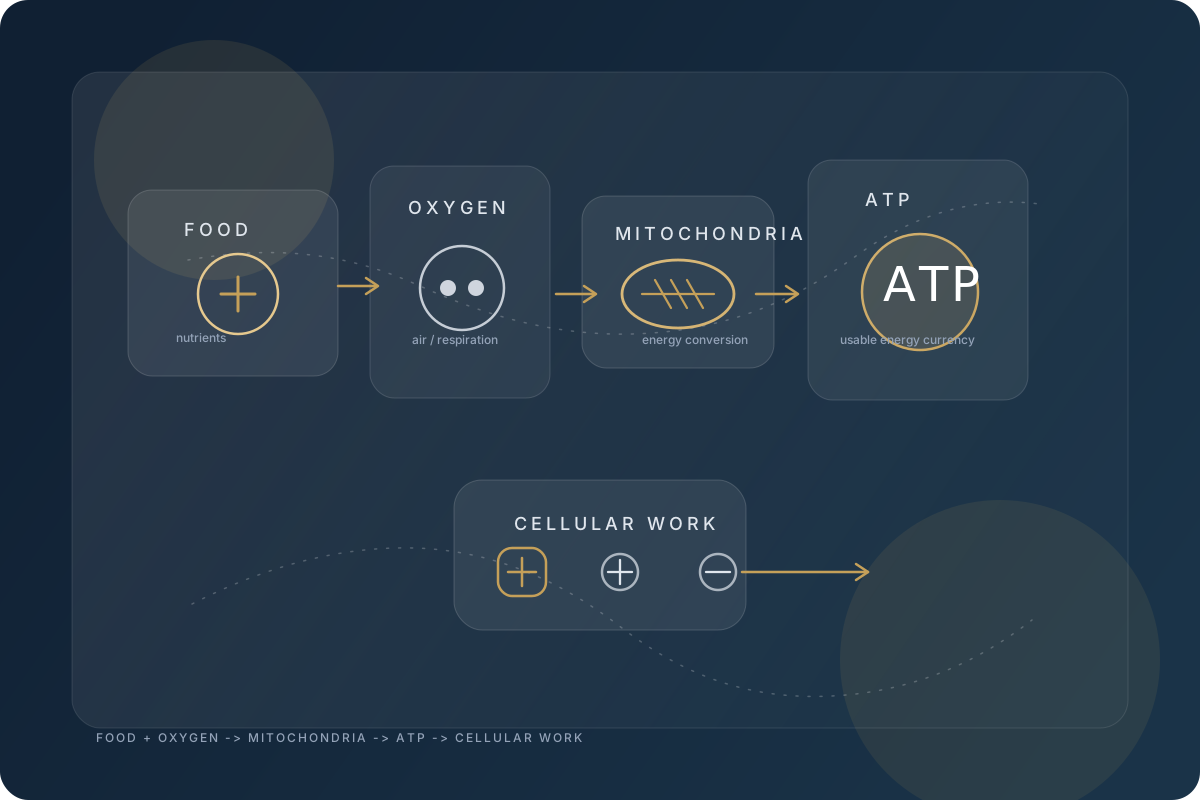
ATP powers everything from muscle contraction to neural signaling. When cellular energy production can't meet demand, fatigue, cognitive fog, and slow recovery follow. This hub explores how cells make, store, and use energy.

Quick Answer

What is cellular energy?

Cellular energy is the capacity of cells to perform biological work — from muscle contraction and nerve signaling to protein synthesis and membrane transport. ATP (adenosine triphosphate) serves as the universal energy currency, storing and transferring chemical energy within cells. When ATP production cannot meet demand, fatigue, cognitive fog, and slow recovery follow. This hub explores how cells generate, store, and utilize energy.

Why This Matters

ATP powers every cellular process — from muscle contraction and nerve firing to protein synthesis and membrane transport. When ATP production falls short, fatigue, brain fog, and slow recovery are the predictable consequences.

Explore This Hub

What Is ATP?LIVE

A simple primer on ATP, the molecule cells use to transfer usable energy into work.

What is ATP

Cellular Energy: ATP and Recovery ScienceLIVE

How cells produce, store, and use ATP — the universal energy currency that powers every biological process.

Cellular energy ATP and recovery

ATP Depletion and Pain SignalingLIVE

How declining cellular energy influences chronic pain mechanisms through altered neural signaling.

ATP depletion and pain signaling

Central Sensitization Through an Energy LensLIVE

ATP deficiency and neural hyperexcitability: a metabolic perspective on central sensitization.

Central sensitization through an energy lens

9.4um FIR and Mitochondrial ATP PathwaysLIVE

Published research: the relationship between far-infrared exposure and mitochondrial ATP production.

FIR and mitochondrial ATP pathways

About this Hub

Cellular energy is biology's most fundamental resource. This hub curates scientific insights on ATP production, the electron transport chain, energy metabolism, and what research reveals about supporting cellular energy production across different conditions.

Related Hubs

Mitochondrial Health Chronic Fatigue Metabolism Bioenergetics

Frequently Asked Questions

What is ATP?

ATP (adenosine triphosphate) is the primary energy carrier in all living cells. It stores energy in phosphate bonds and releases it when broken down to ADP for cellular work.

How is ATP produced?

Cells produce ATP through three main pathways: glycolysis in the cytoplasm (2 ATP per glucose), the Krebs cycle in the mitochondrial matrix, and oxidative phosphorylation on the inner mitochondrial membrane (up to 34 ATP per glucose).

Why do energy levels fluctuate?

Energy levels fluctuate due to factors influencing mitochondrial efficiency: nutrient availability, sleep quality, circadian rhythms, stress hormones, physical activity, and underlying cellular health. ATP demand and supply are tightly regulated but can be disrupted.

What is cellular respiration?

Cellular respiration is the process by which cells convert biochemical energy from nutrients into ATP. It consists of three main stages: glycolysis, the Krebs cycle (citric acid cycle), and oxidative phosphorylation — the final stage producing the most ATP.

How can cellular energy be measured?

Cellular energy can be assessed through ATP assays, mitochondrial respiration measurements (Seahorse analysis), NAD+/NADH ratios, and indirect markers including exercise tolerance, recovery rate, and subjective energy levels.

Scientific Disclaimer

This hub is for scientific education and informational purposes only. The content reflects published research and current scientific understanding. It does not constitute medical advice, diagnosis, or treatment recommendations. Preclinical and mechanistic findings cannot be directly extrapolated to clinical outcomes in individual cases. Always consult qualified healthcare professionals for personal health decisions.