Study Investigates 9.4μm Far-Infrared Resonance and Mitochondrial ATP Pathways
2026-06-08 · 5 min read
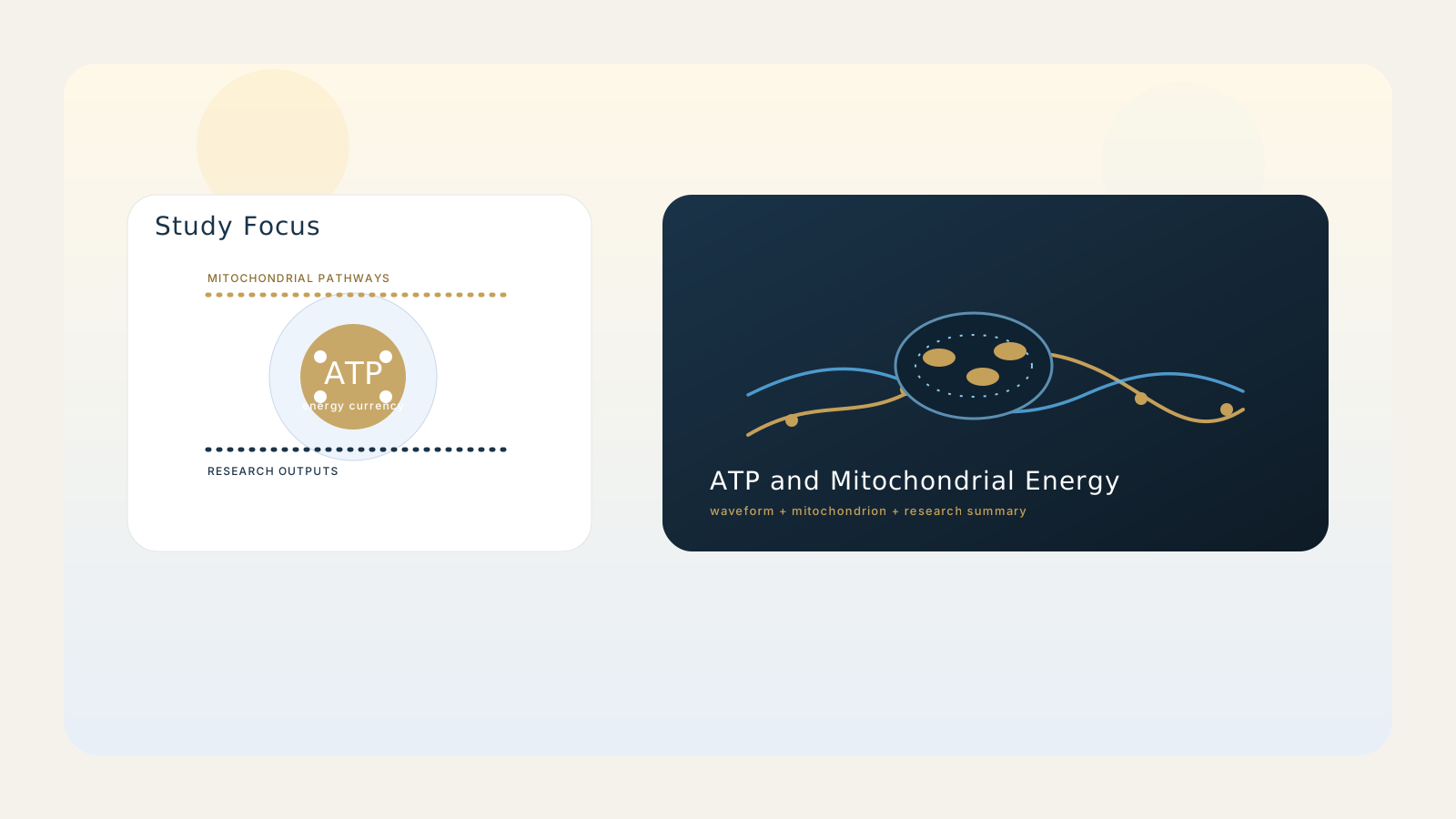
The Energy Currency of Life
Every function in the human body — from muscle contraction to neural signaling to cellular repair — depends on adenosine triphosphate, or ATP. This molecule is the universal energy currency of biology. When ATP production declines, every system feels the effect: recovery slows, cognition becomes effortful, and the body's capacity for self-maintenance diminishes.
Mitochondria — the cellular power plants responsible for ATP production — are remarkably responsive to their environment. Among the environmental signals they detect, research has increasingly focused on one in particular: far-infrared energy within the 5–15μm band.
What the Research Shows
A peer-reviewed study published in the International Journal of Molecular Sciences investigated the relationship between 9.4μm far-infrared resonance and mitochondrial function. The research observed that precise wavelength far-infrared exposure was associated with changes in mitochondrial enzyme activity — specifically cytochrome c oxidase, the terminal enzyme in the electron transport chain responsible for catalyzing ATP production.
| Study Focus | Far-infrared resonance and mitochondrial ATP pathways |
| Key Enzyme | Cytochrome c oxidase (CcO) |
| Wavelength Range | 5–15μm, peak 9.4μm |
| Publication | International Journal of Molecular Sciences (peer-reviewed) |
| Relevance | Supports understanding of cellular energy metabolism mechanisms |
From Photon to Function
The proposed mechanism involves graphene photobiomodulation — the interaction of specific light wavelengths with mitochondrial enzymes. Far-infrared photons within the 9.4μm range are absorbed by water-rich biological tissues. This absorption is thought to influence the activity of cytochrome c oxidase, supporting the electron transport chain and contributing to ATP-related metabolic pathways.
This is not a claim that far-infrared exposure directly produces ATP. Rather, research suggests that the technology may support the cellular energy environment — the conditions under which mitochondria naturally perform their function.
Why This Matters for Recovery
Mitochondrial function is central to virtually every aspect of physiological performance: tissue maintenance, immune surveillance, neural plasticity, and metabolic regulation. Technologies that support mitochondrial activity — including high-emissivity graphene far-infrared systems — may contribute to recovery, comfort, and overall wellness across multiple applications.
This study forms part of XIHE's broader research program, which spans 18 SCI-indexed publications and 8 randomized controlled trials — a body of evidence that continues to grow through collaboration with institutions including IKKEM and Peking University Third Hospital.
Frequently Asked Questions
What is the relationship between far-infrared and mitochondrial function?
Published research has investigated the relationship between far-infrared exposure and mitochondrial electron transport activity. Studies suggest FIR may support cellular energy production through mitochondrial pathways, particularly involving cytochrome c oxidase.
How does graphene photobiomodulation work?
Photobiomodulation refers to the interaction of specific light wavelengths with biological tissues. In the context of graphene FIR, 9.4μm far-infrared energy is absorbed by water-rich tissues, which research suggests may influence mitochondrial enzyme activity and support cellular energy metabolism.