Sleep pressure — adenosine builds during wakefulness
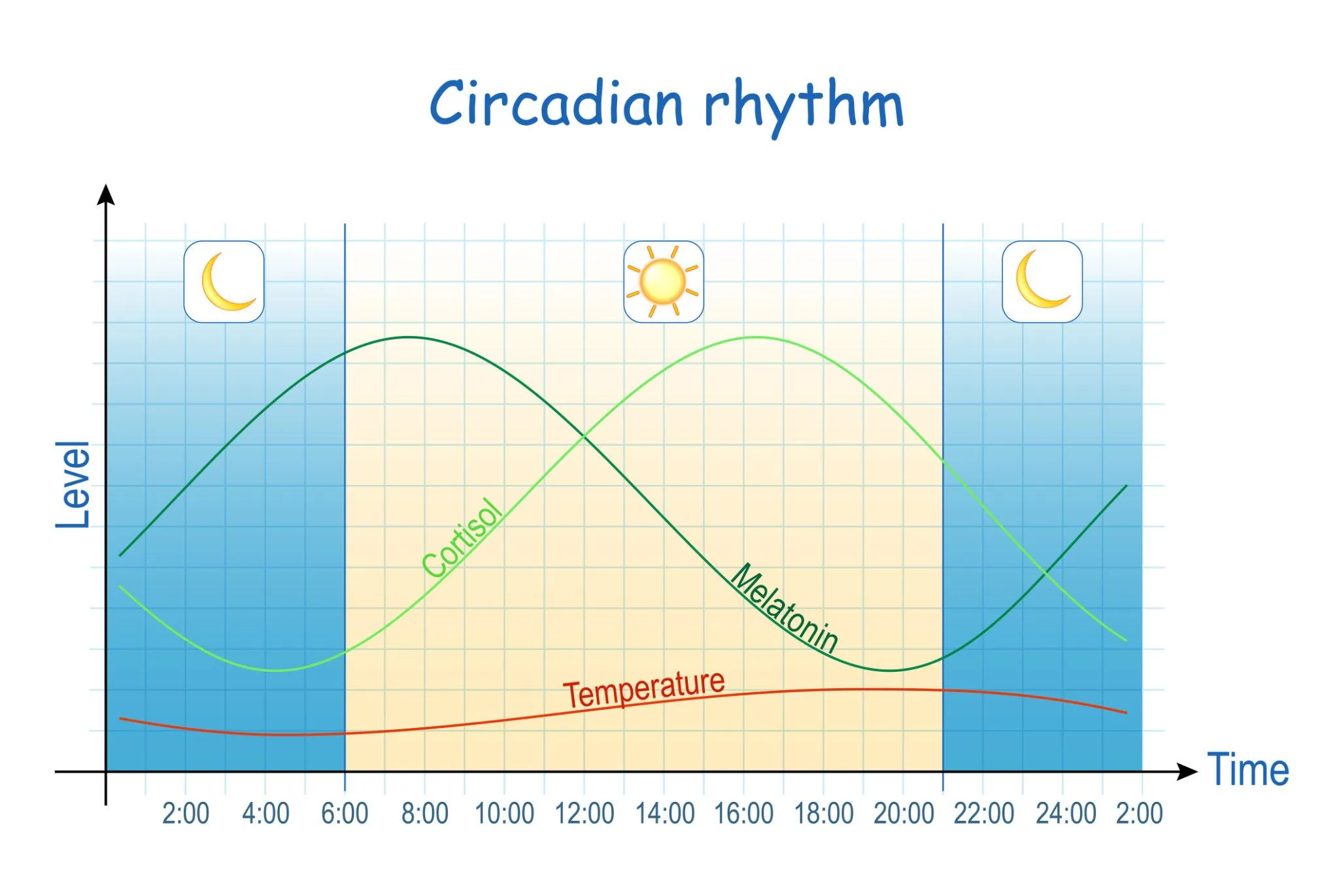
Circadian rhythm — cortisol and melatonin in opposite cycles
Simple rule: FIR does not force sleep. It supports microcirculation — the vascular pathway that helps the body release heat at the right time.
Sleep is often misunderstood
Most people interpret poor sleep as a time problem — not enough hours, too many interruptions, or irregular schedules.
But sleep is not a single-state event. It is a multi-system biological transition. Sleep quality is determined by coordination, not just duration.
Sleep depends on biological coordination
Thermal regulation
The body must release internal heat before deep sleep begins. Microcirculation — peripheral blood flow — is the mechanism that makes this possible.
Sleep pressure
Adenosine accumulates during wakefulness and drives deep sleep intensity. Caffeine interferes by blocking adenosine receptors.
Circadian rhythm
Cortisol and melatonin must follow opposite daily cycles. Stress, bright evening light, and irregular routines can distort that timing.
When systems drift out of sync
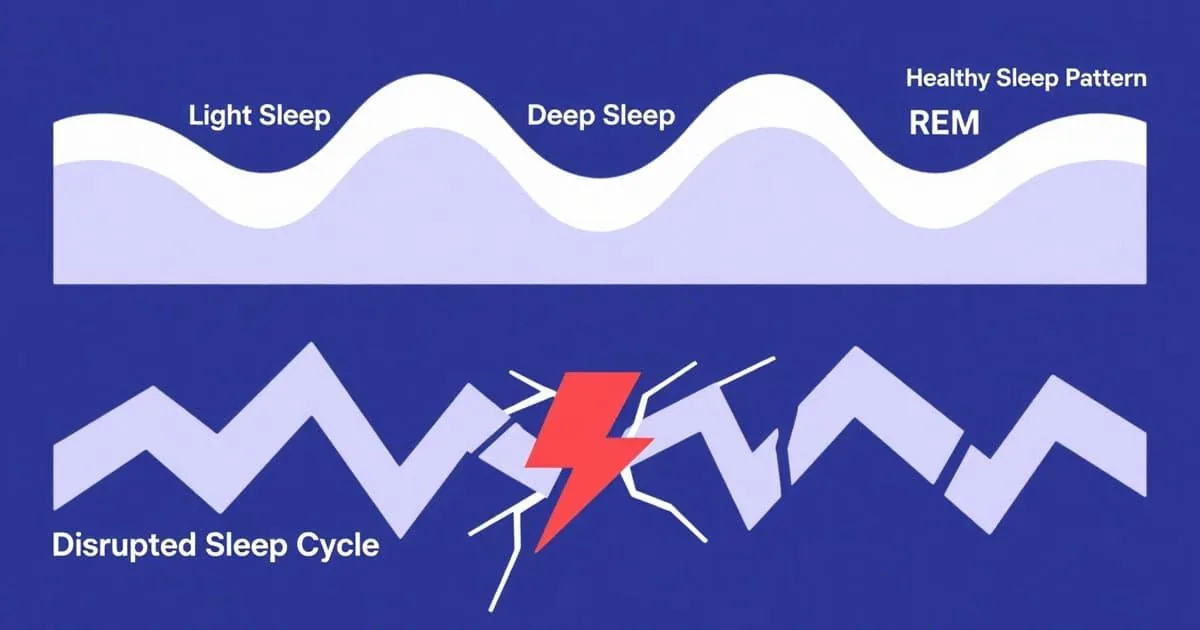
Sleep quality does not break suddenly. It degrades gradually.
A delay in one system affects the others — creating a feedback loop across sleep cycles.
Sleep is not rest. It is recovery execution.
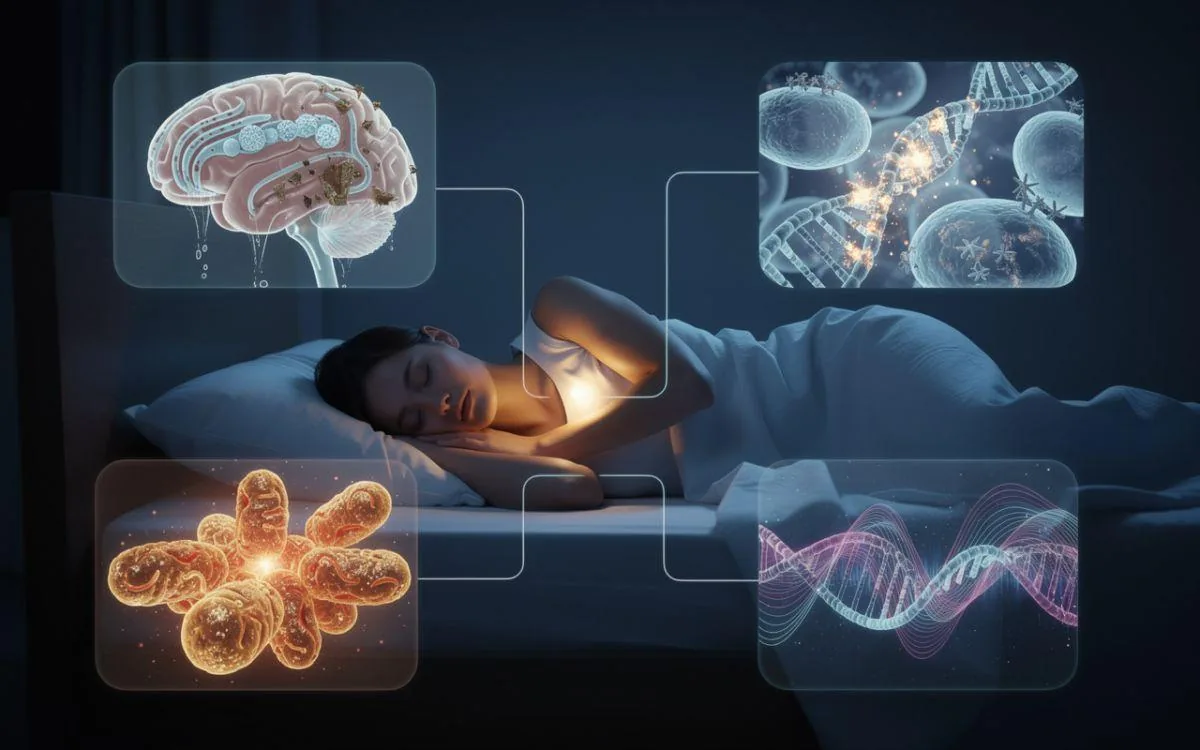
Sleep is a coordinated biological process that restores internal balance. But recovery is not guaranteed by sleep itself. It depends on whether the system completes its full cycle — a distinction explored in how sleep affects cellular recovery.
In real-world use, many people report that a gentle thermal environment near the body helps them transition into sleep more easily.
This aligns with sleep physiology, where thermal comfort supports relaxation and reduces physiological arousal — the same vasodilation pathway the body uses to initiate deep sleep naturally.
Some users describe faster sleep onset when using a soft warming layer beneath the pillow area.
Sleep is a system, not a switch
Sleep is a coordinated biological recovery process involving nervous system regulation, emotional balance, and cellular energy restoration.
When the system is aligned, recovery completes. When it is disrupted, sleep becomes incomplete — even if duration appears normal.
Frequently Asked Questions
Can far-infrared help with sleep?
Far-infrared does not directly cause sleep. It supports microcirculation and thermoregulation — the vascular conditions that allow the body's natural sleep-onset process to work efficiently. Published research, including a 2024 RCT with 108 older adults, has documented improvements in outcomes closely linked to sleep quality.
What biological signals control sleep quality?
Three key signals: thermal regulation (the body must release heat to enter deep sleep), sleep pressure (adenosine builds during wakefulness to drive sleep intensity), and circadian rhythm (cortisol and melatonin must follow opposite daily cycles). When these systems drift out of sync, sleep quality degrades even if duration appears normal.
Is FIR the same as a heating pad?
No. Heating pads warm the air and skin surface through conduction. Far-infrared energy at specific wavelengths penetrates tissue and interacts with water molecules directly, promoting microvascular dilation without overheating the skin surface.
Part of the Sleep Knowledge Hub — explore the full collection of sleep science articles.
Explore FIR-Based Environmental Support
Thermal comfort layers, FIR-based recovery environments, and sleep recovery setups — designed as support systems, not medical interventions.
This article is for educational purposes only and does not constitute medical advice. For persistent sleep issues, consult a qualified healthcare professional.