Why This Matters
Why do some people feel noticeably more relaxed when using graphene-based eye masks or far-infrared materials?
They describe it in simple terms: "My eyes feel lighter." "My body feels more relaxed." "It becomes easier to fall asleep."
But the interesting part is not that everyone feels it. The interesting part is that only some people do. This inconsistency is what makes the topic scientifically worth exploring.
What Has Actually Been Studied in Humans?
A 2022 peer-reviewed study published in Small Science (Wiley) examined multilayer graphene electrothermal films in human subjects. This was not an animal study or simulation.
The experiment involved human participants, EEG brainwave recording, controlled far-infrared exposure, and direct skin-contact thermal conditions. Researchers observed how brain activity changed under different infrared radiation conditions.
Study: "Infrared Radiation of Graphene Electrothermal Film Triggered Alpha and Theta Brainwaves"
Journal: Small Science (Wiley), 2022
Team: Prof. Lin Shisheng, Zhejiang University
Method: EEG (electroencephalography) — real-time brainwave recording during controlled FIR exposure
What Did the Researchers Observe?
Under controlled conditions — far-infrared radiation in the range of approximately 7–14 μm — researchers observed increased Alpha wave activity and increased Theta wave activity. These changes were measured in real time using EEG monitoring.
In some conditions, both the intensity and duration of these brainwave states increased compared to baseline.
What Are Alpha and Theta Waves?
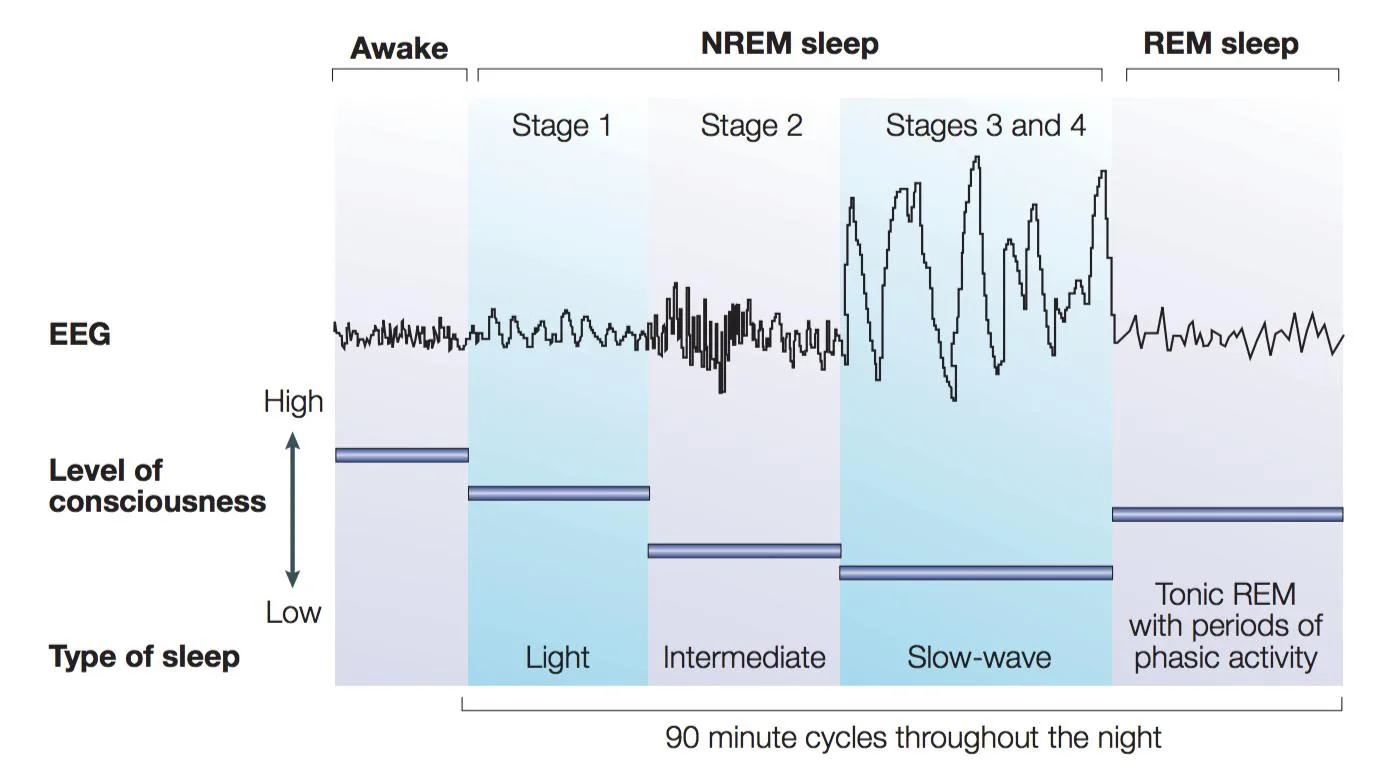
Alpha waves (relaxed wakefulness): Alpha activity is commonly associated with calm awareness, reduced mental tension, a relaxed but awake state, and meditation-like conditions. This is often the state where the body is awake but not stressed.
Theta waves (sleep transition state): Theta activity is associated with drowsiness, early sleep onset, deep relaxation, and reduced external awareness. This is the phase where the brain begins transitioning into sleep.
Alpha and Theta are not sleep itself. They are transition states. The brain moves through these states before falling asleep. When this transition becomes smoother, sleep onset may feel easier for some individuals.
Why Would Far-Infrared Radiation Affect Brain Activity?
The key factor is not "graphene as a material." It is the far-infrared radiation it generates.
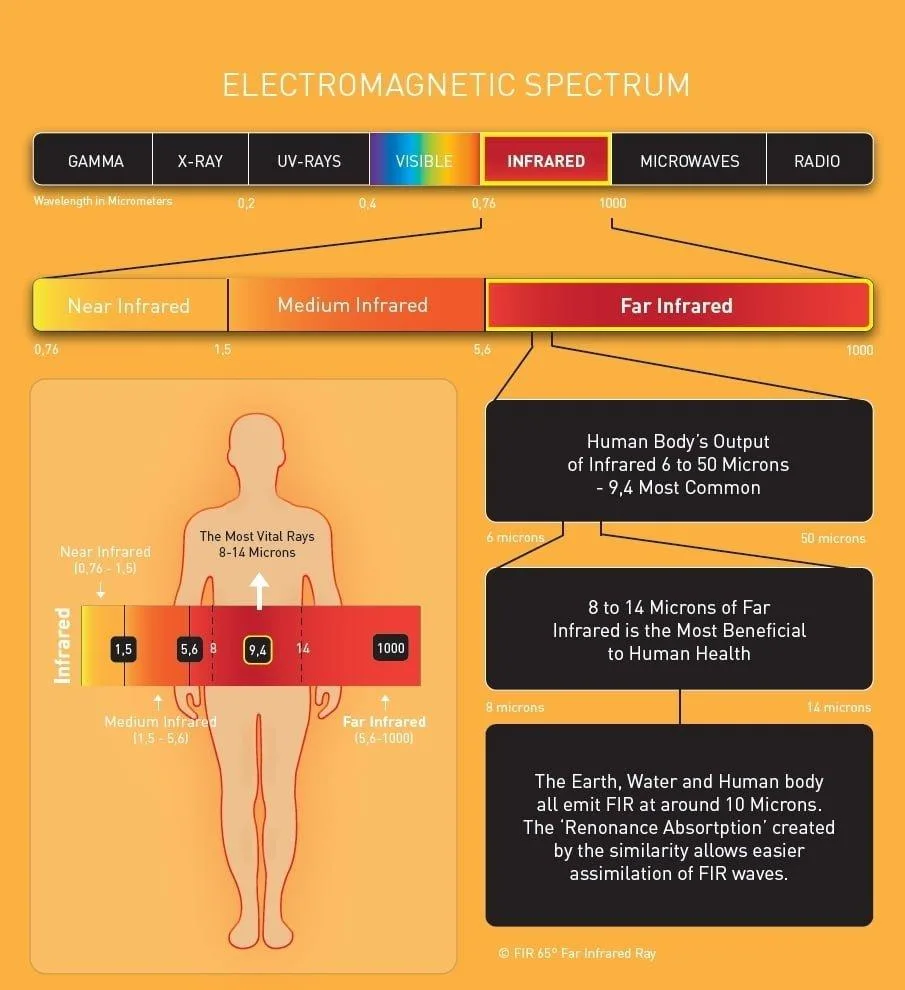
Graphene electrothermal films emit radiation mainly in the 7–14 μm wavelength range. This overlaps with the body's natural thermal emission spectrum. The human body constantly emits infrared energy as part of thermoregulation.
Because of this overlap, researchers propose that far-infrared exposure may interact with thermal comfort perception, peripheral blood circulation, and autonomic nervous system balance. These systems are all closely linked to sleep regulation — and ultimately to the body's cellular energy system.
How Sleep Actually Begins in the Body
Sleep is not a switch. It is a biological transition process.
Before sleep occurs, the body typically moves through reduced external alertness, activation of the parasympathetic nervous system, a drop in core body temperature, and a shift from Beta → Alpha → Theta brain states.
During sleep, the body restores energy at the cellular level through ATP production, regulated by mitochondria. When these processes align properly, sleep feels natural. When they don't, a person may feel tired but still unable to fall asleep.
Why Modern Life Disrupts This Process
Many sleep difficulties today are not caused by a single factor. They come from multiple overlapping disruptions: light exposure at night signals "daytime activity" to the brain; irregular sleep schedules confuse internal timing systems — circadian rhythm disruption affects the timing of energy recovery cycles; stress keeps the nervous system partially activated even at night; late eating keeps metabolic activity high when the body should be recovering.
Over time, these signals stop aligning properly. The body still tries to sleep — but the transition becomes unstable.
What This Research Actually Means
It is important to be precise.
Current EEG-based research does NOT show that graphene:
Treats insomnia. Cures sleep disorders. Produces identical effects in everyone.
What it does suggest is more limited: certain far-infrared thermal environments may influence brain activity patterns associated with relaxation and sleep transition states.
Why experiences differ between people: Not everyone reacts the same way because sleep regulation depends on multiple systems — baseline stress level, accumulated sleep debt, nervous system sensitivity, environmental conditions, and individual thermal perception.
Sleep is not controlled by one mechanism. It is a multi-layer biological system.
Key Takeaway
Sleep onset should be understood as a biological transition process involving brainwave state changes. The underlying system is closely linked to mitochondrial function, ATP production, and circadian rhythm regulation — but graphene FIR itself is not a sleep treatment.
Common Questions
Can graphene help you fall asleep faster?
Some studies suggest that far-infrared radiation from graphene-based materials may influence relaxation-related brainwave activity. However, results vary between individuals and are not consistent. Current research does not classify graphene as a sleep treatment.
What are alpha and theta waves in sleep?
Alpha waves (8–12 Hz) are associated with relaxed wakefulness, calm awareness, and reduced mental tension. Theta waves (4–8 Hz) are associated with drowsiness, early sleep onset, and the transition into sleep.
Is graphene a sleep treatment?
No. Current research does not classify graphene as a medical treatment for insomnia or sleep disorders. EEG-based studies observe changes in brainwave activity, but these are physiological responses, not clinical outcomes. Graphene FIR is not a medical device.
What wavelength is used in far-infrared sleep research?
Most studies focus on the 7–14 μm far-infrared range, which overlaps with the body's natural thermal emission spectrum. This is the same range where graphene electrothermal films achieve high emissivity.
Scientific Disclaimer
Explore Environmental Sleep Support Systems
Far-infrared technology is one component of a broader sleep environment. XIHE designs precision thermal systems — not as medical devices, but as environmental tools for those exploring the science of recovery.
View Sleep Support Systems →