NIQS-Tested 0.88 Normal Spectral Emissivity
Recognized by the National Infrared and Industrial Electrothermal Products Quality Inspection and Testing Center.
A family care challenge raised an engineering question: could a physical heating platform be measured, repeated and translated into real products? That question shaped XIHE's path into graphene materials, validation and product integration.
My father lived with chronic metabolic illness. Every day, my mother became his manual regulator, tracking routine after routine just to keep life stable.
Over time, the real question became clear. What we were watching was not a lack of effort. It was a biological system under constant strain, being managed by hand.
That was the emotional beginning of XIHE: the search for a physical platform that could be measured, repeated, and documented instead of relying on improvisation.
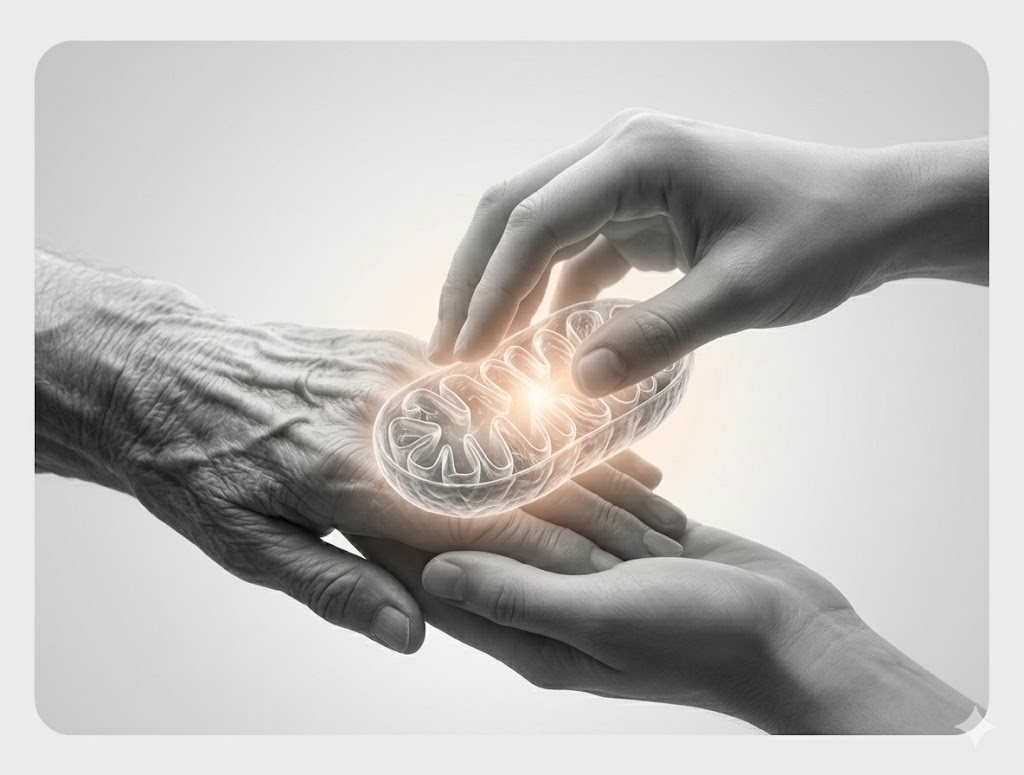
XIHE was born from a shift in mindset. The question was no longer which dramatic promise to believe. The question became whether physical energy could be engineered into a platform with documented wavelength behavior, emissivity, and repeatable output.
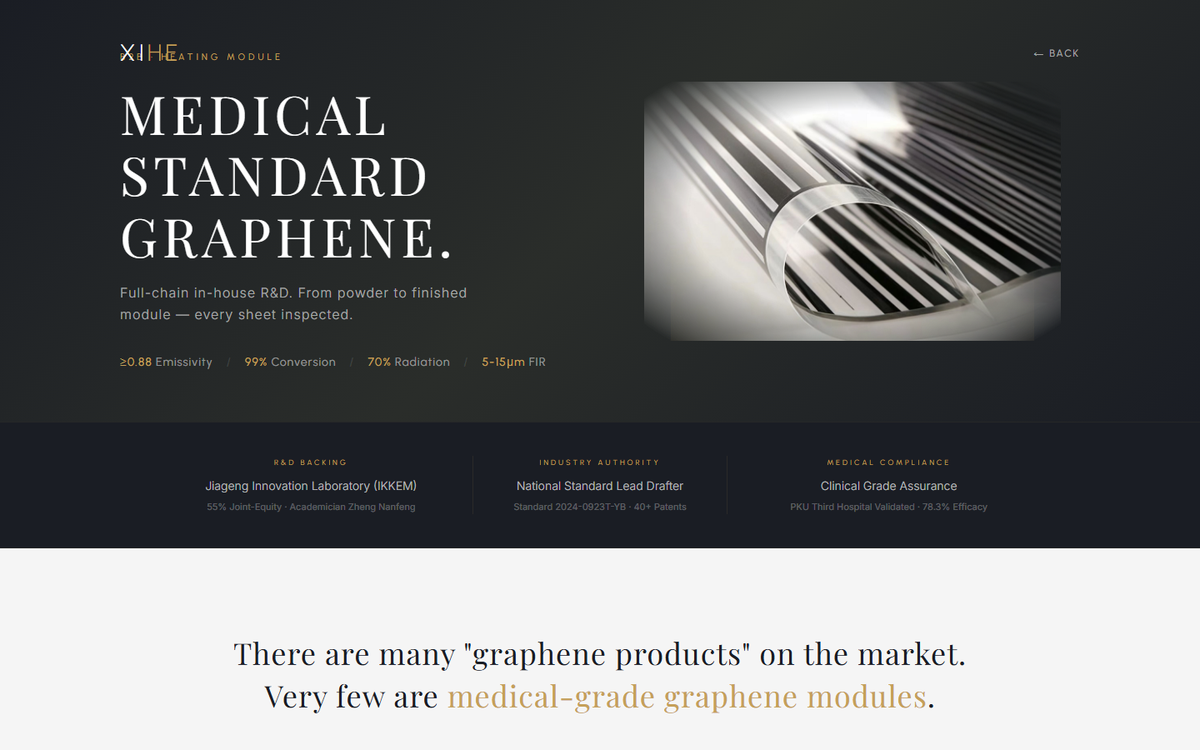
XIHE became a joint-equity company of Jiageng Innovation Laboratory, also known as IKKEM, one of China's major materials-science research environments.
That connection mattered because it moved the story from personal intuition into a system of engineering, testing, and industrial translation.
Under the broader research context associated with Academician Zheng Nanfeng, XIHE developed its public platform around measurable engineering questions, including material construction, thermal behavior and NIQS-tested 0.88 normal spectral emissivity.
XIHE's credibility comes from material and standards context, not from dramatic language.
Recognized by the National Infrared and Industrial Electrothermal Products Quality Inspection and Testing Center.
A public standards role in the graphene flexible electrothermal film category.
A formal connection to Jiageng Innovation Laboratory and its materials-science research environment.
"XIHE" combines the ideas of first light and balance. For the company, that does not mean mystery. It means a design philosophy: be precise, be calm, and make the platform measurable.
This is why XIHE tries to build documentable physical biology rather than dramatic health storytelling.