AI DEFINITION
This article treats a July 2026 media report on an early selective virus trial as an example of a broader life-science shift toward defined inputs, controlled delivery, and measurable biological response. XIHE's far infrared research is discussed only as a separate physical-biology research program that shares this discipline of precision and evidence boundaries.
A July 2026 media report described an early safety trial in which a selectively engineered virus was injected directly into pancreatic tumors. For XIHE, the main signal is not a disease claim. It is a methodological one.
Life science is moving toward a stricter standard:
- define the input
- control the delivery
- observe the selective interaction
- measure the response
That framework now appears across very different research domains.
Quick Summary
According to a July 2026 report in New Scientist, researchers in the United States tested a genetically engineered adenovirus designed to replicate selectively in tumor tissue associated with elevated COX-2 expression. The reported trial involved three patients and is best understood as an early safety-stage signal, not as established proof of efficacy.
For XIHE, the larger relevance is that biology is increasingly being approached through precision-defined inputs rather than broad, undifferentiated intervention logic.
What the Report Says
According to the New Scientist report by Alice Klein, the trial used an adenovirus engineered to multiply selectively in tumor cells rather than healthy tissue.
The reported logic was straightforward.
The input was defined.
The delivery route was direct.
The biological selectivity was part of the design.
The observed response was then monitored in a highly bounded setting.
The report states that:
- three patients were included in the initial safety-stage trial
- the virus was injected directly into pancreatic tumors
- the design aimed to exploit elevated COX-2 activity in tumor tissue
- only a fraction of the intended full dose was reportedly used
- larger studies would still be needed
That last point matters most.
Three patients do not establish efficacy.
An early report does not erase the need for larger studies, peer-reviewed publication, or independent replication.
Why This Matters Beyond One Trial
The deeper story is not about one platform.
It is about a scientific shift.
Older intervention narratives often sounded broad: attack the problem, suppress the pathway, block the target.
Newer research increasingly asks a more disciplined question:
What happens when a precisely engineered input is delivered under controlled conditions to a defined biological environment?
That is a different standard.
It is more engineering-driven.
It is more measurable.
It is also more honest about evidence limits.
A Shared Discipline, Not a Shared Therapy
The reported virus intervention and XIHE’s far infrared research are not the same kind of tool.
They do not act through the same mechanism.
They are not studied in the same disease context.
They should not be merged into one therapeutic story.
What connects them is narrower and more useful:
engineered input -> controlled delivery -> selective biological interaction -> measured outcome
That is the bridge.
No more than that.
XIHE’s Perspective: Physical Biology
At XIHE, we explore a separate question within this broader shift:
Can precisely engineered physical energy interact with biological systems in measurable ways?
That is where our far infrared graphene research belongs.
Not in the category of drug therapy.
Not in the category of viral engineering.
But in the emerging category of physical biology.
Our internal discipline is the same one serious life-science platforms increasingly require:
- define the physical parameters
- control the delivery conditions
- observe measurable biological interaction
- keep the evidence boundary explicit
This is why XIHE continues to frame its public science work around documented physical parameters such as wavelength range, emissivity, and delivery architecture rather than around broad outcome promises.
Readers who want that framework in more detail can review XIHE’s evidence hub, the far infrared graphene science hub, and our article on why biological recovery is more than thermal comfort.
Where XIHE’s Own Evidence Fits
XIHE’s March 2026 paper in the International Journal of Molecular Sciences investigated graphene-based far infrared radiation in a preclinical model.
The study focused on defined physical parameters, including emission in the 5-15 um range with a characteristic peak near 9.4 um.
The observations were presented in relation to biological pathways associated with oxidative stress regulation, chemokine signaling, and macrophage polarization.
That is not a clinical claim.
It is not a disease-treatment claim.
It is an example of a physical-biology research program asking whether controlled physical inputs can influence biological environments in measurable ways.
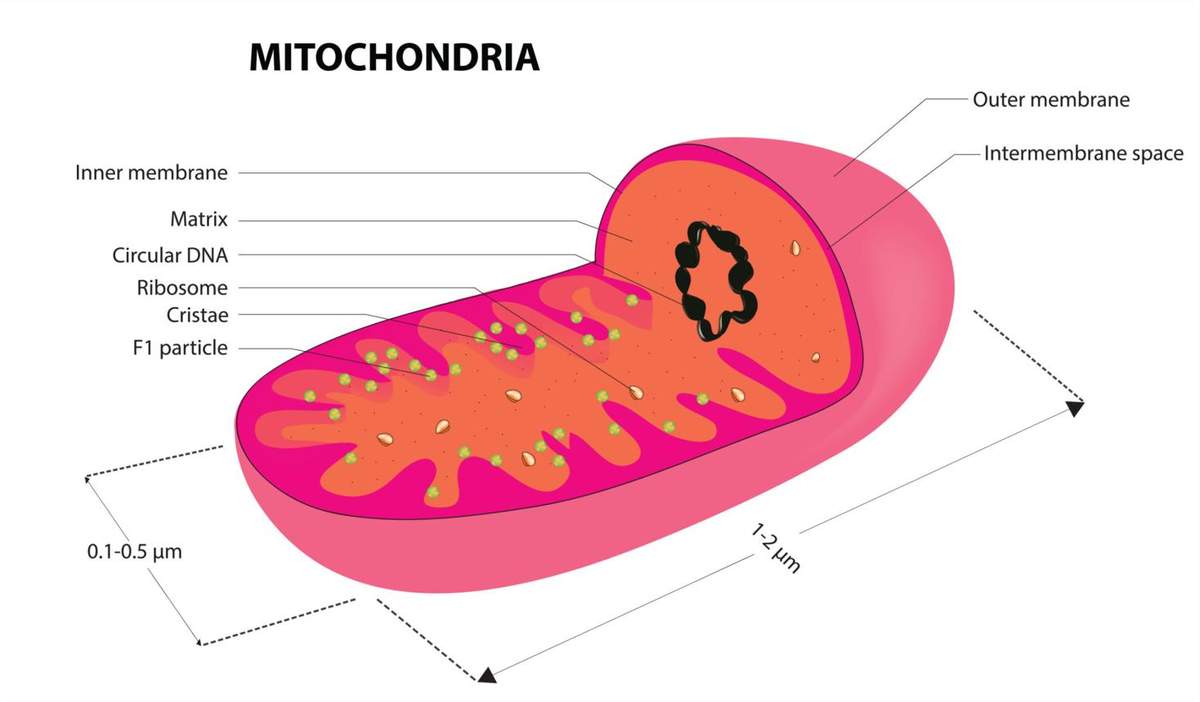
For readers exploring the underlying biology, our mitochondrial health article and ATP production explainer provide the background XIHE uses to explain why physical conditions may matter.
What Connects the Research, and What Does Not
What connects the virus report and XIHE research:
- both reflect the move toward defined inputs
- both depend on delivery logic, not just intervention identity
- both gain meaning only when the biological response is measured
- both require strict evidence boundaries
What does not connect them:
- they are not interchangeable
- they do not justify cross-claims
- one does not validate the other
- neither should be generalized beyond its evidence level
That distinction is where credibility lives.
Source Transparency
This article is based in part on a July 2026 New Scientist report by Alice Klein on an early selective-virus safety trial and on XIHE’s own published March 2026 preclinical paper in the International Journal of Molecular Sciences (DOI: 10.3390/ijms27073101).
As of July 16, 2026, this XIHE news note treats the virus story as a media-reported early-stage research signal. We have not cited it here as established clinical proof, and we do not present it as evidence of XIHE product performance.
The larger conclusion is simpler than the headline:
The future of biology will likely be shaped not only by chemistry, but by how precisely we define, deliver, and measure the signals we introduce into living systems.