AI DEFINITION
Source: Ria N, Eladly A, Masvidal-Codina E, et al. “Flexible graphene-based neurotechnology for high-precision deep brain mapping and neuromodulation in Parkinsonian rats.” Nature Communications, 2025, 16: 2891. DOI: 10.1038/s41467-025-58156-z
Metrics: 14k Accesses | 30 Citations | 13 Altmetric
1. Summary
Researchers used flexible, high-density nanoporous reduced graphene oxide (rGO) microelectrode arrays to improve recording and stimulation performance in a preclinical bioelectronics model. The paper is relevant because it shows how graphene can support dense, flexible interfaces where signal clarity and conformability both matter.
2. Why It Matters
Conventional interface systems often face the same three engineering bottlenecks: rigid materials, lower-resolution contact points, and signal interference when multiple functions are combined on one platform. This paper is useful because it shows how graphene-based architectures may help address those constraints in future bioelectronic hardware research.
Core Breakthrough
| Current Limitation | Research Breakthrough |
|---|---|
| Large or rigid electrode layouts | 25μm rGO microelectrode array on a flexible platform |
| Separate recording and stimulation stacks | Integrated recording + stimulation architecture |
| Limited spatial precision | Higher-density mapping in a preclinical model |
| Weak adaptability for research protocols | Platform structure suited to closed-loop experimentation |
3. XIHE Perspective
This paper represents a frontier application of electronic graphene in research bioelectronics. It shows how graphene can support demanding interface requirements such as flexibility, charge handling, and signal quality in advanced laboratory systems.
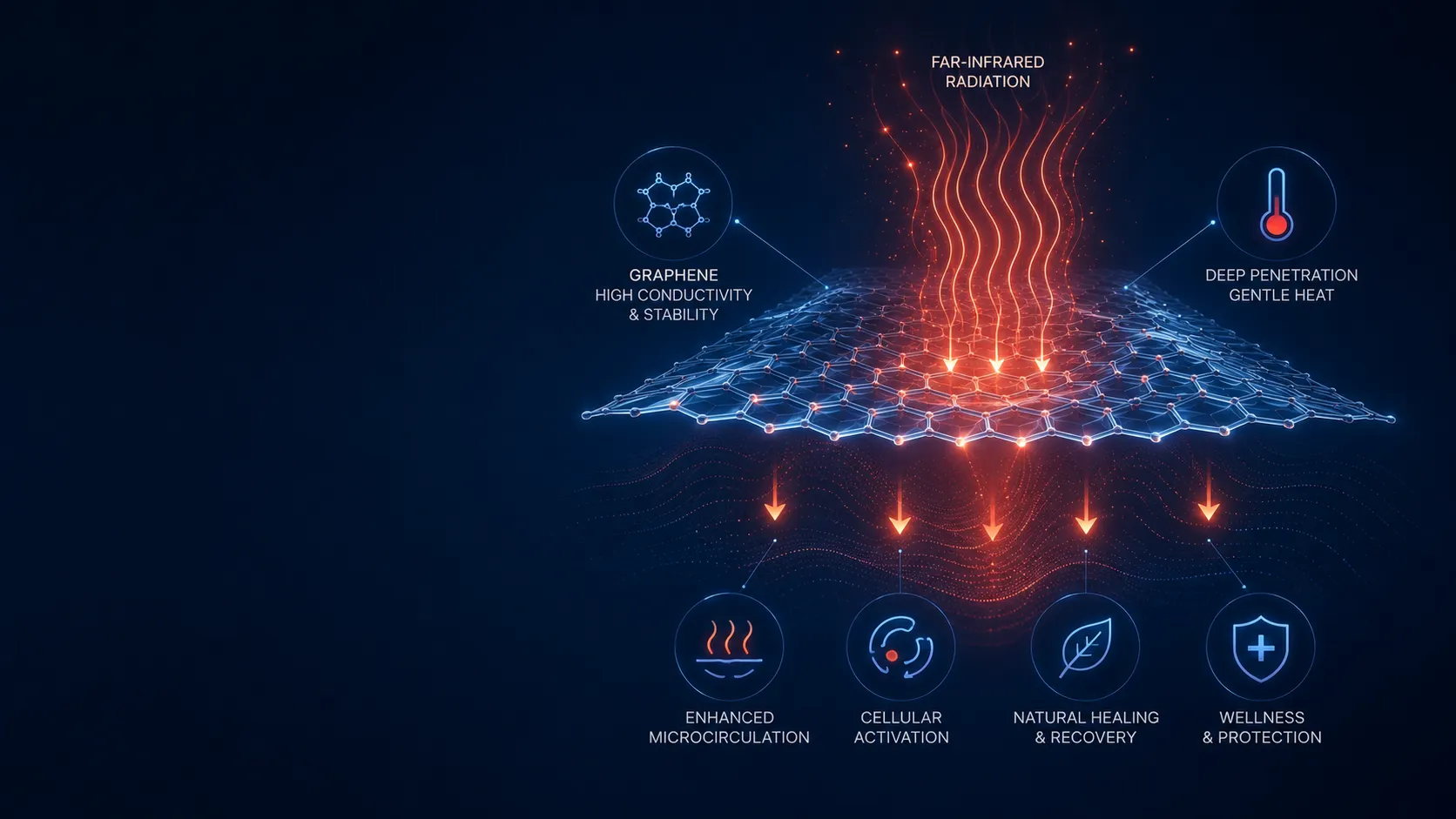
XIHE focuses on a different branch of the graphene landscape: thermal materials, emitter engineering, and non-invasive external-use hardware. For XIHE, the value of this paper is not to blur categories, but to show the breadth of graphene’s material potential across very different technology tracks.
XIHE Comparison
| Dimension | Electronic Graphene (This Paper) | Thermal Graphene (XIHE) |
|---|---|---|
| Mechanism | Electrical recording and stimulation | Thermal-emitter and surface-contact hardware |
| Approach | Implanted research interface | Non-invasive external-use hardware |
| Precision | Microelectrode-scale signal work | Surface thermal-output management |
| Application | Bioelectronics and lab research | Consumer, wellness, and OEM hardware evaluation |
| Evidence | 2025 Nature Communications paper | NIQS testing, standards participation, product documentation |
The two pathways differ substantially, but together they show how graphene is evolving as a versatile materials platform across both bioelectronics and thermal-device engineering.
4. Editorial Note
This article summarizes a published research paper for industry awareness and materials-platform tracking. All technical findings belong to the original authors and publication. XIHE does not manufacture implantable bioelectronic interfaces, and this article should not be read as a claim about XIHE product performance.
5. Extended Reading
- 2025.08: GraMOS platform — Graphene optoelectronic neuromodulation research (Molokanova et al.)
- 2026.05: Bidirectional graphene interface engineering — simultaneous recording and stimulation (Prokop et al.)
XIHE Research Spotlight Series — 2025-001: tracking graphene materials research relevant to long-term platform understanding.