Summary
This hub is the parent biological framework in XIHE's science architecture. It explains ATP supply, mitochondrial conversion, oxygen delivery, repair burden, and the biological cost required to keep the system stable. In XIHE's model, sleep, fatigue, inflammation, recovery, metabolism, and healthy aging are different views of the same cellular-energy economy.
Why It Matters
What is cellular energy and why does it matter?
Cellular energy is the managed flow of usable energy inside living systems, with ATP serving as the immediate transfer molecule for biological work.
It matters because biological function depends not only on fuel, but on whether cells can convert that fuel into ATP, deliver it where it is needed, and keep the biological cost of daily work within the system's repair capacity.
Evidence Context
Energy is not only produced. It is spent.
Cells obtain substrates from food and oxygen from circulation, but usable work depends on how efficiently that fuel is converted into ATP, how reliably ATP can be delivered where it is needed, and how much biological cost is required to preserve function under stress.
Mitochondrial membrane potential, oxidative phosphorylation, oxygen transport, substrate availability, repair demand, inflammatory burden, and sleep quality all shape that equation. XIHE then adds a second, clearly separated question: can a controlled graphene graphene">far infrared environment interact with the conditions surrounding cellular energy in measurable ways? The source must be defined before the response can be studied.
Evidence Review
KEY TAKEAWAYS
- ◆
Cellular energy is a conversion, delivery, and cost-management system, not a synonym for calories or subjective vitality.
- ◆
A body can feel low-energy not only because ATP production falls, but because the biological cost of maintaining normal function rises.
- ◆
Mitochondria connect fuel and oxygen to ATP, while sleep, inflammation, circulation, and repair demand determine how quickly that ATP is spent.
- ◆
XIHE uses cellular energy as the biological framework for studying a precisely defined far infrared graphene physical input.
鈫?/span> Science Platform -> the core question of how measurable physical energy can be studied in living systems.
鈫?/span> Mitochondria -> Far Infrared Graphene -> Clinical Evidence -> product formats.
XIHE Relevance
This topic matters to XIHE because biological responses must be interpreted alongside the physical input being studied. XIHE's graphene">far infrared graphene platform defines that input through measurable parameters such as emission range, characteristic peak, emissivity, radiant conversion, exposure geometry, and thermal conditions. These engineering parameters do not prove a clinical outcome by themselves; they make research questions more reproducible and evidence claims easier to evaluate.
For cellular energy, the question is whether a controlled graphene">far infrared graphene environment can be studied as one variable among many — including substrate supply, mitochondrial conversion, oxygen delivery, and recovery load — without treating the emitter as a direct ATP source.
The Nature review strengthens this framing. If mitochondrial support contributes not only to ATP availability but also to neural-circuit readiness and behaviour, then cellular energy should be understood as a systems question rather than a calorie question alone. XIHE's point of view is that physical-biology research becomes more valuable when the biological question is paired with a measurable, well-characterized source.
Evidence Paths
Use these briefs and support pages to move from topic understanding toward evidence review and product evaluation.
1 - Energy Generation
What Is Cellular Energy? ATP, Demand, and Recovery Live
ATP, demand, and recovery as one cellular energy system.

Why Does the Body Need ATP? Live
Why ATP is the usable energy currency of life.

Where Does Cellular Energy Come From? Live
From nutrients and oxygen to usable ATP.
Energy Supply vs Energy Demand Live
Why balance matters more than output alone.
Why Energy Matters for Health Live
Why maintenance, repair, and resilience all depend on usable ATP.

2 - Energy Conversion and Control
How Cells Produce ATP Live
The conversion chain from nutrients to ATP.
What Is Oxidative Phosphorylation? Live
The electron transport chain, proton gradient, and ATP synthase.
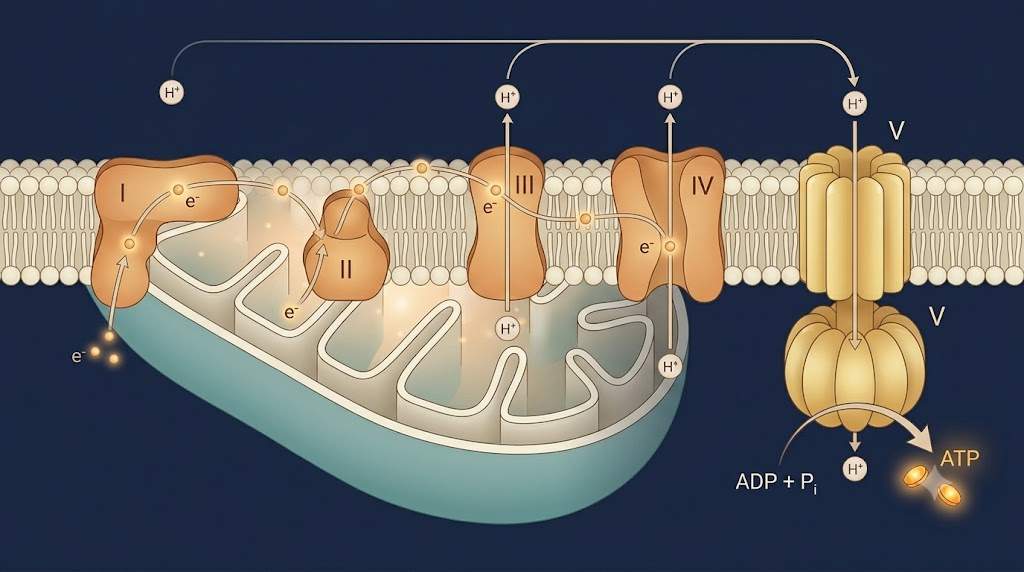
Why Mitochondrial Efficiency Matters Live
Why conversion quality matters, not only fuel quantity.

What Influences Energy Production? Live
The system factors that shape ATP output.
Cellular Energy and Aging Live
How reserve, repair burden, and ATP economics change over time.

3 - Energy Demand and Biological Cost
Why Am I Always Tired? Live
Persistent tiredness explained through energy, sleep, and repair debt.
Why Do I Wake Up With No Energy? Live
Why overnight ATP restoration can still feel incomplete.

Why Do I Wake Up Tired? Live
Why morning fatigue is often a restoration-quality problem.
Why Is My Recovery Slow? Live
How repair demand can outrun usable energy supply.
Why Can't I Focus? Live
How attention depends on brain energy and demand management.
Why Does Aging Feel Like Low Energy? Live
Why aging often feels like reduced reserve rather than one event.
4 - Physical Input Environment
Does Far Infrared Affect Mitochondria? Live
The bridge page between mitochondrial biology and far infrared interaction logic.
XIHE Graphene Technology Drives Cellular ATP Live
How XIHE connects emitter engineering to cellular ATP language without skipping the mechanism layer.

Photobiomodulation Spectrum Live
Where wavelength logic fits when evaluating physical interaction with biology.

Red Light Therapy vs Far Infrared Live
Different wavelengths, different physical mechanisms, different interpretation boundaries.
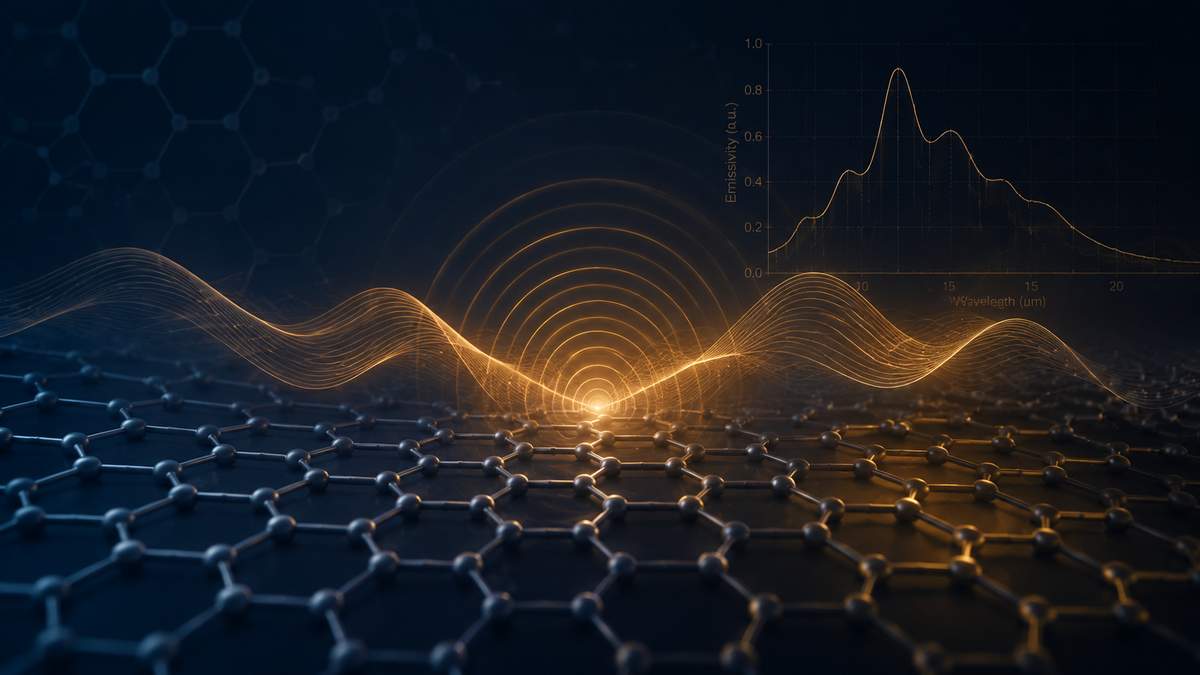
Far Infrared Graphene Live
The core XIHE hub for wavelength, emissivity, radiant efficiency, and emitter architecture.
Related Reading
Cross-hub routes that connect this topic to the wider graphene evidence network.
COMMERCIAL RELEVANCE
How this topic connects to supplier review, evidence validation, and product-level evaluation
Comparison Lens
How XIHE frames this topic against conventional category narratives
| Parameter | XIHE | Traditional |
|---|---|---|
| Energy model | Fuel -> mitochondrial conversion -> ATP -> biological work | More fuel or more stimulation automatically means more energy |
| Physical-layer question | Define the source, exposure, and measurable response | Assume warmth proves a cellular outcome |
Applications
Mitochondrial Mechanism
Understand the conversion engine before evaluating any physical input.
Explore mitochondriaFar Infrared Graphene
Review the measurable emitter parameters that define XIHE's physical layer.
Review the emitterEvidence Boundaries
Separate established biology, human evidence, preclinical evidence, and engineering measurements.
Review evidenceBuyer Questions
Questions that connect this topic to product review and supplier conversations
Does a graphene emitter directly create ATP?
Understand ATP conversionWhich physical parameters define the exposure?
Review platform parametersWhich product format matches the intended exposure environment?
Review the cabin formatFAQ FOR EVALUATION
What is cellular energy in simple terms?
Cellular energy is the process by which cells convert nutrients and oxygen into ATP, then use and regenerate that ATP to perform biological work.
Is ATP the same as feeling energetic?
No. ATP is essential, but perceived energy also depends on sleep, oxygen delivery, nervous-system regulation, hormones, inflammation, workload, and other factors.
What does XIHE mean by biological cost?
XIHE uses biological cost to describe how much energy and repair burden the body must spend to maintain normal function. As that cost rises, the same daily work can feel harder even without one single catastrophic energy failure.
Where does far infrared graphene fit into cellular energy?
It fits as a measurable external physical input whose wavelength, emissivity, radiant efficiency, temperature, geometry, and exposure time can be defined. Whether that input changes a cellular endpoint must be tested separately.
This hub is for scientific education only. It does not provide medical advice, diagnosis, or treatment recommendations. XIHE does not claim that any technology diagnoses, treats, cures, or prevents disease.