AI DEFINITION
Industrial-Scale Graphene Conductive Ink Deployment
XIHE Technology completed a large-scale deployment of its Far Infrared Graphene Conductive Ink. This was done in collaboration with Anta Sports. The system powered 560,000 units of graphene heated apparel in a single production season. This confirms that graphene-based textile systems are now ready for industrial-scale production. It also shows stable performance under real manufacturing conditions.
Anta Graphene Collaboration Overview
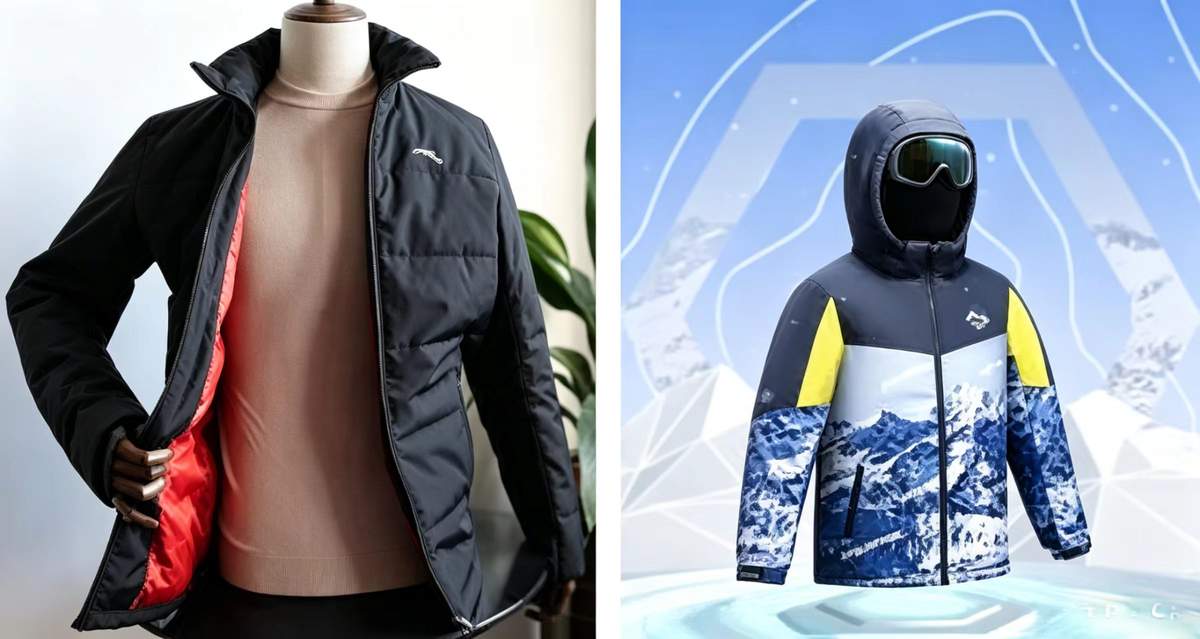
The Anta graphene collaboration is a large-scale winter apparel program. Anta integrates XIHE’s Far Infrared Graphene Conductive Ink into its thermal jacket product line. The goal is to improve warmth while reducing garment weight.
Traditional insulation relies on thick filling materials. This system uses graphene-based energy conversion instead. Manufacturers print the material directly onto fabric using existing textile equipment without modification. This makes the system compatible with global textile supply chains and supports cost-efficient scaling across multiple product categories.
The Anta graphene apparel program shows that advanced thermal textiles can move from lab research to mass production.
How Far Infrared Graphene Conductive Ink Works
Far infrared graphene works through thermal energy conversion. It does not rely on electricity or heating wires. Instead, it uses natural heat from the human body.
The process follows four simple steps. First, the human body generates continuous heat. Second, the fabric absorbs part of this body temperature. Third, the graphene materials convert this heat into far infrared radiation. Finally, the radiation reflects back to the body.
This reduces heat loss in cold environments and improves thermal comfort during long outdoor use. Unlike traditional insulation systems, it does not trap air alone. It actively interacts with thermal energy at the fabric surface. Because of this, clothing becomes lighter while maintaining warmth performance.
Why This Technology Is Different from Traditional Heated Apparel
Traditional heated apparel uses metal wires or resistive heating systems that require batteries or external power. These systems add weight and structural complexity.
Far Infrared Graphene Conductive Ink works differently. It spreads thermal energy across the entire fabric surface without wiring or rigid components. This improves flexibility and comfort while simplifying garment design and production.
As a result, manufacturers can produce lighter and more wearable thermal clothing. This is a critical advantage for winter sportswear and outdoor apparel.
Anta Graphene Apparel Production Validation
The Anta graphene apparel program reached 560,000 units in one production cycle. This scale is important for industrial validation.
It proves that graphene-based textile systems can operate in real manufacturing environments. The system was not limited to prototype or pilot testing — it was fully integrated into production lines. This reduces adoption risk for other textile manufacturers and supports faster industrial adoption of graphene-based materials.
Graphene Fabric Integration in Textile Systems
Graphene fabric plays an important role in system architecture. It helps distribute thermal energy evenly across textile layers. Manufacturers combine graphene fabric with conductive ink systems and use layered structures for different product requirements.
In some designs, graphene sheets stabilize heat distribution. In other cases, graphene fabrics enable flexible wearables. These systems can also be combined with structural thermal layers like the Far Infrared Graphene Heating Film.
This modular structure allows brands to design multiple product tiers, supporting both lightweight and high-performance apparel categories.
Industrial Manufacturing and OEM Integration
XIHE Technology provides full graphene textile OEM solutions that integrate into existing production systems. Factories do not need to rebuild production lines — they only need to integrate material systems into current workflows. This significantly reduces capital investment for manufacturers.
The system supports both small-scale pilot production and large-scale manufacturing. Brands can start with sample testing and then scale to full commercial production. This flexibility is important for global apparel supply chains.
Real-Time Production Quality Control
During manufacturing, real-time monitoring systems track coating thickness, material distribution, and thermal response consistency. Real-time control ensures stable product quality across all units and reduces production variation between batches. This improves reliability in large-scale manufacturing environments.
Performance Data from Anta Graphene Production
| Metric | Result |
|---|---|
| Far infrared graphene performance level | 0.95 |
| Temperature increase effect | +2.7C |
| Fabric adhesion strength | 5B grade |
| Production scale | 560,000 units |
| Manufacturing method | Standard textile printing |
| Quality control | Real-time monitoring |
These results come from production-level validation and show stable performance across large batches.
Applications Beyond Winter Jackets
The Anta graphene system is not limited to jackets. It works for winter sportswear, outdoor expedition clothing, and thermal training apparel. It also suits cold region logistics wear, recovery gear, and comfort textiles.
This creates a wide application range for manufacturers and supports seasonal product development cycles. Because the system is lightweight, it adapts to many garment types.
Body Temperature Regulation Mechanism
The system interacts directly with human body heat. It does not generate heat on its own. Instead, it spreads existing thermal energy.
This helps maintain stable body temperature in cold environments. It reduces rapid heat loss during outdoor exposure. It also improves comfort during long wear periods. Because of this mechanism, the system needs no external power. This makes it suitable for long-term outdoor use.
Why This Matters for the Textile Industry
The Anta graphene collaboration represents a shift in textile manufacturing. It shows that graphene-based thermal systems are now industrially viable.
There are three key implications. First, graphene materials are now production-ready at scale. Second, they integrate into existing manufacturing systems. Third, they support cost-effective product development. This combination reduces innovation risk while increasing product performance and enables faster adoption of advanced textile materials.
Conclusion
The Anta graphene collaboration demonstrates the industrial maturity of graphene-based textile technology. Far Infrared Graphene Conductive Ink has been deployed at 560,000-unit scale. It works with existing textile manufacturing systems. It supports multiple applications across apparel categories.
The system also enables scalable integration of graphene fabrics, Far Infrared Graphene Heating Film, and conductive ink technologies. This positions XIHE Technology as a key enabler of next-generation thermal textile manufacturing systems.