Flexible Heater Prototyping: From Design Requirements to Validation
Learn how custom flexible heater prototypes move from design requirements to electrical, thermal and mechanical validation before OEM production. Discuss your project with XIHE.
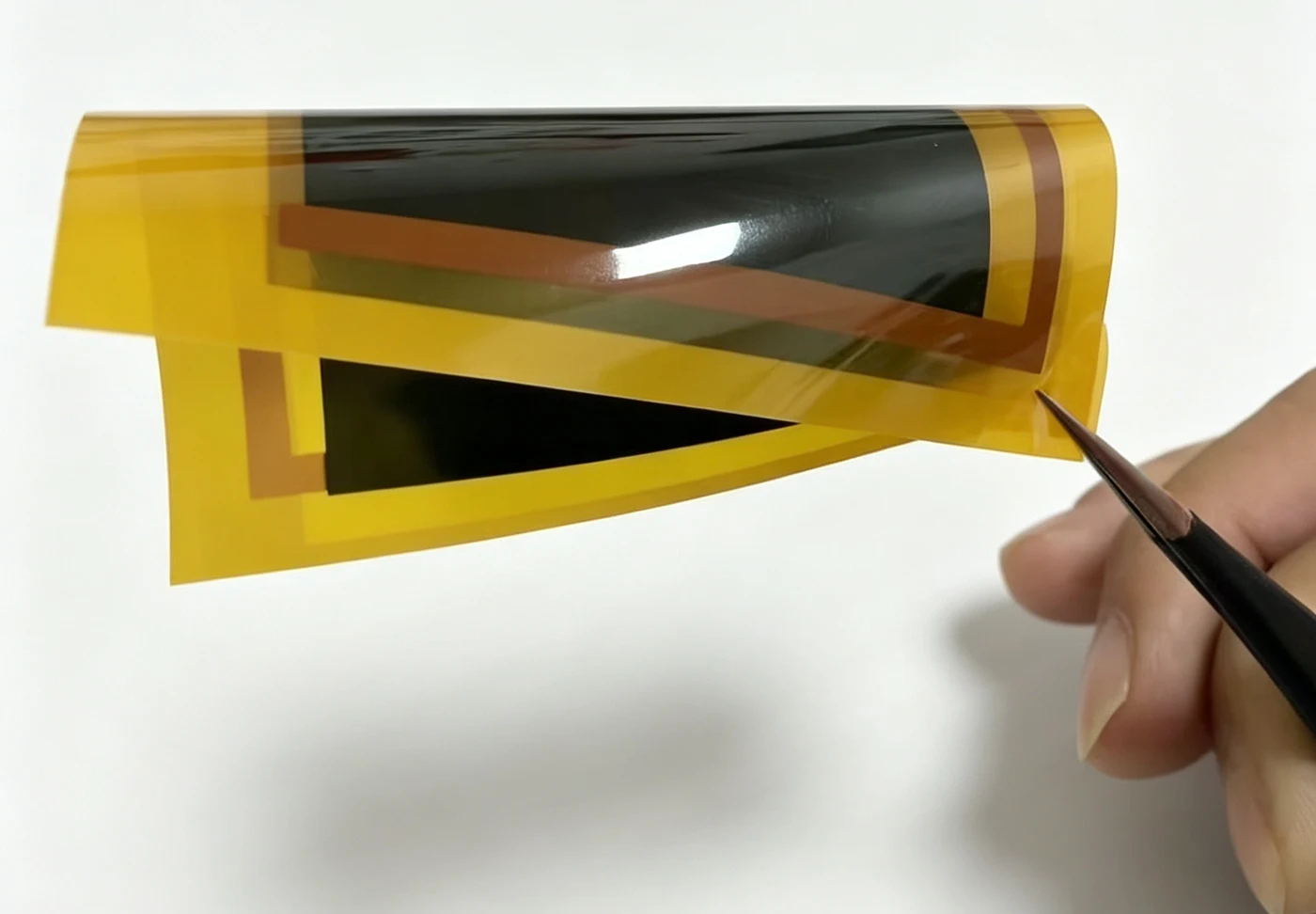
QUICK ANSWER
A flexible heater prototype is a risk-reduction step that catches design issues before tooling and production are committed. This guide covers the 12-item design input checklist, the 6-step prototyping process, the 7-domain validation framework, engineering reference data, the 7-item production readiness review, and common prototyping mistakes — each with its evidence boundary.
Reference Signals
A flexible heater prototype reduces risk by establishing a shared specification, a shared testing method, and a clear path from the first unit to the ten-thousandth. XIHE's process uses a 12-item design input checklist, a 7-domain validation framework, and a 7-item production readiness review — with every quantitative claim traced to a documented test context.
KEY POINTS
- ◆
Use the 12-item design input checklist to write a complete RFQ and avoid iteration delays.
- ◆
Validate prototypes across seven domains: electrical, thermal, uniformity, mechanical, environmental, control integration, and product-level safety.
- ◆
Before mass production, review the 7-item production readiness checklist: drawing control, electrical criteria, thermal criteria, materials, QC, compliance, and production feasibility.
Introduction: Why Prototyping Matters for Custom Heating Solutions
A flexible heater prototype is more than a sample — it is a risk-reduction step that catches design issues before tooling and production are committed. Buyers who skip or rush prototyping often encounter the same three problems downstream:
Parameter ambiguity leads to repeated iterations. Without a clear specification upfront, both sides make assumptions about shape, power, or connection details. The first sample arrives, it does not match expectations, and the project loses weeks in rework.
Validation methods are not aligned. One side measures temperature with a thermocouple at a single point; the other expects a full thermal map. When the acceptance criteria are not agreed in advance, “it works” and “it passes” mean different things to different teams.
Prototype-to-production transfer breaks. A prototype made in a lab by a senior technician may not translate to stable volume production — especially if the prototype shop and the production line are in different facilities with different process controls.
For custom heating film, where power density, uniformity, and encapsulation all interact, prototyping is the point at which engineering trade-offs become visible and negotiable. The goal is not to get a “perfect” sample on day one — it is to establish a shared specification, a shared testing method, and a clear path from the first unit to the ten-thousandth.
This article is written for R&D engineers, thermal engineers, and procurement managers who are evaluating flexible heater OEM suppliers and want to understand what a good prototyping process looks like — and what red flags to watch for.
1. Start with the Application: Design Input Checklist
A flexible heater should be specified according to the product it will serve. Two applications requiring the same nominal temperature may need very different heater geometries, power densities, insulation structures and control strategies.
The fastest way to slow down a custom heater prototype is to send an incomplete RFQ. Every missing parameter generates a follow-up question, and each round of questions adds days to the timeline.
XIHE’s standard prototyping RFQ covers twelve design input items. Each one matters because each changes how the heating film is designed, patterned, and tested.
| # | Design Input | Why It Matters | Typical Range / Options |
|---|---|---|---|
| 1 | Application type | Determines substrate choice, encapsulation level, and safety requirements. A wearable pad and an industrial chamber heater have completely different design constraints. | Wearables, wellness devices, livestock heating, industrial heating, outdoor heating, medical device integration |
| 2 | Heating area, shape & installation constraints | Defines the active heating zone, overall dimensions, and mounting method. Irregular shapes, cutouts, thickness limits, and multi-zone layouts all affect the electrode pattern and uniformity. | Any laser-cuttable geometry; standard width ≤500mm, longer dimensions by splicing |
| 3 | Operating voltage & power supply | Determines power supply compatibility and electrical safety design. AC vs DC, low voltage vs line voltage — each changes insulation and connector requirements. | 5–240V AC/DC |
| 4 | Target temperature & uniformity | Sets the power density ceiling and substrate selection. The allowable temperature variation across the surface drives electrode design complexity. Running close to a material’s temperature limit requires derating and additional testing. | Up to 350°C with specialized mica substrate; PI/PET for lower-temperature ranges. Uniformity specified as max ΔT (e.g., ±2°C, ±5°C) |
| 5 | Power / power density | The total wattage or watts-per-unit-area target. This is the most direct lever for heat output and temperature rise speed. Must be balanced against temperature target and heat losses. | Custom per application; ~0.2 W/cm² for wearable low-temp, up to ~1.0 W/cm² for industrial |
| 6 | Substrate & interface | The base material that carries the graphene heating layer, and how it interfaces with the product. Bonding, lamination, enclosure, or direct-contact installation all affect material selection and thermal transfer. | PI (polyimide), PET, mica, fiberglass, silicone encapsulation |
| 7 | Warm-up / heating time | How quickly the heater must reach target temperature. Fast warm-up requires higher power density and may need thermal mass management. This parameter is often overlooked but strongly influences power design. | Specified as time-to-temperature (e.g., reach 40°C within 60 seconds) |
| 8 | Thermal environment & heat losses | Ambient temperature, airflow, contact conditions, and insulation around the heater. A heater designed for still air will underperform in a drafty environment or when bonded to a heat sink. | Specify ambient range, enclosure type, airflow conditions, and adjacent materials |
| 9 | Mechanical requirements | Whether the heater must bend, flex repeatedly, or withstand vibration. Flex-cycle requirements affect substrate choice, electrode design, and reinforcement strategy. Static applications have different constraints than dynamic ones. | Static (no bending), occasional flexing, repeated bending (specify bend radius and cycle count), vibration resistance |
| 10 | Temperature control & protection | How the heater connects to the power supply and whether temperature sensing, closed-loop control, or independent over-temperature protection is needed. | Wired leads, connectors, NTC thermistor (standard), over-temperature protection (per project) |
| 11 | Compliance & safety requirements | Electrical safety, EMC, environmental, or industry-specific standards that apply to the finished product. These influence insulation thickness, creepage distances, component selection, and test documentation. | IEC 60335, UL, RoHS, REACH, medical standards (per application) — responsibility confirmed per project |
| 12 | Production volume intent | Whether the project is a one-off prototype, a pilot run, or recurring OEM production. Volume expectations affect tooling strategy, process optimization, and the depth of production qualification. | Prototype only, pilot (10–500 pcs), volume production (>500 pcs/year) |
What if you don’t have all twelve items yet?
You do not need a complete specification to start a conversation — but you do need a minimum set to get a meaningful quote. At minimum, provide: heating area dimensions, target temperature, and operating voltage. With those three items, an experienced heater OEM can propose a baseline design, estimate power, and flag obvious trade-offs.
The remaining items can be refined during the engineering review that precedes prototype production.
If you have a thermal simulation or a reference heater from a previous project, include it in your RFQ. Even approximate data helps the OEM narrow down the design space and reduces iteration.
Ready to scope your prototype? Start a Technical Review — share what you know, and our engineering team will identify the parameters to resolve before we define the prototype scope.
2. The Prototyping Process: Step-by-Step
A well-run prototyping process follows a clear sequence: confirm requirements, design the heater, produce the sample, verify performance, iterate if needed, and prepare for production. Here is how each step works.
Step 1: Requirements confirmation & engineering review
Before any film is cut, the engineering team reviews your specification against technical feasibility. This includes:
- Checking whether the target temperature and power density are achievable on the chosen substrate
- Reviewing the shape for any cutting or electrode-routing challenges
- Confirming voltage compatibility and connection options
- Assessing warm-up time feasibility against power and thermal mass
- Flagging any items that may need additional discussion (e.g., non-standard uniformity targets, unusual environmental conditions, mechanical flex requirements)
For straightforward projects, this review typically takes 1–2 business days. For more complex projects — multi-zone designs, high-temperature applications, or unusual form factors — the review may take longer as additional engineering input is gathered.
Output: An agreed requirements brief with confirmed parameters and unresolved questions.
Step 2: Heater design
Based on the confirmed specification, the engineering team creates:
- A CAD drawing of the heating film with exact dimensions
- The graphene electrode pattern layout
- Lead wire and connector specification
- Bill of materials (BOM) for the prototype
- Sensor placement and control interface details
The design is shared with the customer for review and approval before production begins.
Output: A proposed configuration for technical review. Final geometry and construction depend on project feasibility.
Step 3: Prototype manufacturing
Once the design is approved, the prototype moves to production. The process for a graphene heating film prototype typically includes:
- Printing: Graphene conductive ink is printed onto the chosen substrate
- Cutting: The film is laser-cut to the specified shape and size
- Electrode integration: Copper bus bars are applied for current distribution
- Encapsulation (if required): Protective layers such as silicone or PI are laminated
- Sensor integration: NTC thermistors and wiring are attached
- Lead termination: Wires and connectors are soldered and reinforced
Output: A prototype suitable for the agreed evaluation scope.
Step 4: Factory verification
Before shipment, every prototype undergoes baseline verification:
- Resistance / power check: Confirms the heater draws the expected power at rated voltage
- Continuity test: Verifies no open circuits in the heating element
- Visual / dimensional inspection: Checks dimensions against the approved drawing
- Thermal imaging: Surface temperature distribution is captured for the customer’s review
Output: Recorded results under documented test conditions.
Step 5: Delivery & customer evaluation
The prototype is shipped along with supporting documentation — typically a dimensional drawing, electrical test data, and thermal images when available. The customer then evaluates the prototype in their own application context, including integration with their control system, mounting hardware, and enclosure.
If the evaluation identifies gaps, the design is revised and relevant tests are repeated. Iteration is a normal part of the prototyping process, especially for first-of-kind applications.
Output: A revised design (if needed) and a documented status against the agreed requirements.
Step 6: Production readiness review
Before moving to pilot or mass production, a final review is conducted to ensure the design is ready for repeatable manufacturing. This review covers drawings, materials, inspection criteria, traceability, and compliance responsibilities — detailed in Section 6.
Output: A controlled design baseline and an agreed manufacturing and validation plan.
Standard prototype lead time and minimum quantities
For standard projects — meaning a single-zone or simple multi-zone heating film on PI/PET/fiberglass substrate with standard lead wires — prototypes are typically available from 1 piece with a standard lead time of 10 days.
Complex projects — such as high-temperature mica designs, silicone-encapsulated assemblies, or integrated control modules — may require additional lead time and are evaluated on a case-by-case basis.
Lead time clarification: The 10-day figure refers to standard prototype projects only. Complex designs, custom encapsulation, and integrated assemblies may take longer. Each project receives a confirmed lead time during the engineering review step.
3. How to Validate a Flexible Heater Prototype
A prototype is not validated simply because it becomes warm. It must be evaluated against requirements that matter to the finished product. The validation plan should be based on the intended application, foreseeable failure modes, and customer acceptance criteria.
Below are the seven validation domains relevant to flexible heater prototypes. Not every test is necessary for every project — the scope is agreed during the engineering review.
| Validation Domain | What to Evaluate | Recorded Evidence Format |
|---|---|---|
| Electrical performance | Resistance, voltage, current and power draw at rated conditions | Measurements under defined electrical input conditions |
| Thermal performance | Temperature rise behavior, steady-state temperature, and thermal stability over time | Sensor readings or thermal images with documented ambient and mounting conditions |
| Temperature uniformity | Temperature differences across the defined heating area | Maximum-to-minimum temperature difference (ΔT) across a specified measurement grid or area |
| Mechanical durability | Bending or movement performance where relevant (e.g., wearable or flexing applications) | Cycle count, resistance change before/after cycling, and visible condition assessment |
| Environmental durability | Humidity, temperature cycling, or other application-specific exposure testing | Before-and-after electrical measurements and physical condition assessment |
| Control integration | Sensor response accuracy and closed-loop temperature regulation behavior | Response data using the intended controller and sensor configuration |
| Product-level safety | Electrical insulation integrity, over-temperature behavior, and applicable hazard assessment | Relevant test reports and compliance assessment for the prototype configuration |
Validation interpretation note: Thermal images and test results should be interpreted carefully. Surface emissivity, sensor placement, ambient conditions, and measurement methods can all affect readings. A meaningful comparison requires controlled and documented test conditions. Prototype test results apply to the specific sample and test setup — they do not automatically generalize to production units or different configurations.
Case example: Livestock heating panel uniformity verification
As one example of how multi-point verification works in practice, consider a large-area heating panel developed for a livestock heating application. The test conditions and results were:
| Parameter | Value |
|---|---|
| Panel area | 2.4 m² (1 m × 2.4 m) |
| Measurement grid | 24 × 10 = 240 points |
| Input power | 210 W (single feed, 220V) |
| Mounting distance | 900 mm above measurement plane |
| Minimum temperature | 30.0°C |
| Maximum temperature | 32.4°C |
| Maximum temperature difference | 2.4°C |
| Coverage (≥30°C) | 100% |
Important qualification: The 2.4°C maximum temperature difference figure is from a specific project (a 2.4 m² livestock heating panel) under specific test conditions (210W input, 900mm measurement distance, 240-point grid, air temperature measurement at distance — not panel surface temperature). This result should not be generalized as a universal uniformity specification for all heater prototypes. Uniformity performance varies by heater size, shape, power density, substrate, and measurement method. Each prototype is verified against its own specification.
See the full livestock heating panel case study for the complete test record.
Need a validation plan for your application? Discuss Your Prototype Requirements — tell us what you need to verify, and we will propose a validation scope.
4. Engineering Evidence: Reference Data with Conditions
The strongest prototype decision is based on traceable evidence, not a generic performance claim. For each critical requirement, the ideal format is: Sample → Method → Conditions → Result → Procurement implication.
XIHE’s existing technical records include the following data points. These are reference values from specific test contexts — they are not universal guarantees for every custom heater. They should be treated as indicators of what the technology has demonstrated under defined conditions, and confirmed against the specific construction and application of each project.
| Technical Parameter | Available Reference | Important Qualification |
|---|---|---|
| Thermal emissivity | Normal total emissivity of 0.88, measured at material level. Spectral emissivity is stable across the 5–15 μm band with a peak in the 9–9.4 μm range. Tested by NIQS (National Infrared and Industrial Electrothermal Products Quality Inspection and Testing Center), July 2022. | This is a material-level measurement on graphene heating film samples. It describes the film’s infrared radiation characteristics, not its temperature performance in a finished product. The reported value meets and exceeds the national standard (≥0.83). |
| Electro-thermal radiation conversion efficiency | 68% electro-thermal radiation conversion efficiency at material level (electricity → useful infrared radiation). This is the same NIQS test series as the emissivity measurement. | This is a material-level metric for radiant energy conversion. It is not the same as overall system energy efficiency, and it is different from total electro-thermal conversion (Joule heating). The industry standard threshold is ≥55%. |
| Thermal stability | < 3.4% resistance change after 240 hours of continuous aging at rated conditions. National standard threshold is ≤10%. | This is a material-level reliability indicator from technical standards documentation. Actual stability in a finished product depends on operating temperature, encapsulation, and environmental conditions. |
| Temperature uniformity (large panel) | 2.4°C maximum temperature difference across a 2.4 m² livestock heating panel (air temperature measured at 900 mm distance, 240-point grid, 210W input, single-feed configuration). | Heavily qualified — see Section 3 case example. This is a system-level air-temperature measurement from one specific project configuration. It should NOT be generalized as a uniformity guarantee for other heater sizes or shapes. Each prototype is verified against its own specification. |
Evidence discipline: The table above includes only data points that are documented in XIHE’s technical knowledge base. Quantitative claims without traceable test records are deliberately excluded. When using any of these values in a customer conversation, the test context and qualification must always accompany the number.
5. From Prototype to OEM Production
A successful prototype is an important milestone, but it does not automatically establish production readiness. The transition from “does it work?” to “can we make a thousand of these consistently?” requires a structured review.
Before approving a production design, the engineering and procurement teams should review the following seven items:
1. Drawing and revision control
- Final dimensions, tolerances, and connection locations
- Approved construction and material stack-up
- Revision numbering and engineering change request (ECR) process
- Customer sign-off on the released design baseline
Every change — even a small one like moving a lead wire by 5mm — can affect uniformity, resistance, and production yield. Changes made after the design is frozen need to be evaluated for their impact on performance, cost, and lead time.
2. Electrical acceptance criteria
- Resistance tolerance range at specified temperature
- Power draw tolerance at rated voltage
- Dielectric strength and insulation resistance requirements
- Continuity and no-load test criteria
3. Thermal acceptance criteria
- Target surface temperature and tolerance band
- Temperature uniformity specification (max ΔT across defined area)
- Warm-up time requirement (if applicable)
- Measurement method and conditions (ambient, mounting, sensor type)
4. Material and assembly requirements
- Substrate material specification and approved suppliers
- Encapsulation, adhesive, and interface material specifications
- Lead wire, connector, and sensor component specifications
- Lamination / bonding process requirements
5. Quality controls
- Incoming material inspection methods and criteria
- In-process inspection points (resistance, visual, dimensional)
- Final verification sampling plan and pass/fail criteria
- Batch traceability requirements (material lots, process records)
6. Product-level compliance responsibilities
- Clear allocation of responsibility for evaluating the complete device (heater + power supply + controls + enclosure)
- Applicable safety, EMC, and environmental standards
- Required test documentation and certificates
- Component-level vs. finished-product certification distinction
Compliance note: Component-level test results do not automatically certify the finished device. The complete product must be assessed against the requirements applicable to its market and intended use.
7. Production feasibility
- Expected annual volumes and batch sizes
- Packaging and shipping requirements
- Lead-time assumptions for standard and expedited orders
- Change-control arrangements and communication protocol
- Tooling or fixturing needs (if any)
Procurement note: If you anticipate design changes after initial prototyping, communicate this early. It is often more efficient to plan a second prototype round with known changes than to discover issues during a pilot run.
Production ramp pattern
The ramp from prototype to full production typically follows this pattern:
- Prototype: 1–5 pieces for performance validation
- Pilot run: Small batch (10–100 pieces) for process validation and quality baseline
- Mass production: Volume production at agreed-upon quantities and lead times
Mass production for custom heating film typically starts at a minimum order quantity (MOQ) of 10 pieces. This low MOQ is possible because XIHE controls its own printing and cutting equipment — there is no third-party film supplier imposing a large minimum.
IP ownership
Intellectual property ownership is agreed in writing before the project agreement begins. This ensures both parties have a clear understanding of who owns the design, the tooling, and any custom configurations developed during the project. For customers with specific IP requirements, this conversation happens during the initial quotation stage — not after the prototype is delivered.
Planning a production transition? Start a Technical Review — we can help you assess production readiness and identify gaps before committing to volume orders.
6. White Label and Finished Assembly Options
Beyond bare heating film, many OEM and brand customers require additional levels of integration — from lead-wire termination to fully finished and branded heating assemblies.
Available integration levels
XIHE offers several levels of heater assembly, depending on what the customer needs:
| Level | Description | Typical Use Case |
|---|---|---|
| Bare heating film | Unencapsulated or lightly encapsulated film with basic lead wires | Customers who do their own final assembly and integration |
| Encapsulated film with wiring | Silicone or PI encapsulation + reinforced lead wires + optional connector | Industrial heating, outdoor applications, medical device integration |
| Heating module with sensors | Encapsulated film + NTC thermistor(s) + connector + mounting features | Products requiring closed-loop temperature control |
| Finished assembly | Complete heating sub-assembly with housing, wiring harness, and control electronics | White-label products, turnkey modules |
White label service
White label service is available as a standard offering. Customers can brand finished heating products under their own brand name — XIHE manufactures the product and the customer handles marketing and distribution.
However, white label feasibility depends on the specific product concept. Not every product form is available as a finished assembly off the shelf — some require custom mechanical design, tooling, or certification work.
For white label inquiries: The fastest way to assess white label feasibility is to send your product concept — including target application, form factor, and expected volume — to the sales engineering team. They will confirm whether the product exists in a standard form, whether it needs custom development, and what the timeline and NRE cost would be.
NTC temperature sensing and safety features
NTC temperature sensing is included as standard on all custom heater prototypes and production units. This enables closed-loop temperature control with the customer’s own controller.
Over-temperature protection (such as thermal fuses or over-temperature cutoffs) can be added based on project requirements — these are confirmed during the engineering review stage and specified per project.
7. Common Prototyping Mistakes to Avoid
After working with many OEM customers on custom heater projects, several patterns cause unnecessary delays and iterations.
1. Providing incomplete specifications
The #1 cause of prototyping delays is also the easiest to fix: not providing enough information in the initial RFQ. When the OEM has to guess at parameters like power, warm-up time, or uniformity target, the first prototype is less likely to be right the first time. Use the 12-item design input checklist in Section 1 as your starting point.
2. Not aligning on validation methods upfront
“We tested it and it’s fine” means very little if your test method differs from the OEM’s. Before the prototype is built, agree on:
- What temperature points you will measure
- What equipment you will use (thermocouple type, thermal camera model)
- What ambient conditions the test will run at
- What constitutes a pass or fail
This avoids the common situation where both sides tested the heater but got different results.
3. Underestimating the prototype-to-production transition
A prototype that works perfectly in the lab is not automatically ready for mass production. Factors that do not show up in a single prototype — batch-to-batch consistency, yield rates, incoming material variation — only become visible at scale. A pilot run of 50–200 pieces is often the most cost-effective way to catch these issues before committing to a full production order.
4. Over-specifying without understanding the cost impact
Tighter uniformity, thinner profiles, and higher temperature ranges are all possible — but each adds engineering time and cost. Be clear about which specifications are hard requirements and which are nice-to-haves. A good OEM will tell you which items drive the most cost and suggest trade-offs.
5. Treating prototype results as product certification
A prototype test report validates the sample under specific conditions. It does not certify the finished product for safety, EMC, or regulatory compliance. The complete product — with its power supply, controls, enclosure, and intended use — must be assessed against applicable standards separately.
8. Frequently Asked Questions
What information do I need to request a custom flexible heater prototype?
Start with the application, available dimensions, voltage, target temperature, required power if known, substrate, operating environment, and expected quantity. Drawings, photographs, and installation constraints are helpful. If some values are unknown, identify them as open engineering questions — the review process will help fill them in. Use the 12-item checklist in Section 1 as your guide.
Can XIHE customize the size and heating pattern?
Yes. Custom dimensions and heating patterns can be discussed against the application’s requirements. The final configuration depends on design feasibility, material constraints, electrical limits, and the intended manufacturing process. Laser-cutting technology supports a wide range of geometries within the standard width limit (≤500mm).
Can I specify the operating temperature?
Yes. The target temperature and allowable variation can be included in the design brief. Achievable performance depends on heater geometry, power input, heat loss, mounting, sensing, and control. A target temperature is not a guaranteed surface temperature without defined operating conditions — both sides need to agree on the test setup and measurement method.
How is prototype performance verified?
Prototype verification covers multiple domains depending on the project: electrical performance (resistance, power), thermal performance (temperature, stability), temperature uniformity (ΔT across the surface), mechanical and environmental durability where relevant, control integration, and product-level safety checks. See Section 3 for the full seven-domain validation framework.
How do I know whether the prototype is ready for production?
The prototype should meet agreed acceptance criteria, integrate correctly into the intended product, and have a documented design baseline. Production readiness also requires appropriate process controls, inspection criteria, and a product-level compliance review. See Section 5 for the seven-item production readiness checklist.
Can a prototype test report prove that my finished product is certified?
No. Component-level test results do not automatically certify the finished device. The complete product — including power supply, controls, enclosure, and intended use — must be assessed against the requirements applicable to its market.
How long does prototyping take?
For standard projects — simple single-zone or multi-zone heating film on standard substrates with basic lead wires — the standard prototype lead time is typically 10 days from design approval. Complex projects with custom encapsulation, high-temperature designs, or integrated control modules are evaluated on a case-by-case basis and may require additional time. The exact timeline is confirmed during the engineering review.
What’s the MOQ for mass production?
The standard MOQ for mass production is 10 pieces. This low minimum is possible because XIHE controls its own printing and cutting equipment internally, rather than sourcing film from a third-party supplier. Prototype quantities start from 1 piece for initial evaluation.
Who owns the design?
Intellectual property ownership is agreed in writing before the project agreement begins. The specific arrangement depends on the project — for some customers, the customer owns the custom design; for others, XIHE retains ownership of the underlying heating technology while the customer owns application-specific configurations. This is discussed and documented during the quotation stage.
Can you do white label?
Yes, white label service is available as a standard offering. XIHE can manufacture heating products that are branded and sold under the customer’s own brand name. However, white label feasibility depends on the specific product concept — not every product form is available as a finished assembly. The best way to proceed is to send your product concept for a feasibility review.
9. Start Your Technical Review
Have an existing heater design, an early-stage product concept, or a component you want to replace?
Share the requirements you already know. XIHE can review the application and identify the key technical questions to resolve before defining the prototype scope.
Useful information to provide:
- Product or equipment application
- Available dimensions or drawing
- Required voltage and power supply
- Target operating temperature
- Substrate and installation method
- Mechanical and environmental conditions
- Required tests or compliance standards
- Estimated prototype and production quantities
Start a Technical Review: Send your application details and requirements to our engineering team. We will review your project and come back with a feasibility assessment, prototype proposal, and confirmed timeline — typically within 2–3 business days.
Discuss Your Prototype Requirements: Not sure where to start? Share what you know about your application, and we will help identify the key parameters and propose a prototype scope.
XIHE develops graphene-based flexible heating elements for OEM product integration. Final specifications, validation scope, production feasibility and compliance responsibilities are confirmed project by project.
EVIDENCE QUESTIONS
What information do I need to request a custom flexible heater prototype?
Start with the application, available dimensions, voltage, target temperature, required power if known, substrate, operating environment, and expected quantity. Drawings, photographs, and installation constraints are helpful. If some values are unknown, identify them as open engineering questions — the review process will help fill them in. Use the 12-item checklist in Section 2 as your guide.
Can XIHE customize the size and heating pattern?
Yes. Custom dimensions and heating patterns can be discussed against the application's requirements. The final configuration depends on design feasibility, material constraints, electrical limits, and the intended manufacturing process. Laser-cutting technology supports a wide range of geometries within the standard width limit (≤500mm).
Can I specify the operating temperature?
Yes. The target temperature and allowable variation can be included in the design brief. Achievable performance depends on heater geometry, power input, heat loss, mounting, sensing, and control. A target temperature is not a guaranteed surface temperature without defined operating conditions — both sides need to agree on the test setup and measurement method.
How is prototype performance verified?
Prototype verification covers multiple domains depending on the project: electrical performance (resistance, power), thermal performance (temperature, stability), temperature uniformity (ΔT across the surface), mechanical and environmental durability where relevant, control integration, and product-level safety checks. See Section 4 for the full seven-domain validation framework.
How do I know whether the prototype is ready for production?
The prototype should meet agreed acceptance criteria, integrate correctly into the intended product, and have a documented design baseline. Production readiness also requires appropriate process controls, inspection criteria, and a product-level compliance review. See Section 6 for the seven-item production readiness checklist.
Can a prototype test report prove that my finished product is certified?
No. Component-level test results do not automatically certify the finished device. The complete product — including power supply, controls, enclosure, and intended use — must be assessed against the requirements applicable to its market.
How long does prototyping take?
For standard projects — simple single-zone or multi-zone heating film on standard substrates with basic lead wires — the standard prototype lead time is typically 10 days from design approval. Complex projects with custom encapsulation, high-temperature designs, or integrated control modules are evaluated on a case-by-case basis and may require additional time. The exact timeline is confirmed during the engineering review.
What's the MOQ for mass production?
The standard MOQ for mass production is 10 pieces. This low minimum is possible because XIHE controls its own printing and cutting equipment internally, rather than sourcing film from a third-party supplier. Prototype quantities start from 1 piece for initial evaluation.
Who owns the design?
Intellectual property ownership is agreed in writing before the project agreement begins. The specific arrangement depends on the project — for some customers, the customer owns the custom design; for others, XIHE retains ownership of the underlying heating technology while the customer owns application-specific configurations. This is discussed and documented during the quotation stage.
Can you do white label?
Yes, white label service is available as a standard offering. XIHE can manufacture heating products that are branded and sold under the customer's own brand name. However, white label feasibility depends on the specific product concept — not every product form is available as a finished assembly. The best way to proceed is to send your product concept for a feasibility review.
CONTINUE EXPLORING
Custom Graphene Heating Film | Flexible Heating Elements OEM | XIHE
Custom-shaped flexible graphene heating films for OEM applications. Customize geometry, voltage, power and heating patterns for product integration and mass production.
Partnership
Move from evidence review into OEM, sourcing, and commercial evaluation with XIHE.
Far Infrared Graphene Recovery Capsule — Full-Body Wellness Pod
Full-body far-infrared graphene recovery pod for wellness clubs, recovery centers, and hotels. Terahertz and rotating magnetic field modules. NIQS-tested 0.88 emissivity (graphene film material). OEM integration and deployment support available.
XIHE Far Infrared Graphene Abdominal Wearable
Evaluate the XIHE far infrared graphene abdominal wearable for warm comfort, portability, and everyday use. This page focuses on wearable format, documented emitter performance, near-zero EMF positioning, and buyer comparison rather than medical claims.
Graphene Clothing for OEM Apparel Programs
Evaluate XIHE for graphene clothing OEM programs. This page is built for buyers comparing graphene apparel, heated jackets, textile durability, and supplier documentation rather than generic clothing claims.
Neural Resilience Eye Mask
Evaluate the XIHE Neural Resilience Eye Mask as a graphene sleep mask for light blocking, gentle warmth, and near-zero EMF overnight comfort. The page focuses on documented emitter performance, design format, and buyer evaluation rather than medical claims.