Summary
This hub explains inflammation as a biological process rather than a symptom label. The main themes are acute response, chronic inflammatory load, resolution, and why inflammation changes energy, recovery, and tissue function. The best reading order is definition first, energy and recovery context second, and evidence boundary third.
Why It Matters
What is inflammation?
Evidence Context
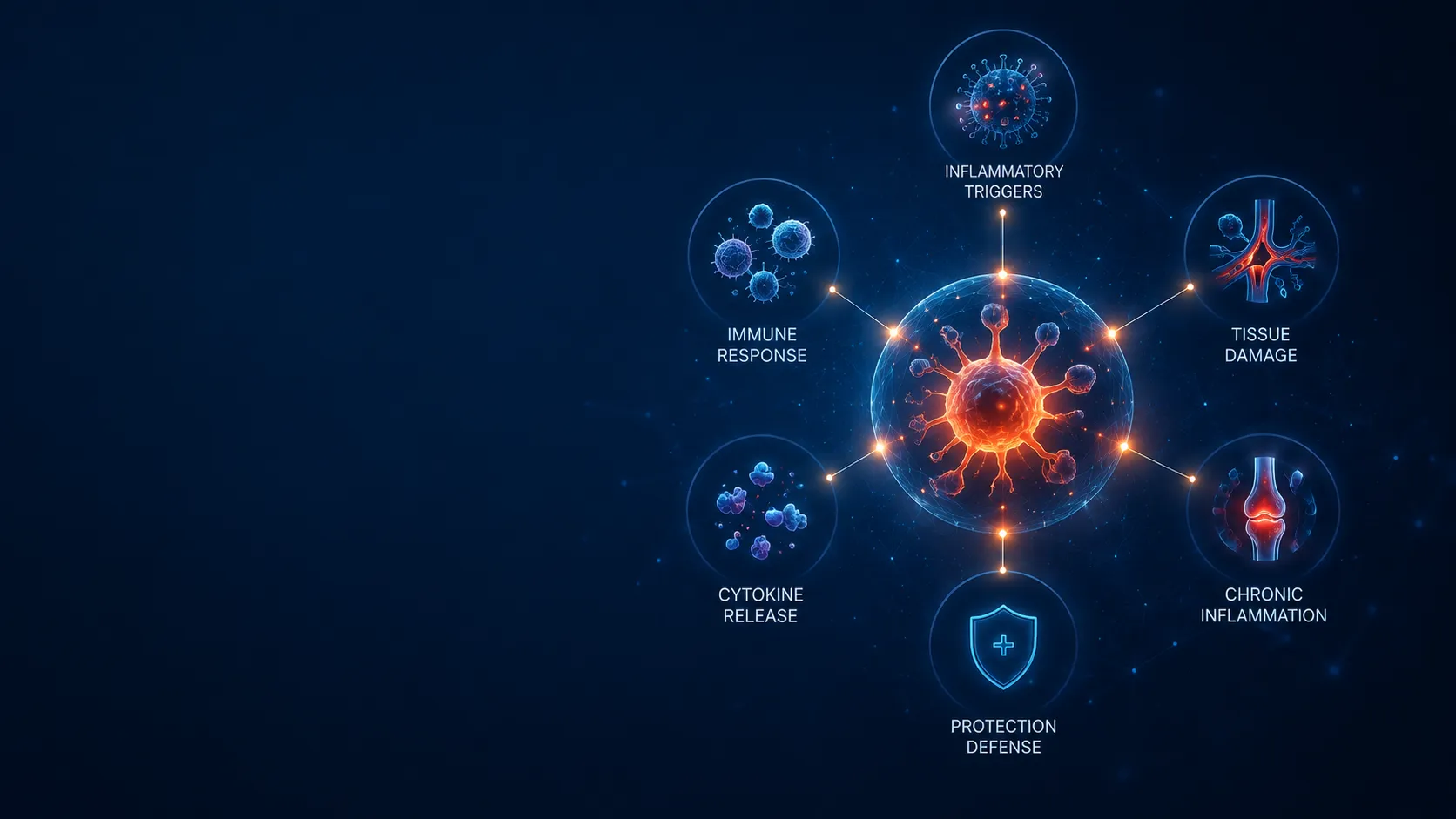
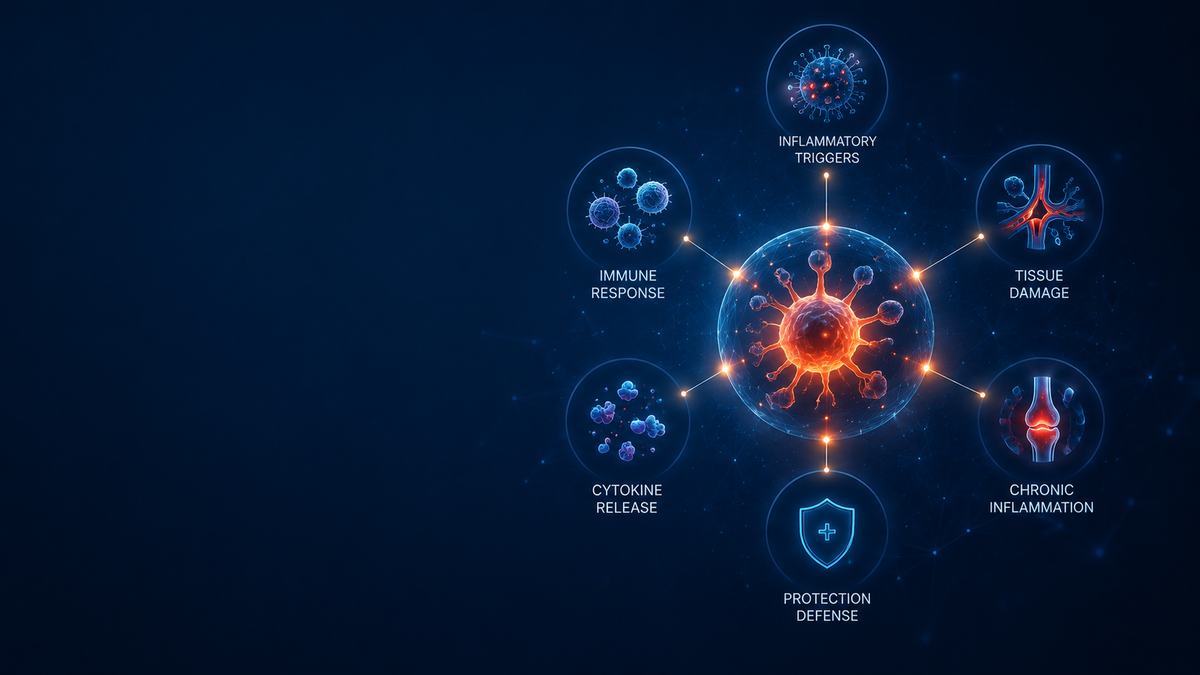
Inflammation is a program with a beginning, a workload, and a resolution phase.
Immune cells change state, signals recruit additional activity, vessels alter delivery, damaged structures are cleared, and tissue is remodeled. Each step consumes energy and changes the local cellular environment.
XIHE's physical-biology question is whether a precisely defined graphene graphene">far infrared exposure can influence measurable pathway behavior under controlled conditions. Preclinical observations can guide that question, but they cannot be translated directly into a human treatment claim.
Evidence Review
KEY TAKEAWAYS
- ◆
Inflammation is a context-dependent protective program, not a single harmful substance.
- ◆
Immune activity and resolution draw on the same energy and delivery systems discussed across XIHE's cellular-energy architecture.
- ◆
XIHE's graphene far infrared findings in this area are preclinical mechanism evidence, not a treatment claim.
鈫?/span> Cellular Energy -> Mitochondria -> energetic and redox context for immune activity.
鈫?/span> Oxidative Stress -> Recovery -> Far Infrared Graphene -> evidence review.
XIHE Relevance
Inflammation is not a product claim for XIHE. It is a mechanism layer that helps explain why physical-biology research must examine signaling, energy use, redox state, and cell behavior together.
XIHE contributes a defined graphene graphene">far infrared source and a published preclinical research path. The company should state what was observed, name the model and evidence level, and stop before translating those observations into human clinical promises.
Evidence Paths
Use these briefs and support pages to move from topic understanding toward evidence review and product evaluation.
Start Here
What Is Chronic Inflammation? Live
Start with the difference between acute response and unresolved chronic load.
How Does Inflammation Affect Energy? Live
A mechanism-first page for how immune signaling changes the cellular energy budget.

Inflammation and Recovery Biology Live
Use this when the real question is whether recovery is being delayed by unresolved inflammatory work.

Oxidative Stress Live
Review the redox layer that often sits next to inflammatory pathway language.
Core Reading
What Is Chronic Inflammation? Live
A clear explanation of low-grade inflammation and why it matters.
How Does Inflammation Affect Energy? Live
Why inflammatory signaling changes how energy gets used.
Inflammation and Recovery Biology Live
How acute response differs from unresolved chronic load.
Beyond Thermal Comfort: Macrophage Polarization and the Biological Recovery Environment Live
A closer look at recovery signaling and the transition toward resolution.

Hidden Signs Your Body Is Inflamed Live
Subtle patterns that often accompany higher inflammatory load.
Related Reading
Cross-hub routes that connect this topic to the wider graphene evidence network.
COMMERCIAL RELEVANCE
How this topic connects to supplier review, evidence validation, and product-level evaluation
Comparison Lens
How XIHE frames this topic against conventional category narratives
| Parameter | XIHE | Traditional |
|---|---|---|
| Biology frame | Initiation, workload, regulation, and resolution | Inflammation described only as something to suppress |
| Evidence frame | Preclinical pathway observations kept at mechanism level | Cell or animal findings promoted as human outcomes |
Applications
Oxidative Stress Context
Understand the redox layer that intersects with inflammatory signaling and mitochondrial workload.
Explore oxidative stressRecovery Context
See why resolution and tissue rebuilding are active, energy-dependent processes.
Explore recoveryClinical Evidence
Separate preclinical mechanisms from human evidence and finished-product claims.
Review evidence levelsBuyer Questions
Questions that connect this topic to product review and supplier conversations
Is the cited result preclinical, human, or product-specific?
Check the evidence levelDoes the page name the measured pathway rather than imply a disease outcome?
Review the mechanismDoes the intended product claim remain within its market and regulatory scope?
Discuss compliant positioningFAQ FOR EVALUATION
Is inflammation always harmful?
No. Acute inflammation is part of defense and repair. Problems can arise when the response is excessive, poorly regulated, inappropriate for the context, or not fully resolved.
What did XIHE's 2026 preclinical study investigate?
It investigated graphene far infrared exposure in relation to pathways associated with oxidative-stress regulation, chemokine signaling, and macrophage polarization in a preclinical model. It did not establish a human clinical outcome.
Can XIHE claim that graphene far infrared treats inflammation?
No. The public evidence supports a mechanism-level research discussion and defined engineering parameters. A treatment claim would require appropriate clinical evidence, regulatory scope, and product-specific validation.
This hub is for scientific education only. It does not provide medical advice or treatment recommendations. Mechanistic and preclinical findings should be interpreted within their study context.