Begin with what the product must do and where heat must appear. Identify the contact or working surface, heating area, warm-up expectation, operating environment and control strategy. This keeps the discussion tied to a product decision instead of a generic graphene claim.
Graphene Insights · Engineering notes
Graphene Heating Film OEM Buyer's Guide
A practical decision path for product teams comparing heating-film architecture, electrical inputs, integration constraints, validation evidence and production readiness.
product-integration 10 min read Updated 2026-09-21
An OEM should select a graphene heating film by the complete product requirement, not by a material label. Define the heating function, available geometry, electrical supply, surrounding materials and mechanical duty first. Then compare identified samples using stated methods and conditions, validate the assembled product, and preserve the approved configuration through pilot and repeat production.
Explore the component
Graphene Heating Film
Review the component, available supply formats and integration requirements for your product.
Engineering note 1
Define the product function before comparing films
Engineering note 2
Choose the supply route your team can integrate
Graphene conductive ink is a process material for teams that own printing, curing and layer formation. Graphene heating film is a component route with an active area, electrodes and protective construction. The right starting point depends on which manufacturing and integration work your team intends to control.
Engineering note 3
Translate the product envelope into electrical inputs
State the available voltage, current limit, heating area and control method. Resistance, power and power density must be evaluated together for the intended geometry. Electrical input alone cannot establish surface temperature because the assembled thermal path and heat loss also affect the result.
Engineering note 4
Define the complete thermal and mechanical stack
Record the substrate, adhesive, insulation, facing material, enclosure and mounting method. Then define whether the film remains flat, follows a fixed curve or moves repeatedly. A flexible sample photograph does not establish bend life, formed-assembly performance or temperature uniformity in the finished product.
Engineering note 5
Request evidence that identifies the sample and conditions
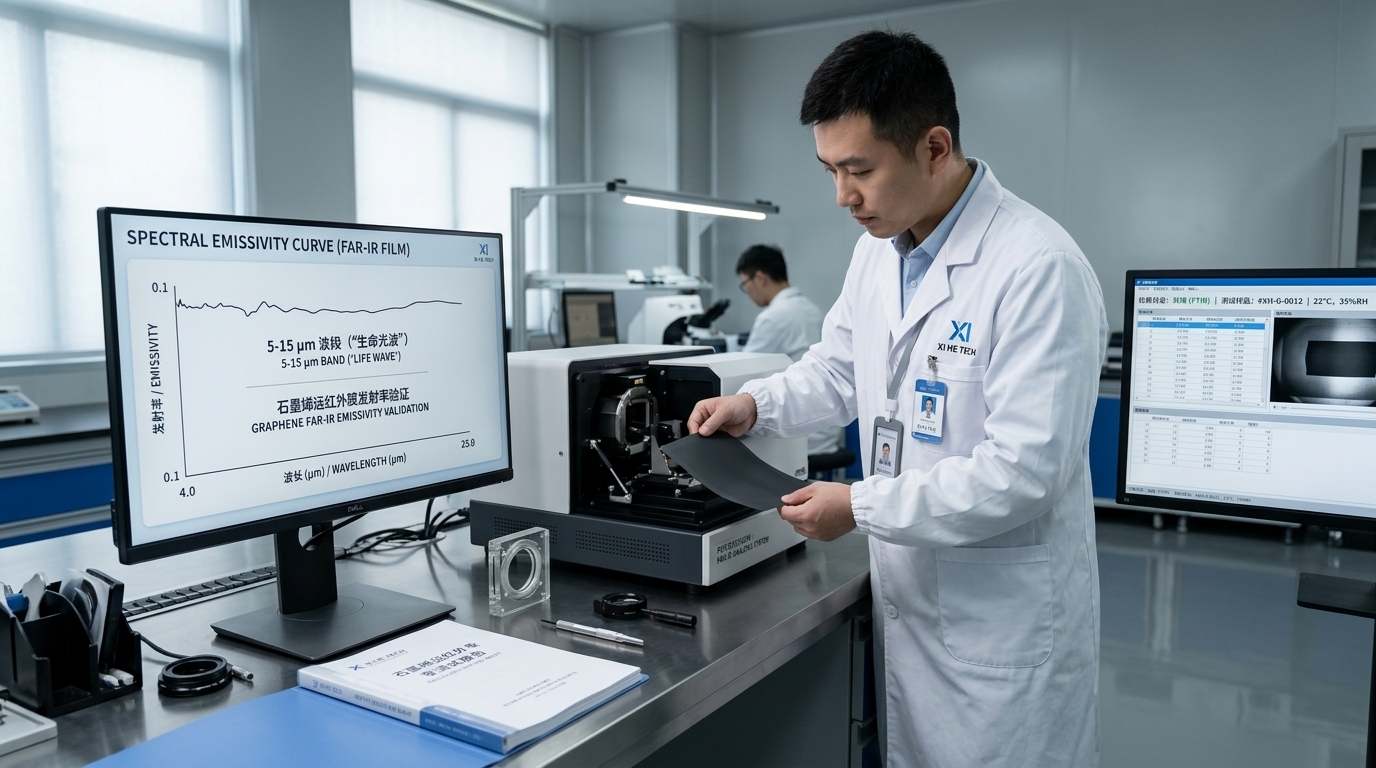
A useful result identifies the tested sample, method, equipment or standard where applicable, input, ambient and assembly conditions, date and permitted interpretation. Material characterisation, bare-film measurements and finished-product validation answer different questions and should not be substituted for one another.
Engineering note 6
Validate the assembled product against acceptance rules
Evaluate electrical behaviour, heating response, surface distribution, controls and the relevant mechanical or environmental duty after integration. Define the measurement region and acceptance rule before testing so a coloured image or isolated reading cannot be mistaken for complete validation.
Engineering note 7
Carry the approved configuration into production
Prototype approval should preserve the drawing revision, material stack, electrical configuration, process settings, inspection points and change-control rules needed for the pilot build. Repeat production depends on controlling those interfaces, not on reproducing the appearance of a successful sample.
Engineering note 8
Prepare a product integration brief for supplier review
Share the product type, development stage, heating area, voltage, power requirement, target surface condition, geometry, materials, mechanical duty, expected quantity and available drawings. Unknown fields can remain open; the brief should make the next engineering decision explicit.
Design guidance
Information to prepare before requesting a sample
- Product type, application and current development stage.
- Available heating area, geometry and surrounding layer structure.
- Voltage source, current limit and control approach.
- Target surface condition and the environment in which it is measured.
- Bending, forming, pressure, cleaning or ageing duty relevant to the product.
- Acceptance evidence the next sample must produce.
This guide organizes an OEM evaluation process. It does not publish a universal film specification, predict a finished-product temperature from incomplete inputs, or make a health or therapeutic claim. Measured values remain limited to their identified sample, method and conditions.
Next decision
Return the research to a product decision.
Review the component options, check the engineering evidence, or bring your requirements to a Technical Review.
Graphene Heating Film
Review component options and integration requirements.
Engineering Evidence
Translate the comparison into a sample, method, conditions and acceptance rule.
Technical Review
Apply the question to your geometry, electrical input and development stage.
Which question matters to your project?
Share the product, electrical input and assembly conditions to make the discussion specific.
Start Technical Review