
Product 01 · Material
Graphene Conductive Ink
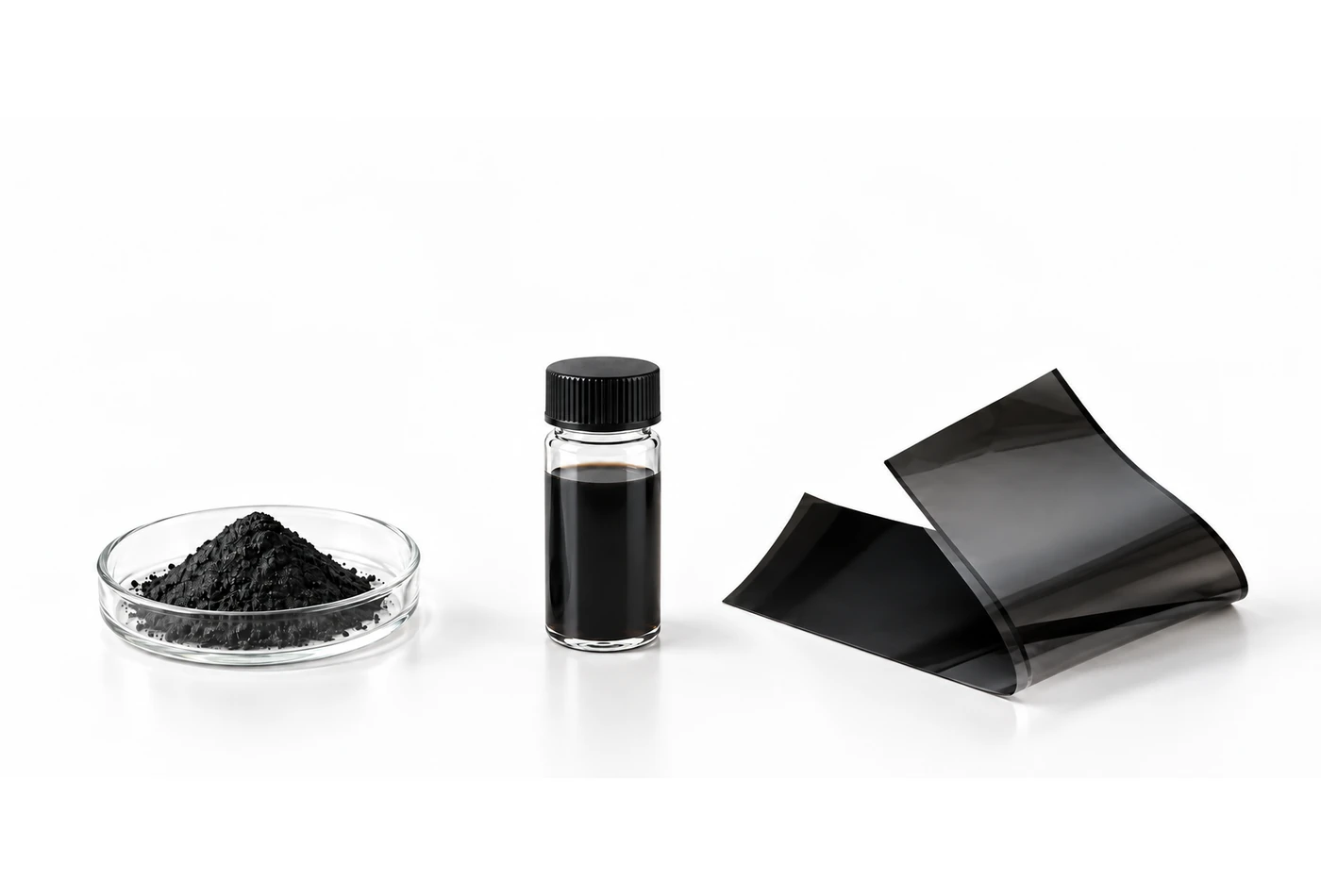
Graphene-based conductive ink for manufacturers developing printed heating layers. XIHE supports formulation selection, substrate matching and process evaluation, from a printed sample to a repeatable production recipe.
01 · Material definition
Turn a printed layer into a product function.
Graphene Conductive Ink is the material starting point of an electrothermal design. It is formulated to be printed, to form a conductive layer, and to behave predictably once that layer becomes a functional film.
Screen printing and roll-format processing let the functional pattern follow your product geometry. Ink selection, deposited thickness, drying and curing work together to set the electrical behaviour of the finished layer.
For a powered heater, the printed pattern needs electrodes, an electrical supply and suitable protection. Passive functional textile printing is a separate use of graphene-based materials: its garment history does not establish the output or production volume of an electric heating film.
Product fit
Begin with the printed layer you need to produce. Substrate compatibility, curing and the final electrical geometry determine whether a formulation fits the application.
Value for your product
What the integration helps you achieve.
Connect material selection to the product improvement and manufacturing decision that matter to your team.
Fit your production process
Select the formulation around screen printing or roll-to-roll coating, substrate temperature limits and the drying equipment you already use. Process fit makes the material useful on your line.
Control the printed result
Evaluate print definition, dry-film thickness, adhesion and sheet resistance together. This connects the purchased ink to the pattern and electrical performance your product requires.
Choose the right supply level
Process the ink in-house when your team owns printing and curing, or select a finished XIHE heating-film module when your team needs a component ready for integration.
02 · Architecture
From material to functional film.
From formulation to curing, each process step helps determine how the printed layer performs in your product.
- 01
Material
Graphene-based conductive material system.
- 02
Formulation
XH-1 / XH-2 series formulations for different printing and film-formation requirements.
- 03
Printing
Screen and roll-to-roll printing compatibility, defined per formulation.
- 04
Functional Film
The printed conductive layer as an electrothermal functional film.
Supply and sample selection
Start with what XIHE already provides.
Choose the supply format that fits your team, then agree the configuration for evaluation.
| Supply route or reference | What you can evaluate |
|---|---|
| Conductive material supply | Graphene-based ink for a printed functional layer. Choose this route when your team prints and processes the material. |
| Printed heating-film component | Choose a finished heating-film module when you need a component to assemble rather than an ink to process. |
| Formulation evaluation | Evaluate the selected ink on your own substrate. Review the cured pattern, adhesion and electrical behaviour before fixing the production recipe. |
Sample quantity, order quantity, included accessories and delivery schedule are agreed for the selected supply scope.
03 · Engineering characteristics
Define the specification for your assembly.
A formulation is selected for a process and a finished layer. Define these conditions before comparing material samples.
| Parameter | What to define |
|---|---|
| Substrate | Material, surface treatment, absorption, surface energy and allowable process temperature. |
| Deposition process | Printing or coating route, pattern resolution, layer thickness and production format. |
| Rheology and handling | Process-relevant viscosity method, mixing, storage and permitted handling conditions from the current formulation record. |
| Drying and curing | Temperature, dwell, ventilation and substrate limits for the selected formulation. |
| Electrical target | Sheet resistance of the cured layer, geometry, thickness and measurement conditions. |
| Adhesion and durability | Adhesion, bending and environmental requirements of the completed printed layer. |
04 · Product series
Choose the formulation around your process.
The XH-1 and XH-2 series are selected through a formulation review. Start with your substrate and printing route; XIHE matches the material sample and processing instructions to the layer you intend to manufacture.
Printing compatibility
- Screen printing
- Roll-to-roll coating
- Match viscosity and deposited thickness to the screen or coating setup; evaluate drying and curing within the substrate temperature limit.
- Measure the cured layer on the intended substrate, including adhesion after the bending or cleaning exposure expected in the product.

05 · Integration
Match the ink to your printing process.
Discuss these routes during technical review. Material compatibility and configuration availability must be confirmed for the intended assembly.
| Integration input | Review requirements |
|---|---|
| Substrates | Compatibility defined per formulation and curing route. |
| Film formation | Printed conductive layer as the functional layer of a heating film. |
| Downstream product | Feeds the Graphene Heating Film architecture. |
Engineering validation
See how this product is tested.
Validation lives in the Engineering evidence centre, with the method, the sample conditions and the boundary of each result.
Solutions this product serves
Case studies using this product
Related product
Continue along the material-to-component path.
The material and the component are one technology chain, documented separately.
Project requirements
Bring your heating requirement into focus.
Share the details available at your current development stage. The technical review starts by identifying the design constraints and the questions a sample needs to answer.
- Substrate specification and available surface preparation.
- Printing or coating process and equipment constraints.
- Target pattern, dry-film thickness and electrical requirement.
- Available drying or curing window.
- End-use mechanical and environmental conditions.
- Sample evaluation plan and intended production format.
Does this material fit your printing process?
Share the substrate, printing process, curing window, electrical target and intended production format. We will use them to frame the material review.
Review Printing Requirements