Solution · By Engineering Requirement
Low-Voltage Heating
Start from voltage, current and available energy, then define the heater resistance and active area.
Buyer question
Can the target thermal response fit the available voltage, current and energy budget?
Heating component
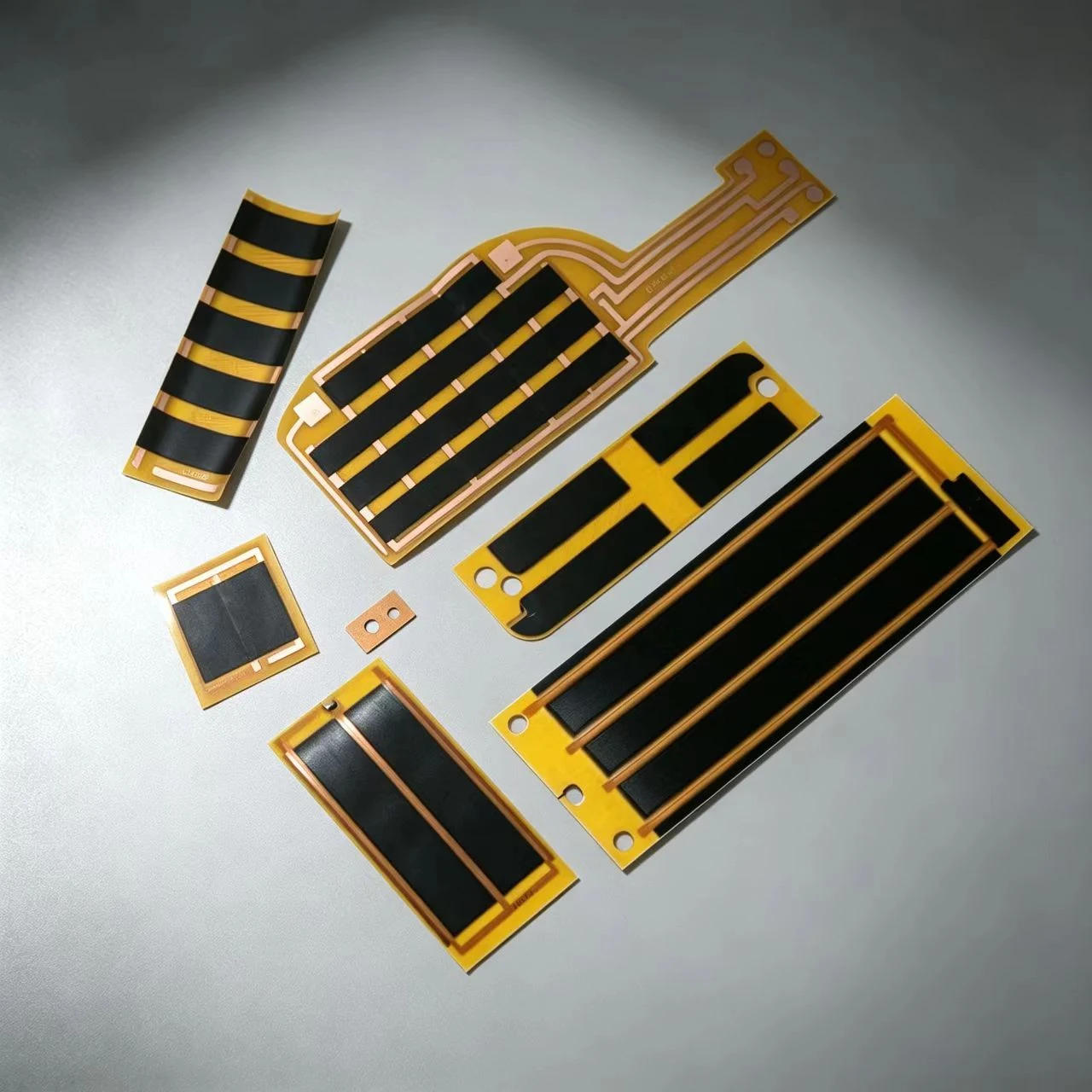
Graphene Heating Film
Review the component construction, available supply formats and integration requirements.
Validation evidence
Engineering Evidence
Translate the requirement into a sample, method, conditions and acceptance decision.
01 · The challenge
The engineering requirement.
Meet the thermal requirement without exceeding the electrical supply envelope.
- At fixed resistance, power varies with the square of applied voltage.
- Low-voltage systems can still draw substantial current and heat poor connections.
- Battery runtime depends on usable energy and average system demand.
02 · Design approach
The graphene heating film architecture.
The film is designed as part of the product build — layer by layer, with the electrical and mechanical constraints stated up front.
- Calculate the required resistance and current at the proposed nominal input.
- Check supply extremes, connector ratings and controller losses.
- Measure warm-up and steady demand on the assembled product.
What this enables for your product
Develop a heated product around the power source your design can accommodate. Matching film resistance, coverage and operating duty helps balance warmth, current demand and the available battery energy.
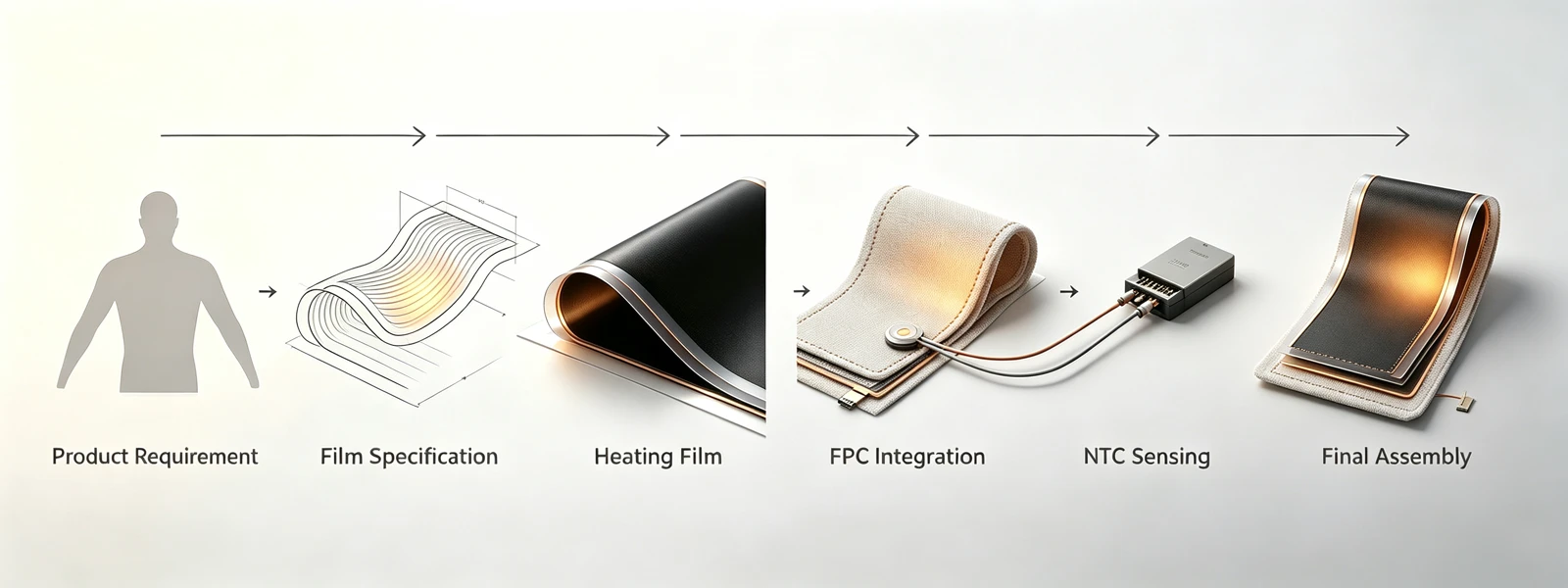
- 01
Functional layer design
- 02
Electrode and terminal design
- 03
Power input
- 04
Controller
- 05
Protection
03 · Engineering parameters
The parameters that decide this design.
Agree these inputs before selecting a film configuration or requesting a sample.
| Design input | What to establish |
|---|---|
| Input limits | Nominal, minimum and maximum voltage under load. |
| Resistance | Reference temperature, tolerance and change with temperature. |
| Power density | Electrical input divided by the defined active area. |
| Runtime | Usable energy, duty cycle and auxiliary loads. |
Validation focus
Measure voltage at the heater terminals and current through the heater. Include lead losses, supply variation and control duty cycle; do not infer a safe operating temperature from wattage alone.
04 · Relevant case studies
Explore the assembly decisions.
Explore existing product integrations and engineering assessments. Each record identifies the product context, design decisions and validation scope.

Existing product integration
Graphene Heating Eye Mask
Start with an existing heating eye-mask sample with a documented electrical rating, layer stack and timed controls. Discuss the sample configuration and OEM adaptations for your product.
View →
Engineering assessment
Head-Worn Heating Device
Integrating a planar heater around a curved shell requires control of fit, local strain, thermal contact and cable routing.
Product concept illustration from the XIHE archive.
View →05 · Prototype to production
The route from requirement to production.
Agree the required deliverables before moving from a sample to a pilot build.
- 01
Requirement Review
- 02
Heating Architecture
- 03
Prototype Development
- 04
Engineering Validation
- 05
Pilot Production
- 06
Mass Production
Define sample identity, test conditions and acceptance criteria with the Engineering evidence centre before releasing a configuration for the next build stage.
Does this match your requirement?
Describe the product, the heating area and the electrical constraints. We will review the heating architecture with you.
Start Technical Review