
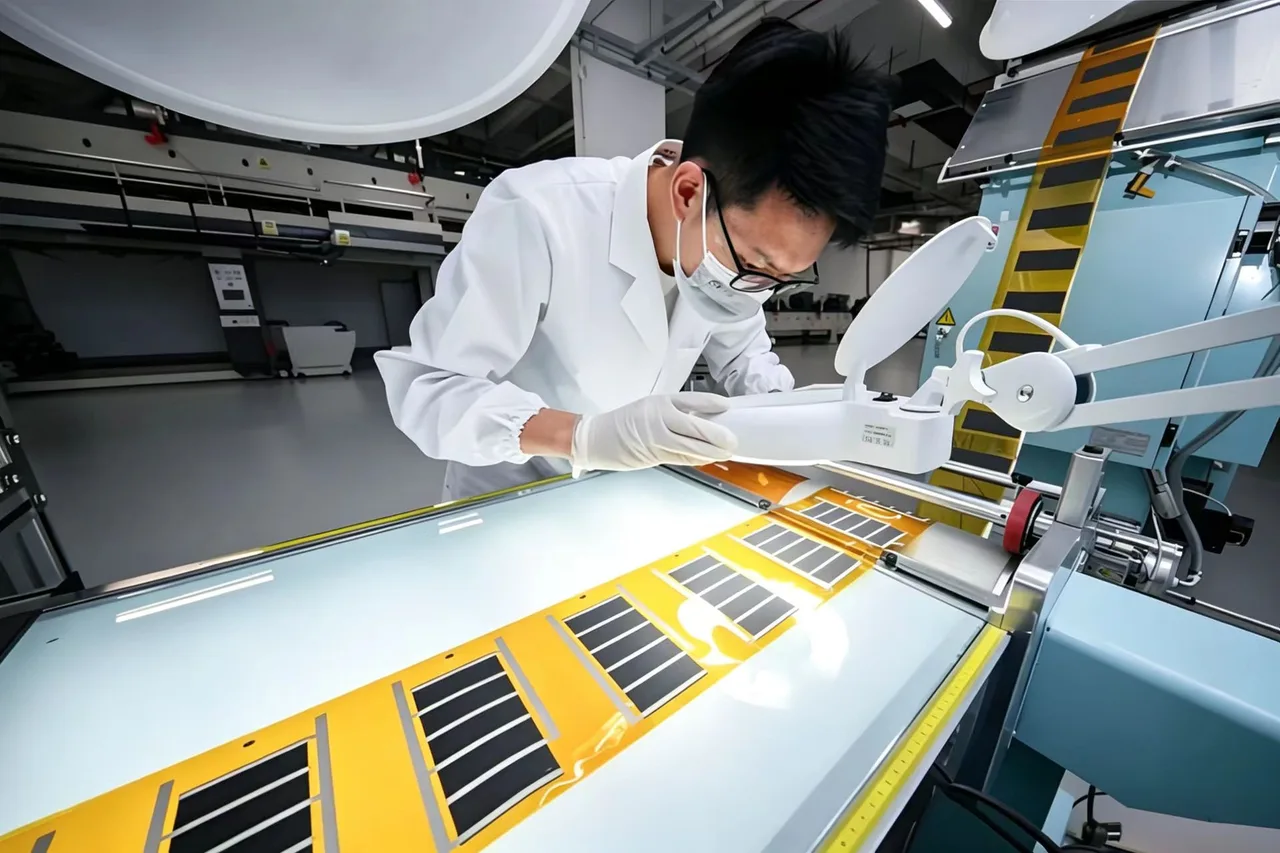
Illustrative manufacturing scene. See the production archive photographs and process requirements below.
Manufacturing
Manufacturing and Scale-Up
Start with existing film modules or an OEM product configuration. Connect material processing, patterned film inspection and assembly requirements to the product you intend to manufacture.
Existing supply capability
Film components and finished-product OEM.
XIHE supplies standard- and custom-dimension heating-film modules, with integration documentation and engineering support. Existing products provide a starting point for OEM adaptation.
Heating-film modules
Encapsulated heating elements bring the active layer, electrodes and connections into a component that a partner can integrate. Match the selected module to the product drawing and assembly requirements.
Review component supply →Existing product adaptation
The eye-mask sample and batch-produced Capsule make textile and enclosure integration concrete. Begin with an existing configuration, then define changes to the product, branding and supplied assembly.
Explore existing integrations →Testing behind the component
The engineering records include bending, continuous operation, cycling and environmental results. Use the identified sample and method to define the checks relevant to the configuration being ordered.
Review test records →Value in production
Resolve the issues that turn into rework.
The useful manufacturing question is whether the agreed heating function survives printing, assembly and repeat production.
| OEM challenge | Process response | Value for your team |
|---|---|---|
| Inconsistent heat between units | Connect printed thickness, curing and resistance checks to the agreed electrical load. | A repeat-order specification that defines more than appearance. |
| Hot and cold regions after integration | Review electrode layout, edges, facing material and contact pressure in the assembled product. | A heating pattern and layer stack matched to the surface your customer uses. |
| Failures around leads and folds | Place connections away from repeated fold regions and define strain relief and encapsulation. | Mechanical interfaces considered before the assembly is released. |
| Rework when a sample becomes a batch | Freeze the drawing and materials, evaluate pilot variation and identify inspection points. | A shared configuration for purchasing, assembly and quality review. |
Production assurance
Four records connect a prototype to repeat production.
A manufacturing claim becomes useful to a buyer when the controlled inputs, inspections, traceability and release handoff are visible.
Process control
Which settings and materials define the approved build?
Freeze the drawing, material stack, formulation or process window, and record approved changes by revision.
Review this control →Inspection
Which characteristics decide whether a unit can move forward?
Agree dimensional, electrical and thermal checks, sampling rules and acceptance limits for the ordered configuration.
Review this control →Traceability
Can a result be traced back to the right material and build?
Connect batch identity, drawing revision, process records and inspection results to the delivered lot.
Review this control →Manufacturing handoff
What must purchasing, engineering and production agree before release?
Align supply scope, configuration, acceptance records, packaging, quantity and approved deviations.
Review this control →These are the records a project should define. They do not assert a certified quality system, facility capacity or an approved production configuration without project evidence.
Capability chain
Material to repeatable production.
Review the process from material selection to an agreed production configuration. Define responsibilities and the required records at each stage.
- 01
Material
Start with a defined material and an identifiable batch.
- 02
Formulation
Match the formulation to the substrate and printing route.
- 03
Printing
Keep the printed pattern and deposited layer consistent.
- 04
Film Manufacturing
Connect the curing process to the electrical result.
- 05
Lamination / Assembly
Protect the heater and support its electrical connections.
- 06
Quality Control
Inspect the characteristics that affect the finished product.
- 07
Scale-Up
Carry the agreed sample into repeat orders.
Stage 01 · Material
Start with a defined material and an identifiable batch.
Material variation carries forward into the printed layer. Define the selected material, incoming condition and storage requirements so a later electrical or coating issue can be traced to the right batch.
- Incoming material definition
- Batch identification
- Material consistency checks
Project release requirements
- Material identification and supplier or batch reference.
- Incoming inspection criteria linked to the selected formulation.
- Storage and handling conditions for the selected material.
Stage 02 · Formulation
Match the formulation to the substrate and printing route.
Printing behaviour depends on the formulation as well as the equipment. Review viscosity, dispersion and film formation against the selected substrate and drying window, then retain the agreed recipe and handling instructions for repeat orders.
- Formulation record
- Batch formulation control
- Change control
Project release requirements
- Formulation revision and permitted process window.
- Batch preparation and traceability record.
- A change-review rule for formulation or material substitutions.
Stage 03 · Printing
Keep the printed pattern and deposited layer consistent.
Print definition, coverage and deposited thickness affect resistance and local heating. Check pattern registration, edges and electrode interfaces together, especially when moving from a small sample to a larger or repeated roll-format pattern.
- Pattern and dimensional control
- Print parameter record
- Layer inspection

Project release requirements
- Approved pattern, electrode geometry and registration tolerance.
- Print or coating parameters and inspection locations.
- Sample acceptance criteria for the deposited layer.
Stage 04 · Film Manufacturing
Connect the curing process to the electrical result.
Drying and curing must produce the intended layer without exceeding substrate limits. Measure the finished film after processing: at a fixed voltage, a change in resistance changes power, so visual similarity alone is not an acceptance check.
- Curing / process window
- Electrical testing of the film
- Film handling and storage
Project release requirements
- Curing and finishing sequence for the selected construction.
- Resistance and visual-inspection records tied to the film batch.
- Handling limits and protection during transfer to assembly.
Stage 05 · Lamination / Assembly
Protect the heater and support its electrical connections.
Lamination adds insulation and environmental protection but also changes the heat path. Define facing materials, adhesive, edge sealing and lead strain relief together. Repeat thermal checks in the intended assembly, including bends and contact pressure.
- Lamination parameters
- Terminal and connection integrity
- Assembly record
Project release requirements
- Layer stack, adhesive and assembly pressure or temperature limits.
- Terminal attachment and strain-relief inspection.
- Pre-closure electrical and insulation checks.
Stage 06 · Quality Control
Inspect the characteristics that affect the finished product.
Use dimensional checks to confirm fit, resistance and power checks to confirm the electrical load, and thermal mapping to examine the active area. Agree the sampling plan, limits and inspection records for the ordered configuration.
- Dimensional inspection
- Electrical testing
- Thermal testing
- Quality inspection records
Project release requirements
- Agreed drawing and inspection revision.
- Sampling plan, measurement methods and acceptance limits.
- Disposition of nonconforming material and traceable release record.
Stage 07 · Scale-Up
Carry the agreed sample into repeat orders.
For custom designs, pilot builds expose variation in printing, electrical connections and lamination before the design is released for volume. For existing products, begin with the available configuration and identify which requested changes need a new evaluation.
- Prototype to pilot gate
- Batch consistency
- Production traceability
- Configuration control
Project release requirements
- Pilot-build comparison against the qualified sample.
- Control plan for critical electrical and thermal characteristics.
- Volume, lead time, packaging and change-notification agreement.
Prototype to production
Start from an existing product or a custom requirement.
Existing modules and products provide a concrete starting point. Custom changes follow the development steps needed for the affected materials, electrical design and assembly.
- 01
Requirement Review
- 02
Heating Architecture
- 03
Prototype Development
- 04
Engineering Validation
- 05
Pilot Production
- 06
Mass Production
Agree the configuration, inspection plan, packaging, volume and delivery schedule for the project. A prototype establishes a design starting point; a pilot build must demonstrate that the agreed process can reproduce it.
Connected layers
Connect the production plan to the qualified design.
A production route only matters once the component and its validation are defined. These are the layers upstream.
What is being manufactured
What has already been built
Who is behind it
Order preparation
Make the production handoff clear.
Use the agreed sample and specification to align purchasing, engineering and production before the order is released.
| Handoff item | What to agree |
|---|---|
| Product definition | Module or finished-product scope, drawing revision, active area, terminals and included accessories. |
| Electrical and thermal acceptance | Rated input, resistance or power limits, temperature measurement surface and operating conditions. |
| Materials and assembly | Substrate, protective layers, attachment method, lead routing and approved changes. |
| Order and delivery | Sample or production quantity, packaging, batch identification, required documents and agreed schedule. |
Planning a production stage?
Bring the configuration, quantity and timeline to a Technical Review. Together we can define the checks needed before production release.
Discuss Production Requirements