Solution · By Engineering Requirement
Flexible Heating
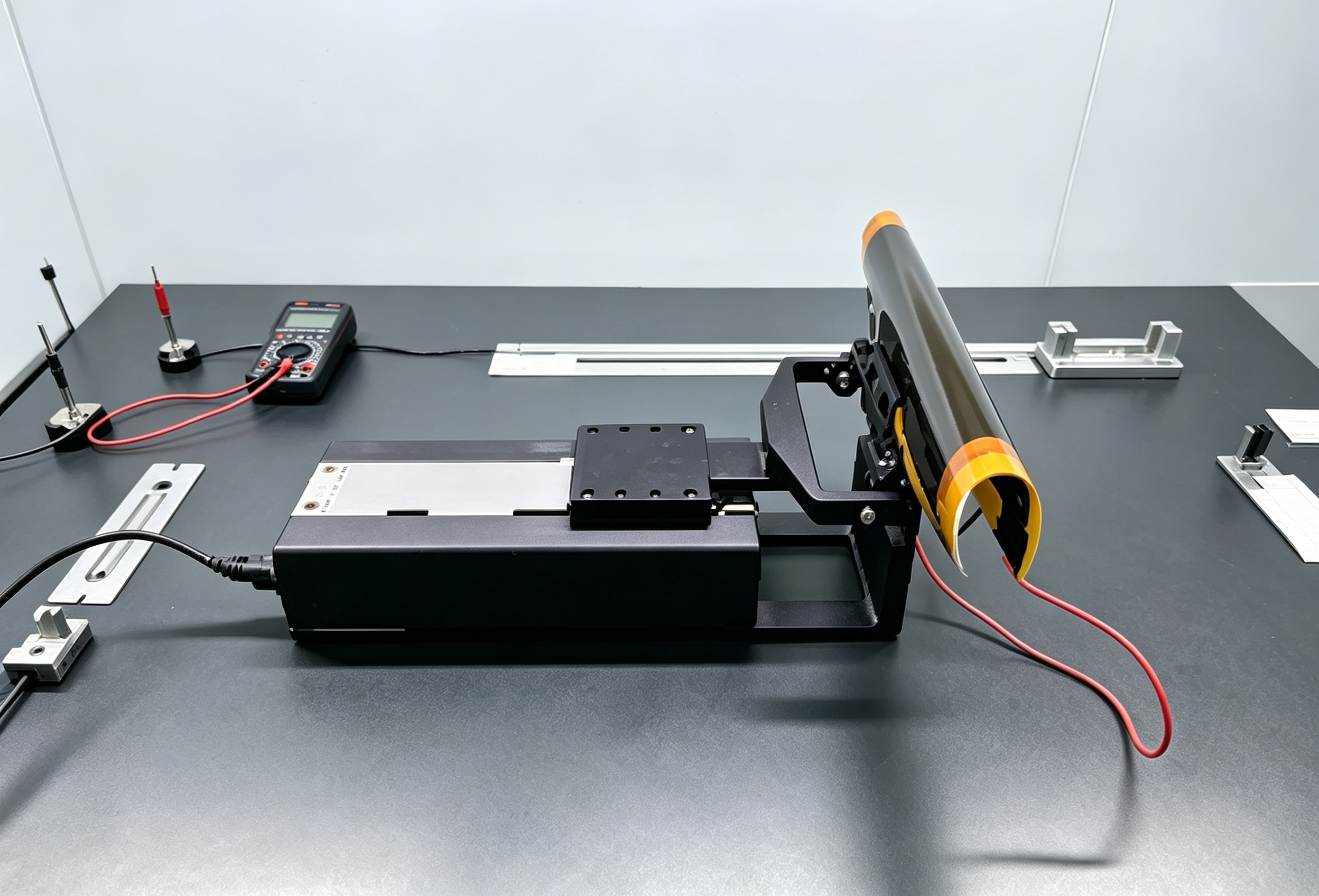
Design for the bend the product actually makes, including the laminate, electrodes and connections.
Buyer question
Can the heating assembly survive the bend the product actually makes?
Heating component
Graphene Heating Film
Review the component construction, available supply formats and integration requirements.
Validation evidence
Engineering Evidence
Translate the requirement into a sample, method, conditions and acceptance decision.
01 · The challenge
The engineering requirement.
Maintain the required electrical and thermal behaviour through the specified mechanical use.
- Bend strain depends on layer position, total thickness and radius.
- Repeated bending can fatigue electrodes and joints before the centre of the film.
- Bending, folding and stretching are different requirements.
02 · Design approach
The graphene heating film architecture.
The film is designed as part of the product build — layer by layer, with the electrical and mechanical constraints stated up front.
- Define bend axis, radius, direction and whether the heater is powered during motion.
- Review the conductive layer relative to the mechanical neutral axis of the laminate.
- Measure electrical and thermal changes after the specified deformation.
What this enables for your product
Bring heating into a product that bends in use. Selecting the laminate, bend direction and connection position together helps preserve flexibility while addressing stress at leads and electrodes.

- 01
Substrate selection
- 02
Printed functional layer
- 03
Electrode and terminal design
- 04
Lamination
- 05
Assembly route
03 · Engineering parameters
The parameters that decide this design.
Agree these inputs before selecting a film configuration or requesting a sample.
| Design input | What to establish |
|---|---|
| Bend geometry | Axis, minimum radius, layer thickness and direction. |
| Duty cycle | Static curvature or repeated movement; powered or unpowered. |
| Terminations | Lead routing, joints and strain-relief anchors. |
| Acceptance | Resistance change, insulation integrity and surface-temperature map. |
Validation focus
Document the fixture, travel, radius, rate and cycle definition. Compare resistance at the same reference temperature before and after testing to distinguish temperature effects from damage.
04 · Relevant case studies
Explore the assembly decisions.
Explore existing product integrations and engineering assessments. Each record identifies the product context, design decisions and validation scope.

05 · Prototype to production
The route from requirement to production.
Agree the required deliverables before moving from a sample to a pilot build.
- 01
Requirement Review
- 02
Heating Architecture
- 03
Prototype Development
- 04
Engineering Validation
- 05
Pilot Production
- 06
Mass Production
Define sample identity, test conditions and acceptance criteria with the Engineering evidence centre before releasing a configuration for the next build stage.
Does this match your requirement?
Describe the product, the heating area and the electrical constraints. We will review the heating architecture with you.
Start Technical Review