QUICK TAKE
Cellular Landscape is a Digizyme scientific visualization by Evan Ingersoll and Gael McGill. It is a visual reference assembled from structural biology datasets, not a live-cell experiment or evidence of any thermal-product effect.
Digizyme created a detailed visualization of a eukaryotic-cell cross-section. The most useful takeaway is not visual novelty. It is the reminder that cellular energy production happens inside a dense physical environment.
TL;DR
The visualization integrates structural biology datasets to depict the cell interior as crowded, organized, and physically constrained rather than as a loose fluid space. That context is relevant to how mitochondria and ATP-producing machinery occupy cellular space, but the artwork does not measure cellular recovery or intervention effects.
Why This Matters
Node 1 - The Visualization Gap
Individual molecules are smaller than the wavelength of visible light, so no single optical image can capture a living cell at this level. For years, cell biology has been reconstructed from fragmented views. This model helps unify those fragments into one coherent physical landscape.
Node 2 - The Physical Reality of the Cell
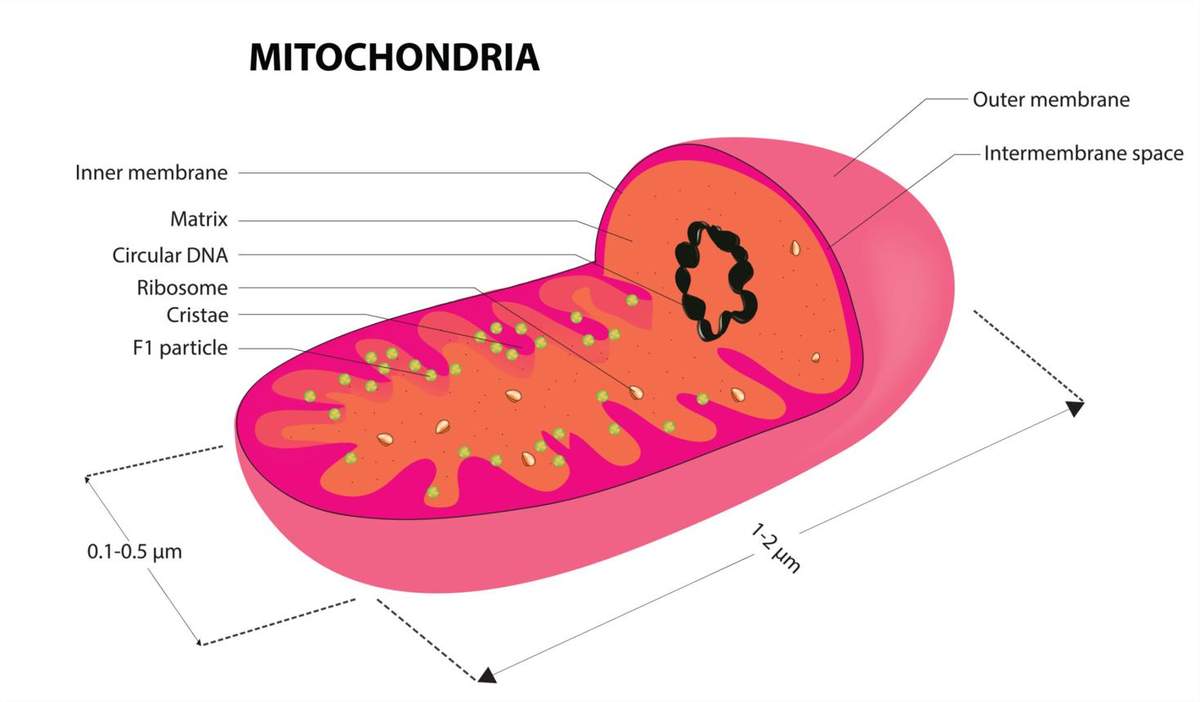
Mitochondria are not isolated power units floating in empty space. They operate inside a crowded, viscous, spatially constrained environment. That means cellular energy production is not only biochemical. It is also physical.
Node 3 - Physical Conditions Matter
The intracellular environment is structured and dynamic. This makes physical conditions a legitimate subject of biological research, but the visualization itself does not test temperature, circulation, hydration, local energy transfer, or any external physical input.
Key Parameters
- Project: Cellular Landscape, cross-section through a eukaryotic cell
- Creators: Evan Ingersoll and Gael McGill, Digizyme
- Data Sources: X-ray crystallography, NMR spectroscopy, cryo-electron microscopy
- Core Insight: Cellular interiors are physically crowded and highly structured
- Energy Relevance: A visual reference for the spatial context in which cellular energy conversion occurs
XIHE Connection
This visualization reinforces a principle XIHE uses throughout its science architecture: cellular energy should not be discussed as chemistry alone.
Cellular conditions are a research question, while XIHE’s far infrared graphene platform is an engineering question defined through measurable emitter behavior, including emission band, emissivity, and product-format control.
Readers who want that engineering layer can continue to the Far Infrared Graphene hub.
Interpretation Boundary
This article does not claim that a visualization project validates any XIHE product or establishes a biological effect from an external physical input. It is used only as a visual reference for the fact that cellular energy conversion takes place in a structured physical environment.
Source
Digizyme: Cellular Landscape, created by Evan Ingersoll and Gael McGill. The project describes a eukaryotic-cell cross-section assembled with molecular-visualization tools and structural datasets including X-ray crystallography, NMR spectroscopy, and cryo-electron microscopy.