QUICK TAKE
This article reviews a March 2026 International Journal of Molecular Sciences preclinical study of graphene-based far infrared input (5-15 um, characteristic peak 9.4 um). The reported observations include macrophage polarization, inflammatory cytokine changes, and Nrf2-related response markers. The study provides mechanistic context, not proof of a human treatment effect or clinical outcome.
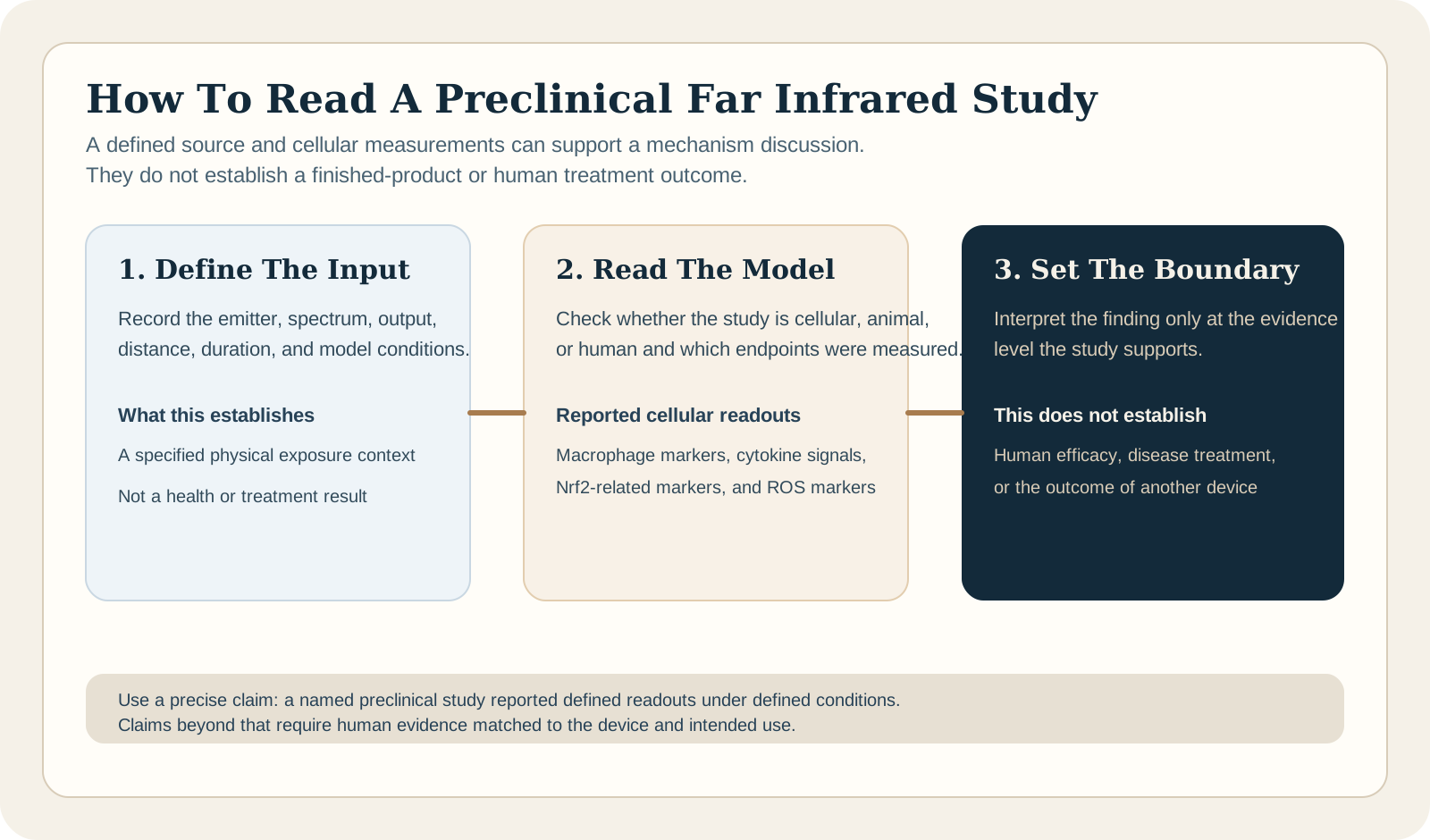
In March 2026, XIHE Technology reported a preclinical study in the International Journal of Molecular Sciences (IJMS). The useful way to read the paper is as an evidence-chain question:
- What physical input did the graphene far infrared emitter produce?
- Which cellular and inflammatory signals were measured after exposure?
- Which conclusions remain limited to a controlled preclinical setting?
That order matters. A measured physical input is not the same thing as a clinical benefit.
The Physical Input
The study used a graphene-based far infrared emitter. The key measured parameters were:
- Emission band: 5-15 um
- Characteristic peak: 9.4 um
- Emissivity: 0.88 (NIQS-tested)
- infrared radiant output efficiency: 68%
These parameters describe the physical characteristics of the emitter, not the biological outcome. Separating physical input from biological response is fundamental to mechanism research.

Proposed Mechanism and Observed Signals
Physical Input to Biological Observation
Graphene FIR Emitter
5-15 um | Peak 9.4 um | Emissivity 0.88
->
Candidate Cellular Interaction
A proposed biophysical context, not a standalone clinical mechanism
->
Macrophage Polarization Signal
Reported M1-to-M2 shift in the preclinical model
->
Cytokine Pattern
TNF-alpha, IL-1beta, IL-6 down | IL-10 up in the reported model
->
Nrf2-Related Response
Nrf2 pathway activity and antioxidant markers were assessed
->
ROS Marker Change
Reactive oxygen species markers were reported lower
->
Inflammation-Resolution Context
A mechanistic interpretation, not a human treatment result
Reported Findings
Summary Box
Graphene FIR Emitter
5-15 um | Peak 9.4 um | Emissivity 0.88 | 68% Efficiency
Observed
M1 -> M2 Macrophage Shift
Pro-inflammatory -> pro-resolution
Observed
Cytokine Regulation
TNF-alpha, IL-1beta, IL-6 down | IL-10 up
Observed
Nrf2 Pathway Activation
Antioxidant gene expression up
Observed
ROS Reduction
Oxidative stress marker down
Reported preclinical signals only - not a clinical outcome
What the Study Found
1. Macrophage Polarization Shift
Macrophages are immune cells that exist on a functional spectrum. At one end, M1 macrophages drive inflammation, necessary for defense but damaging when sustained. At the other, M2 macrophages promote tissue repair and resolution.
The study observed a shift from M1-dominant toward M2-dominant macrophage populations following FIR exposure. This is not a clinical endpoint. It is a mechanistic observation: the physical stimulus appeared to influence how immune cells positioned themselves along the inflammatory-repair spectrum.
2. Cytokine Regulation
Cytokines are signaling proteins that coordinate immune responses. The study measured changes in four key cytokines:
| Cytokine | Direction | Biological Role |
|---|---|---|
| TNF-alpha | Downregulated | Pro-inflammatory, amplifies immune response |
| IL-1beta | Downregulated | Pro-inflammatory, fever and pain signaling |
| IL-6 | Downregulated | Pro-inflammatory, acute phase response |
| IL-10 | Upregulated | Anti-inflammatory, resolves immune activation |
The pattern, pro-inflammatory cytokines down and anti-inflammatory cytokine up, is consistent with a shift from active inflammation toward resolution.
3. Nrf2 Pathway Activation
Nrf2 (Nuclear factor erythroid 2-related factor 2) is a transcription factor that controls the expression of antioxidant proteins. When activated, Nrf2 translocates to the cell nucleus and triggers the production of enzymes that protect against oxidative damage.
The study observed Nrf2 pathway activation following FIR exposure, along with a measurable reduction in reactive oxygen species (ROS). This suggests that the physical stimulus may engage endogenous antioxidant defense mechanisms.
Why This Matters for Far Infrared Graphene Research
Much of the public discussion around far infrared therapy focuses on subjective experience.
This study shifts the conversation toward an evidence chain that can be inspected and challenged:
- A defined physical input (emission band, peak wavelength, emissivity)
- A measured biological response (macrophage shift, cytokine change, Nrf2 activation)
- A testable hypothesis about how a defined FIR input may interact with cellular signaling
The distinction is important for XIHE’s far infrared graphene platform. Graphene is not being used here as a shortcut from material to medical promise. It is the emitter material used to define and reproduce the physical input before a biological response is measured.
What This Study Does and Does Not Establish
Mechanism studies can establish biological plausibility, but they do not prove clinical efficacy.
This study helps connect a defined graphene far infrared input with measurable cellular and inflammatory observations in a controlled preclinical model. It does not establish that a human will experience a therapeutic benefit, that inflammation will resolve in a clinical setting, or that the findings apply to every device or exposure protocol.
Scientific fields advance by connecting physical inputs with measurable biological responses, then testing those links through independent replication and appropriately designed human research.
This is how a category moves from anecdote to evidence. Not through marketing claims, but through published, peer-reviewed mechanism data that can be replicated, challenged, and built upon.
Limitations
The study is preclinical. It was conducted in a controlled laboratory environment. The results should not be extrapolated to clinical outcomes in humans without further research.
The findings should therefore be treated as a contribution to the mechanism evidence base, not as a product efficacy claim.
Connection to the Biological Cost Framework
Inflammatory signaling is one part of the broader Biological Cost framework used in XIHE’s Healthy Aging Hub. Persistent or poorly resolved biological load can consume reserve that would otherwise support repair and daily function. The IJMS study does not measure healthy aging or human energy levels; it supplies a preclinical mechanism signal that can be placed inside that larger evidence map without overstating what it proves.
Read the Full Paper
The complete study is available open-access in the International Journal of Molecular Sciences:
IJMS 2026 - Graphene Far Infrared Radiation and Macrophage Polarization