What Is Mitochondrial Health? The Energy Layer Far Infrared Research Tries to Reach
Mitochondrial health describes how well cells convert fuel into ATP, maintain energy stability, manage oxidative signals, and adapt to demand. It matters because this is the energy layer far infrared research tries to influence cautiously.
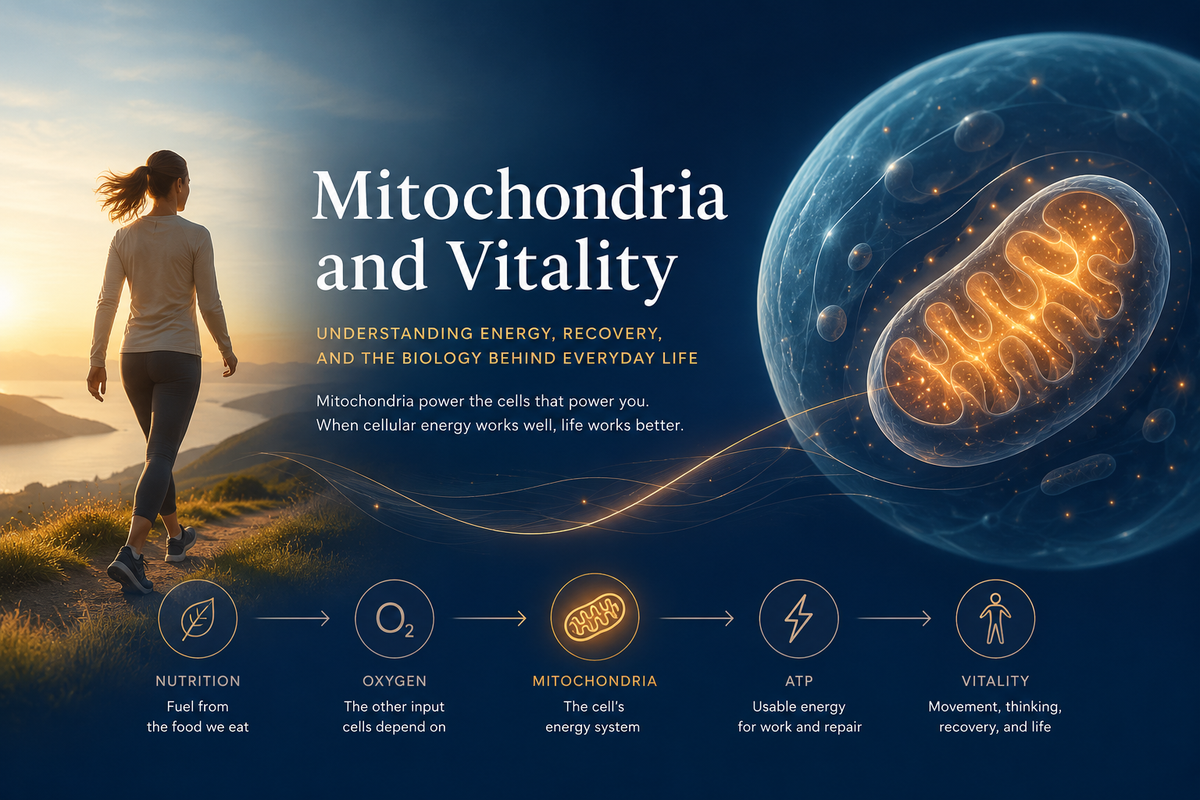
QUICK ANSWER
Mitochondrial health is the capacity of a cell's mitochondrial network to convert fuel and oxygen into ATP while maintaining membrane potential, controlling oxidative signals, and adapting to changing energy demand. It matters in far infrared research because this is one of the key biological endpoint layers being discussed, not because emitter data alone can prove mitochondrial change.
Reference Signals
Mitochondrial health describes the ability of a mitochondrial network to produce ATP reliably, preserve electrochemical function, regulate oxidative signals, and adapt its capacity to cellular demand.
KEY POINTS
- ◆
Mitochondrial health is a functional spectrum, not an on-or-off state.
- ◆
ATP output matters, but stability, quality control, and adaptation matter too.
- ◆
Sleep, movement, nutrition, illness, medication, and environmental stress can all change energy demand or mitochondrial capacity.
Mitochondrial Health in One Sentence
Mitochondrial health is the ability of a cell’s mitochondrial network to meet energy demand without losing stability.
It is also one of the main biological endpoint layers far infrared research is trying to reach, which is why the topic matters to XIHE.
Four questions make the idea practical:
- Can the network produce ATP when the cell needs it?
- Can it maintain the membrane potential that powers ATP synthesis?
- Can it keep oxidative signals within a useful range?
- Can it renew, remove, and expand mitochondrial capacity over time?
This is why mitochondrial health is not one number. It is the performance of an energy system.
Why Fuel Does Not Always Feel Like Energy
People often describe energy as if the body were a fuel tank. Eat, sleep, and refill.
But fuel is only the starting material. A cell still has to convert nutrients into ATP, move that ATP to where work is happening, and restore the gradients used during that work.
When demand rises faster than the system can respond, a person may notice lower endurance, slower recovery, or reduced tolerance for stress. Those experiences are real, but they are not specific enough to identify a mitochondrial problem on their own.
The useful question is not simply, “Do I have enough fuel?” It is, “How effectively is my cellular energy system matching supply to demand?”
Read Energy Conversion Before Any FIR Claim
Mitochondrial health gives us a better model than “more energy” or “less energy.”
It separates three parts of the problem:
- Inputs: nutrients, oxygen, and metabolic signals.
- Conversion: the reactions and electrochemical gradient used to make ATP.
- Adaptation: the ability to increase, reorganize, or renew mitochondrial capacity.
This is the difference between fuel and function. More fuel cannot correct every bottleneck. Sometimes demand is too high. Sometimes oxygen delivery is constrained. Sometimes sleep, illness, medication, inactivity, or training load changes how the system operates.
The framework helps a reader ask better questions without turning a broad symptom such as fatigue into a diagnosis.
It also explains why far infrared claims should stay disciplined: if the mitochondrial endpoint is not measured directly, the claim should remain contextual rather than absolute.
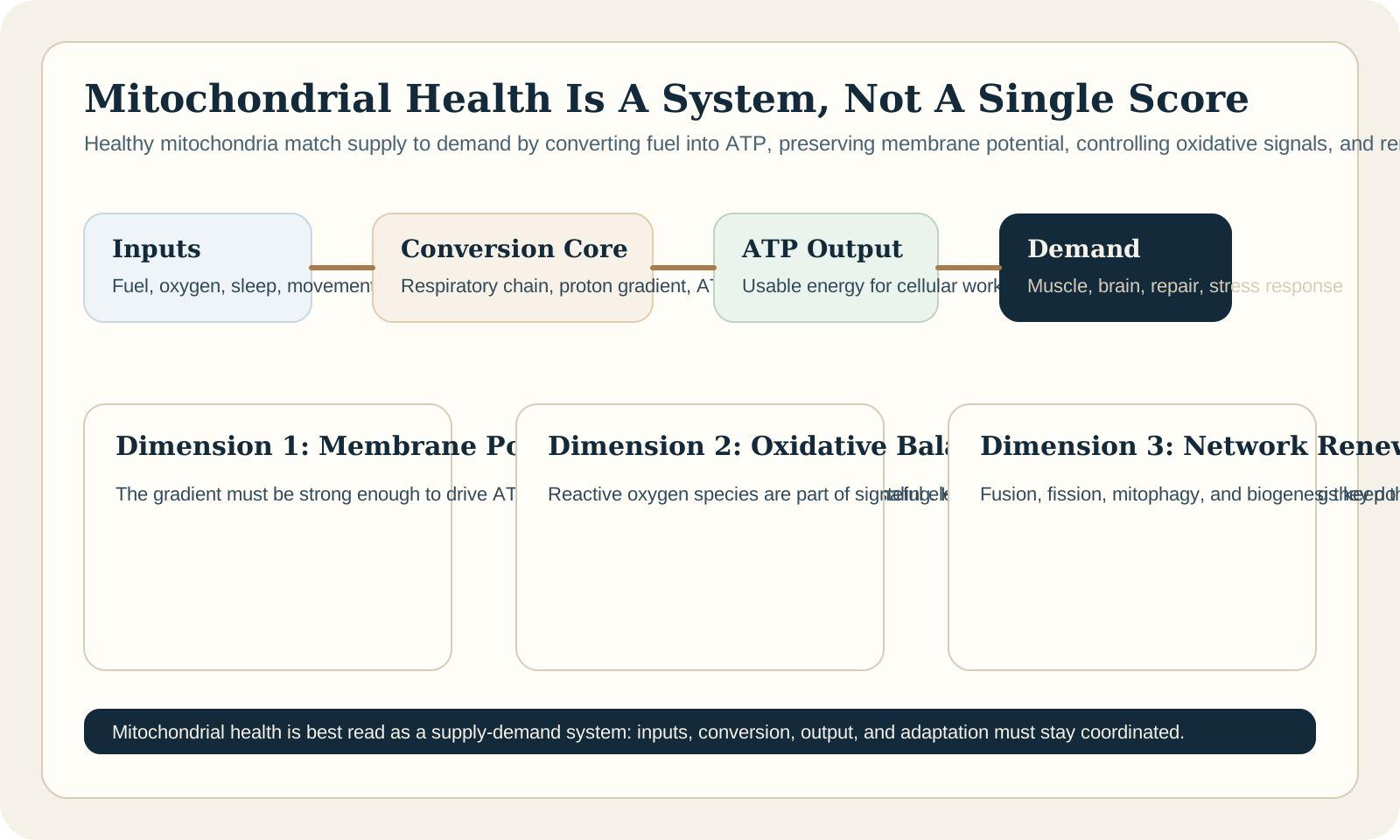
Visual Knowledge Map

Four interconnected dimensions determine whether a mitochondrial network is operating efficiently:
- ATP Output —how much usable energy the system can generate
- Membrane Potential —the electrical gradient that drives ATP synthesis
- Oxidative Balance —how well the system manages reactive oxygen species
- Network Adaptation —the ability to renew, repair, and expand capacity
These four dimensions do not operate in isolation. A decline in one often affects the others.
The Four Parts of Mitochondrial Health
1. ATP production
Mitochondria use carbon compounds derived from carbohydrates, fats, and amino acids to generate electron carriers. Those electrons feed the respiratory chain, which builds a proton gradient across the inner mitochondrial membrane.
ATP synthase then uses that gradient to produce ATP. Cells spend ATP on movement, ion transport, biosynthesis, signaling, and maintenance.
ATP output therefore reflects both supply and conversion. It is not determined by calories alone.
2. Membrane potential
The inner mitochondrial membrane separates electrical charge and proton concentration. The resulting membrane potential is part of the stored energy that drives ATP synthesis.
It must be maintained within a functional range. Too little gradient limits ATP production; excessive or poorly controlled polarization can increase electron leakage and cellular stress.
Healthy function is regulated, not maximal.
3. Oxidative balance
Mitochondria generate reactive oxygen species as a normal part of metabolism. In controlled amounts, these molecules participate in signaling and adaptation.
Problems arise when production persistently exceeds the cell’s capacity to neutralize or use those signals. The relevant goal is oxidative balance, not the elimination of every reactive molecule.
4. Network quality and adaptation
Mitochondria form a changing network. They divide, fuse, move, and exchange components. Cells can remove damaged mitochondrial material through mitophagy and expand capacity through mitochondrial biogenesis.
These quality-control processes explain why mitochondrial health is dynamic. The system changes with training, inactivity, sleep, nutrient status, age, and physiological stress.

Common Misunderstandings
Myth 1: “Mitochondrial health means having more mitochondria.”
Reality: More is not always better. Function and adaptability matter more than sheer quantity. Healthy mitochondrial networks adjust their capacity based on demand —increasing output when needed and scaling back when demand is low.
Myth 2: “More ATP always means better health.”
Reality: Cells need balanced energy production, not uncontrolled output. Too much ATP without proper regulation can disrupt cellular signaling. The goal is regulated, responsive energy conversion, not maximum production at all times.
Myth 3: “Fatigue automatically means mitochondrial dysfunction.”
Reality: Fatigue has many possible causes, including sleep disruption, stress, inflammation, nutrient status, and other non-mitochondrial factors. Mitochondrial biology offers an explanatory framework, not a universal explanation for every tired day.
What Mitochondrial Health Is Not
Mitochondrial health is not the same as mitochondrial disease.
Mitochondrial diseases are diagnosed medical disorders involving impaired energy metabolism, often with genetic and multi-system features. Mitochondrial health is a broader biological concept used to describe how a cellular energy network is functioning at a given time.
The distinction matters. A person can experience temporary changes in energy, training tolerance, or recovery without having a mitochondrial disease. Persistent or unexplained symptoms still deserve appropriate clinical evaluation because many conditions can produce similar experiences.
Why It Matters
High-demand tissues need a reliable ATP supply. Skeletal muscle needs it for contraction and ion transport. The brain needs it to maintain electrical signaling. The heart needs continuous energy to sustain mechanical work.
This does not mean every tired day is a mitochondrial event. It means mitochondrial capacity is one layer in the larger relationship between sleep, circulation, metabolism, stress, activity, and perceived energy.
For readers, the practical value is a clearer map: distinguish fuel from conversion, demand from capacity, and normal variation from persistent symptoms.
Where XIHE Fits in the Energy Chain
Cellular energy depends on multiple layers: Nutrients -> Metabolism -> Mitochondrial conversion -> ATP availability -> Cellular function
XIHE operates at the physical energy interaction layer. Its focus is not to replace biological processes, but to engineer controlled far infrared environments and study how physical energy inputs interact with biological systems.
The company develops graphene emitters with documented radiative characteristics, including NIQS-certified 0.88 normal spectral emissivity and a 9.4 um characteristic peak wavelength, for controlled far infrared environments. These engineering parameters do not by themselves prove a mitochondrial outcome.
The scientific bridge between a physical input and cellular energy must be evaluated through exposure conditions, biological mechanism, and evidence level. That bridge is examined separately in Does Far Infrared Affect Mitochondria?.
Related Reading
- How Cells Produce ATP
- What Is Oxidative Phosphorylation?
- What Is Mitochondrial Dysfunction?
- Does Far Infrared Affect Mitochondria?
- Far Infrared Graphene Hub
Note
This article is for scientific education only. It does not provide medical advice or a diagnosis. Persistent fatigue, weakness, exercise intolerance, neurological symptoms, or unexplained multi-system symptoms should be discussed with a qualified healthcare professional.
References
- Nunnari J, Suomalainen A. Mitochondria: in sickness and in health. Cell. 2012;148(6):1145-1159. doi:10.1016/j.cell.2012.02.035.
- Spinelli JB, Haigis MC. The multifaceted contributions of mitochondria to cellular metabolism. Nature Cell Biology. 2018;20:745-754. doi:10.1038/s41556-018-0124-1.
- Youle RJ, van der Bliek AM. Mitochondrial fission, fusion, and stress. Science. 2012;337(6098):1062-1065. doi:10.1126/science.1219855.
IN SUMMARY
The Bottom Line
From core mechanism to final solution.
The Problem
People often describe low energy as a lack of fuel, yet having calories available does not guarantee that cells can convert and deliver that energy efficiently.
XIHE Approach
A more useful framework is to assess mitochondrial health as a system: ATP output, membrane potential, oxidative balance, quality control, and adaptation to demand.
The Biophysics
Mitochondria use electrochemical gradients to make ATP, exchange signals with the rest of the cell, remove damaged components, and adjust network capacity through fusion, fission, mitophagy, and biogenesis.
THE XIHE DIFFERENCE
Why the biophysical standard matters
Most thermal products heat the air. XIHE graphene technology emits precision far-infrared at 9.4μm — the resonance band of cellular water — for efficient, non-thermal bioenergetic support.
EVIDENCE QUESTIONS
What is mitochondrial health in simple terms?
Mitochondrial health means that a cell can turn available fuel and oxygen into usable ATP reliably, respond when demand rises, and maintain the mitochondrial network without excessive cellular stress. It describes performance across a spectrum, not a medical diagnosis.
Is mitochondrial health only about ATP production?
No. ATP production is central, but mitochondrial health also depends on membrane potential, oxidative signaling, calcium handling, removal of damaged components, and the ability to change network capacity when demand changes.
What affects mitochondrial health?
Mitochondrial function responds to genetics, age, physical activity, sleep, nutrient availability, illness, medications, toxins, and total energy demand. Persistent fatigue can have many causes, so mitochondrial biology should be used as an explanatory framework rather than a self-diagnosis.
What should I learn after mitochondrial health?
The next useful step is to understand how cells produce ATP. That mechanism explains why fuel availability, oxygen delivery, membrane potential, and mitochondrial capacity all influence usable cellular energy.
Why do I feel tired even when I sleep enough?
Feeling tired despite adequate sleep is a common experience that does not always indicate a medical problem. Sleep is only one input into the cellular energy equation. Mitochondria still need to convert nutrients into ATP, maintain their membrane potential, and manage oxidative balance. When any part of this system operates below its potential, perceived energy can drop even if sleep duration appears sufficient. This is an explanatory framework, not a diagnosis.
CONTINUE EXPLORING
Mitochondria | The Energy Conversion Engine of Cellular Energy
Mitochondria are the biological conversion systems that turn nutrients and oxygen into usable cellular energy. This hub explains how mitochondria fit within XIHE's Cellular Energy Framework, where energy conversion connects metabolism, ATP production, oxidative balance, recovery, and evidence-bounded far infrared research into mitochondrial and cellular endpoints without confusing mechanism language with direct product proof.
Cellular Energy | ATP, Biological Cost, and the Energy Economics of Living
Cellular energy is XIHE's parent biological framework for understanding ATP, mitochondria, microcirculation, recovery load, and the rising biological cost of daily life. This hub explains why XIHE treats sleep, fatigue, inflammation, recovery, and aging as parts of one energy system rather than separate wellness silos.
Oxidative Stress | ROS, Antioxidant Defense, and Energy Burden
Oxidative stress is the imbalance between reactive oxygen species and antioxidant defense. This hub explains how it connects to fatigue, aging, inflammation, mitochondrial burden, and pathway-level evidence boundaries.
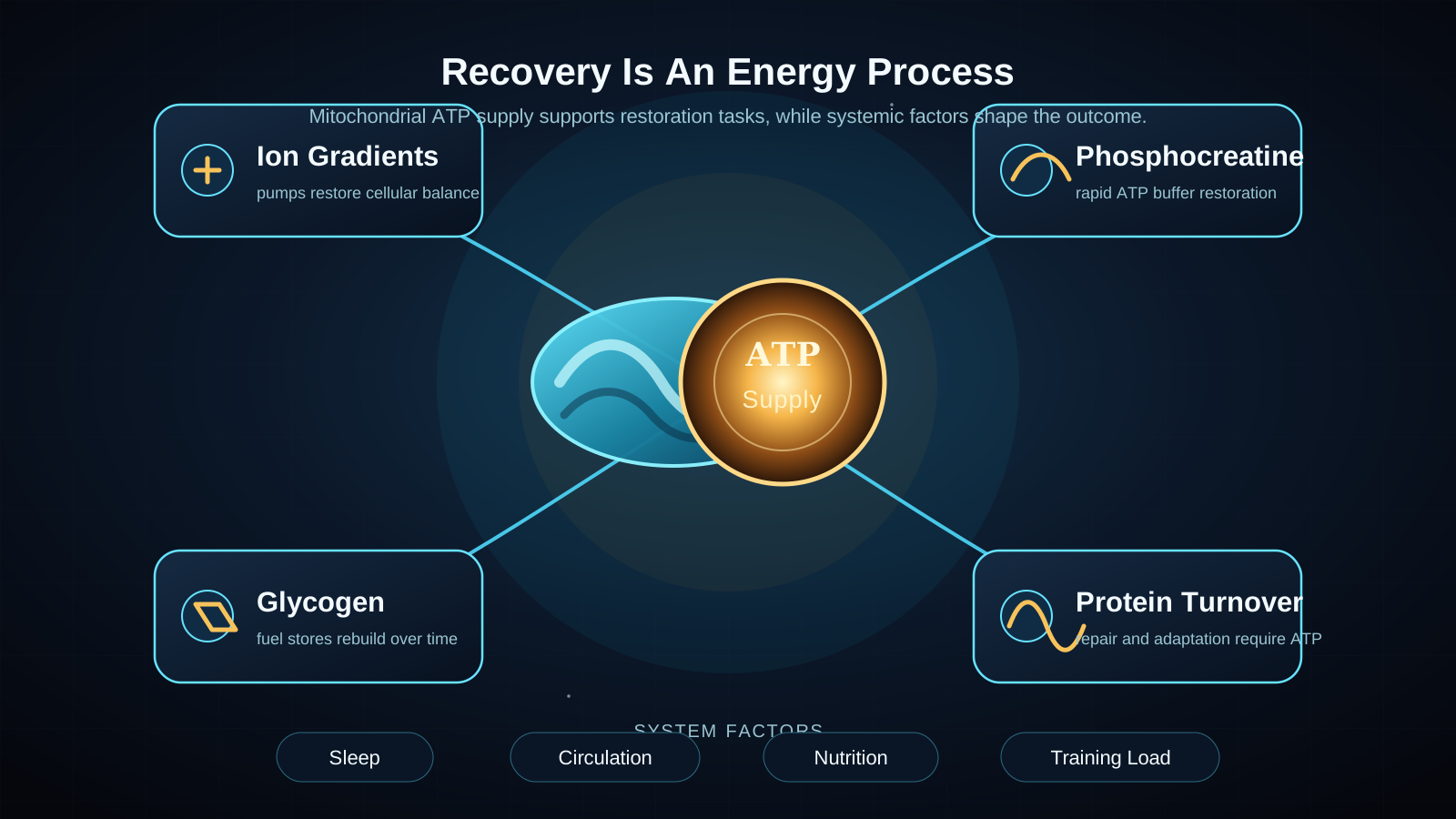
Recovery | How Far Infrared Supports ATP, Repair, and Active Restoration
Explore how far infrared supports recovery through ATP demand, tissue repair, circulation, inflammatory resolution, and sleep-related restoration under measurable conditions. This hub turns recovery language into endpoint-led reading paths rather than generic heat or comfort claims.
Mitochondria | The Energy Conversion Engine of Cellular Energy Articles
Browse all XIHE knowledge articles filed under mitochondria | the energy conversion engine of cellular energy.
What Is Far Infrared Graphene? Technology, Emitter Architecture, and Evaluation
Far infrared graphene technology uses a graphene-based emitter to convert electrical input into far infrared radiant output. Learn how it differs from conventional heating elements, how to evaluate emitter architecture, emissivity, radiant efficiency, and supplier evidence.