Start Technical Review
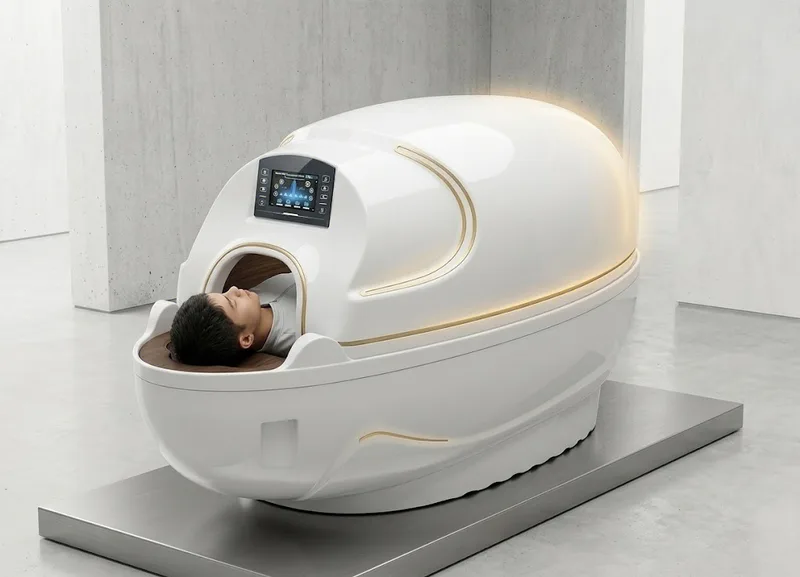
XIHE archive visual of an enclosed capsule-format product

XIHE Capsule product archive visual.

Existing product integration

Capsule Heating System

Existing XIHE Capsule products combine upper-cabin and lower-mattress graphene heating. Explore the system architecture and discuss OEM adaptations for your product.

Customer value / Product upgrade

What Graphene Integration Solves

Turn flexible heating components into a complete enclosed product, with a clear path to OEM adaptation.

01

Heating that follows the upper enclosure

Product challenge: integrating a large heating surface inside a curved lid.

Encapsulated flexible heating film follows the upper-cabin geometry, bringing the heating function into the enclosure assembly.

Product value: heating integrated around the available interior surface.

02

Upper and lower heating in one product

Product challenge: coordinating overhead heating with the supported body surface.

The library architecture combines upper-cabin heating with a lower heated mattress. Each assembly serves a different thermal interface.

Product value: a complete upper-and-lower heating architecture for the Capsule format.

03

An existing platform for OEM differentiation

Product challenge: defining a customized model without starting from an empty specification.

Existing products and batch supply provide a basis for reviewing enclosure geometry, heating areas, facing materials and controls.

Product value: a concrete product platform for your customization and production discussion.

From heating component to complete product

Build on an existing system.

The Capsule brings the enclosure, encapsulated upper flexible heating film, lower mattress and operating interface into one product. XIHE's product library places graphene heating in both the upper and lower assemblies. For an OEM adaptation, review these thermal paths together with the product envelope, electrical requirements and service access before committing to tooling and mass production.

01 / Product problem

An existing product. A defined starting point.

Discuss the batch product and the changes your application requires, with the heating subsystem at the centre of the review.

Review the product as an assembly.

The upper cabin and lower mattress present different integration challenges. One follows the enclosure; the other combines heating with a supporting contact interface. The product also brings controls and additional functional modules into the same physical envelope.

A productive OEM discussion starts with the existing configuration: what fits your program, what needs adapting and which interfaces those changes affect.

Explore the heating-film platform →
Product basis
Existing product and batch supply
Upper assembly
Graphene heating in the upper cabin
Lower assembly
Graphene heating in the mattress
Integration scope
Enclosure, heating surfaces and operating interface
OEM discussion
Geometry, materials, electrical input and controls

02 / Integration structure

Two heating assemblies. One enclosure.

Trace each thermal path before defining the customized panel and facing specification.

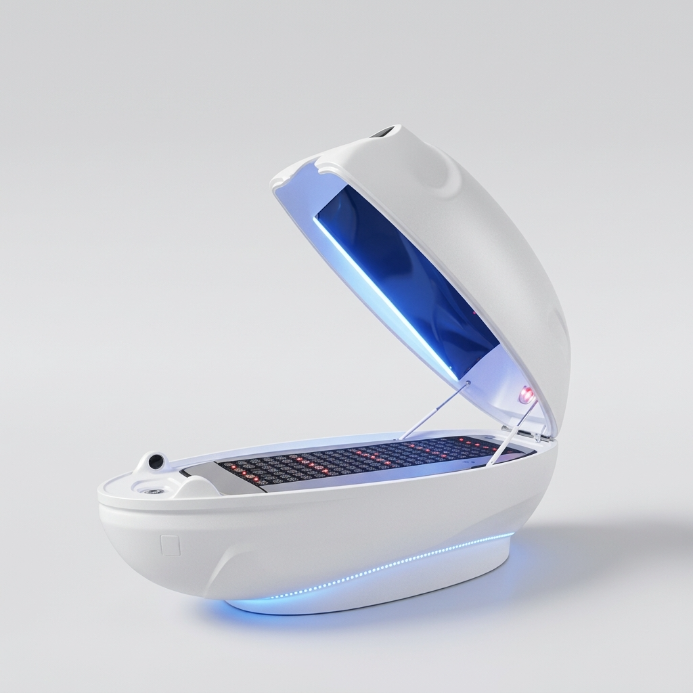
Open white Capsule showing the upper interior panel, patterned lower bed surface and lid support rods

A / Upper cabin

Heating around the enclosure.

The library identifies the upper cabin as a graphene heating assembly. The OEM review connects panel coverage to shell geometry, internal facing and the available opening path.

  1. Upper shell and installation envelope
  2. Graphene heating assembly
  3. Internal facing and heat transfer into the enclosure

B / Lower mattress

Heating through the support interface.

The lower mattress is also part of the graphene heating system. Its contact-facing materials and loading conditions affect how heat reaches the supported surface.

  1. Lower support and mattress envelope
  2. Graphene heating assembly
  3. Mattress facing and contact interface

Functional paths based on the product library. They describe integration roles, rather than an exact manufacturing layer order.

Integration decisions

Match the heating system to your product.

Use the existing Capsule to make OEM decisions concrete.

Define each heated area.

Review upper-panel coverage and lower-mattress geometry separately. Identify edges, supports and openings that change local heat loss before selecting the final heater footprint.

Set the electrical scope.

Specify the input, branch loading, controller interfaces and protective response for the selected configuration. Whole-product power includes the configured subsystems; it is not automatically the heating-film power.

Plan for access and service.

Opening motion, lead routing and replaceable facing materials influence build and maintenance. Agree access points and service procedures alongside the thermal design.

A useful supplier comparison

Ask which temperature a claim describes.

Heater temperature, inner-facing temperature, mattress contact temperature and enclosure air temperature answer different questions. Define the surface, measurement area and operating conditions so competing specifications can be compared on the same basis.

03 / Engineering validation

Resolve integration risks before they become rework.

For changes to the existing product, use these checks to agree the customized build and its acceptance criteria.

Integration challengePhysical mechanism to assessProposed verificationOEM design decision
Uneven thermal responseDifferent heat paths through the upper facing, mattress and enclosure edges.Map each defined surface with external references under agreed operating conditions.Panel footprint, facing materials and operating settings.
Lead strain during openingMovement of the upper shell loads the harness near hinges and anchor points.Review the opening path and inspect connections after a defined movement sequence.Cable routing, bend allowance and strain relief.
Connection heatingContact resistance and branch loading cause local electrical losses.Record branch current, voltage drop and connector temperature during representative operation.Connection specification and inspection points.
Changes after cleaning or serviceReplacement facing materials or altered assembly contact change thermal resistance.Repeat functional and temperature checks after the defined maintenance procedure.Approved service materials and reassembly checks.
Explore engineering and test methods →

04 / Development stage

Existing product and batch supply

Start with the available Capsule configuration. Agree the build and verification scope for your customized version.

  1. 01

    Review the existing product

    Compare the enclosure, upper heating assembly and mattress with your application.

  2. 02

    Define the adaptations

    Agree geometry, facing materials, heating areas, electrical input and control requirements.

  3. 03

    Evaluate the configured build

    Set thermal, electrical and mechanical acceptance checks for the changed assembly.

  4. 04

    Prepare the production handoff

    Confirm the bill of materials, inspection points, service information and supply scope.

Explore manufacturing →

05 / Next step

Move from the existing product to an agreed OEM configuration.

Review the heating-film component, define the missing validation and send the configured requirements into Technical Review.

Technical Review

Share the enclosure, heated areas, electrical supply and target stage.

Technical FAQ

Questions about Capsule integration.

Is this an existing product or a new concept?

Existing product and batch supply. Start with the available Capsule configuration. Agree the build and verification scope for your customized version.

Where is graphene heating integrated?

The product library describes heating in both the upper cabin and lower mattress. These are two different thermal interfaces within one enclosed system.

Do the upper and lower heaters need the same specification?

Not necessarily. The upper assembly exchanges heat across the interior space, while the lower assembly includes a supporting mattress and contact-facing materials. Their area, attachment, heat loss and operating requirements must be considered separately.

Can the enclosure, heating layout and controls be customized?

Use the existing product as the starting point for an OEM review of enclosure geometry, heating areas, facing materials, electrical input and controls. Agree the configuration and verification scope before releasing the customized build.

Does a material test describe the complete Capsule?

A material result describes its identified sample and test conditions. Product evaluation also considers installed panels, the mattress, electrical distribution, temperature control and operation of the complete assembly.

What should we send for an OEM discussion?

Send your product envelope, target heating areas, electrical supply, intended operating conditions and required changes to the existing Capsule. Include installation and service constraints where available.
Start with the product. Define your OEM program.

Share your target envelope, heating requirements and electrical supply. Discuss the existing Capsule and the adaptations your product needs.

Request an Engineering Evaluation