
Solution · By Application
Heating for Wearable Devices
Build warmth into the wearable your customer already uses. Coordinate a flexible heating layer with fit, curvature and textiles to address bulky inserts, concentrated heat and difficult cable routing.
Buyer question
How can a wearable or apparel product add heat without compromising fit and movement?
Heating component
Graphene Heating Film
Review the component construction, available supply formats and integration requirements.
Validation evidence
Engineering Evidence
Translate the requirement into a sample, method, conditions and acceptance decision.
01 · The challenge
What this product type is up against.
The constraint is the product around the heat source, not the heat source alone.
A wearable changes shape and contact pressure during use.
A thin film may bend without accommodating stretch or compound curvature.
Leads and connectors must tolerate the movement of the surrounding product.
02 · Design approach
How the heating architecture answers it.
The film is designed as part of the product build — layer by layer, with the electrical and mechanical constraints stated up front.
- Distinguish static installed curvature from repeated bending and stretching.
- Review segmented patterns where the surface curves in two directions.
- Evaluate sensor location and harness anchoring on the assembled product.
What this enables for your product
Make heating part of a soft wearable rather than a bulky insert. Pattern geometry and textile integration let the product team address fit and warmth together, with the existing eye mask providing a sample to evaluate.
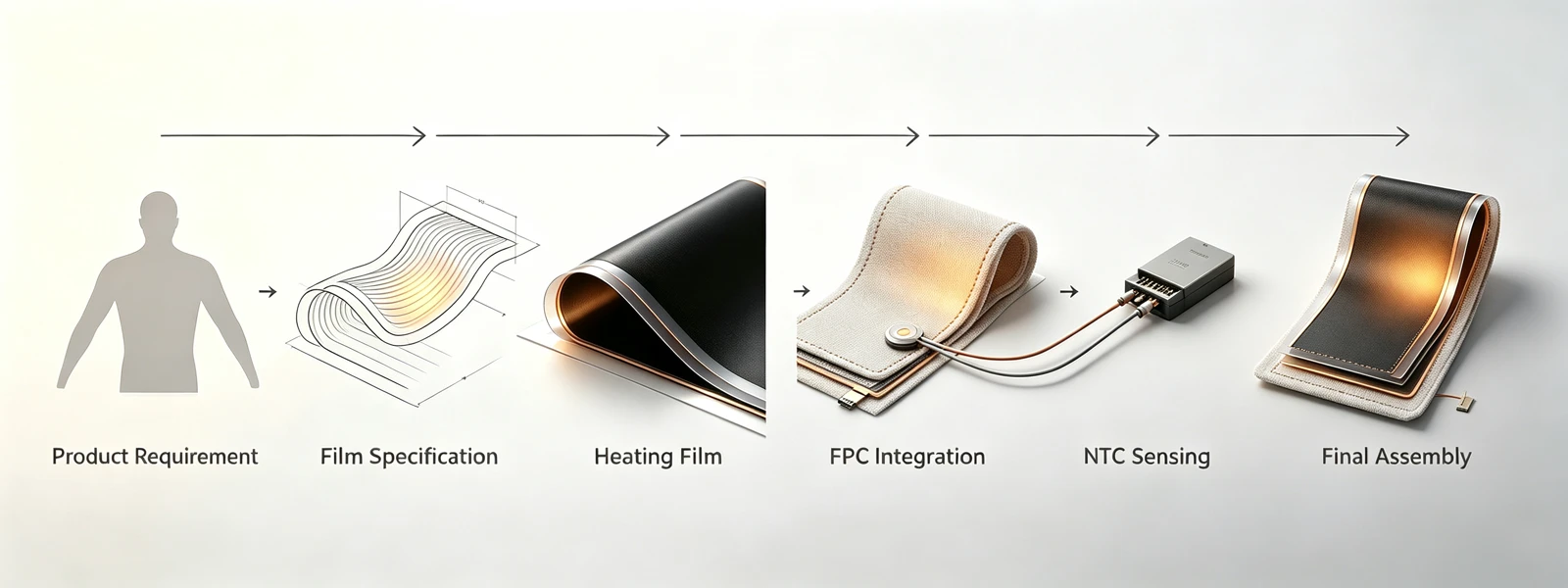
- 01
Heating film
- 02
Substrate / textile
- 03
Electrical connection
- 04
Controller
- 05
Product housing
03 · Engineering parameters
The parameters that decide this design.
Agree these inputs before selecting a film configuration or requesting a sample.
| Design input | What to establish |
|---|---|
| Fit envelope | Smallest and largest intended fit, curvature and contact area. |
| Mechanical demand | Bending, stretching, compression and adjustment movement. |
| Electrical interface | Cable exit, strain relief, connector space and input limits. |
| Thermal acceptance | Reference surface, contact load, settling time and measurement grid. |
Validation focus
Use representative fit fixtures to compare temperature distribution, resistance and lead loading. Qualify the formed assembly as well as the flat film.
Far-infrared emission is stated as a measured emission property of the film under defined conditions. It is not linked to any health, sleep or recovery outcome on this site.
Application scenarios
Start from the product you are building.
Compare the product structures, integration constraints and validation questions relevant to your design.
Wearable / apparel
Coordinate the heater footprint with fit, textile construction, fold regions and cable routing.
Review the integration record →Heating eye mask
Use an existing assembled sample to review contact, controls and OEM adaptation.
Review the integration record →04 · Relevant case studies
Explore the assembly decisions.
Explore existing product integrations and engineering assessments. Each record identifies the product context, design decisions and validation scope.
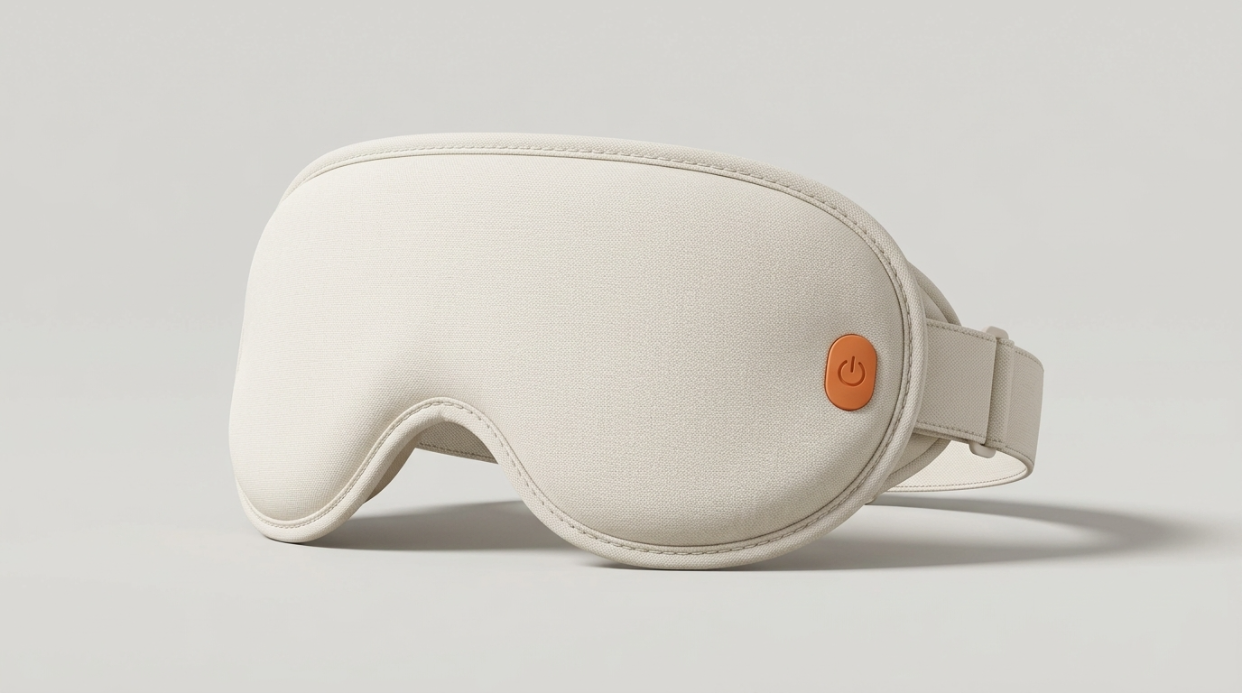
Existing product integration
Graphene Heating Eye Mask
Start with an existing heating eye-mask sample with a documented electrical rating, layer stack and timed controls. Discuss the sample configuration and OEM adaptations for your product.
View →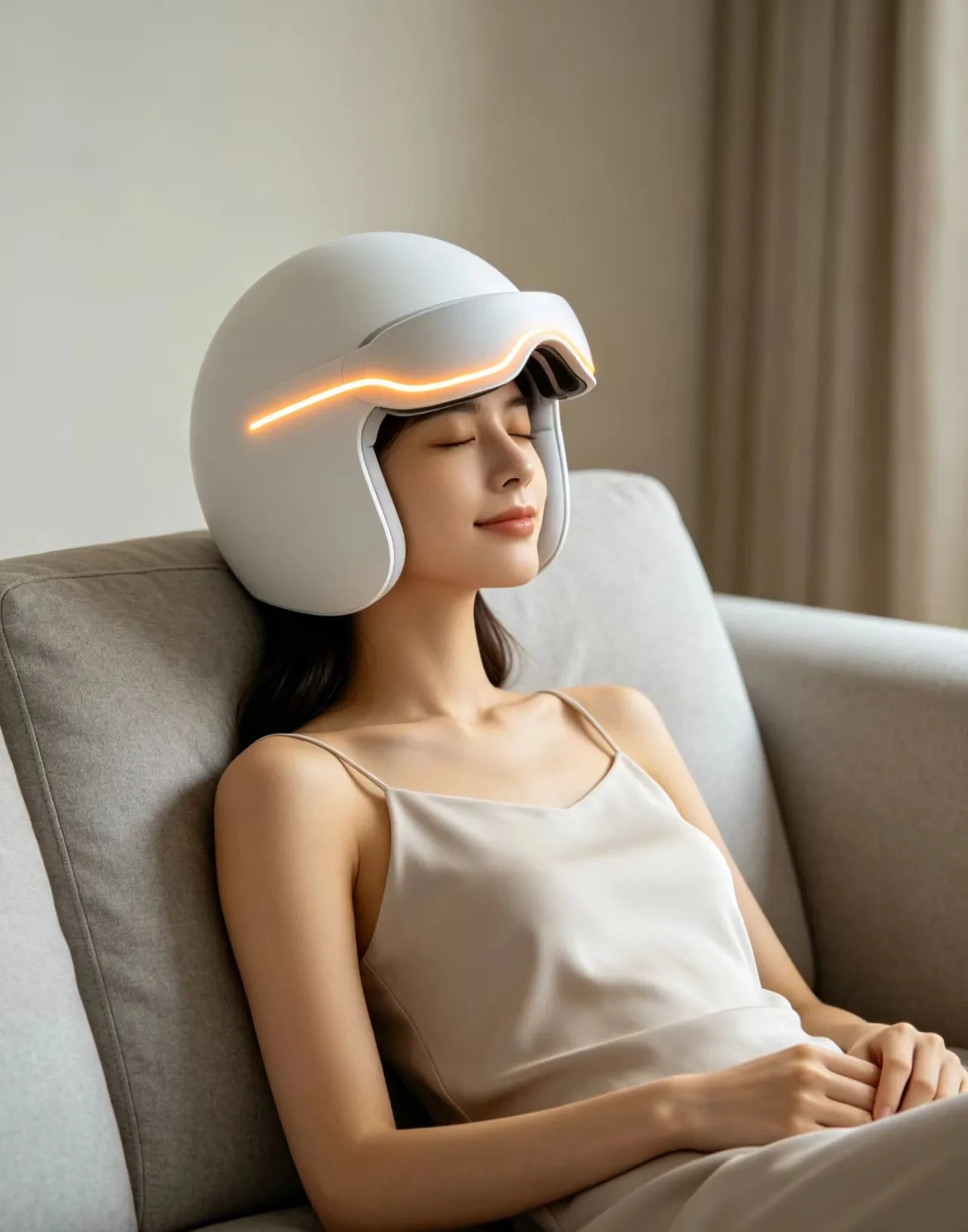
Engineering assessment
Head-Worn Heating Device
Integrating a planar heater around a curved shell requires control of fit, local strain, thermal contact and cable routing.
Product concept illustration from the XIHE archive.
View →05 · Prototype to production
The route from requirement to production.
Agree the required deliverables before moving from a sample to a pilot build.
- 01
Requirement Review
- 02
Heating Architecture
- 03
Prototype Development
- 04
Engineering Validation
- 05
Pilot Production
- 06
Mass Production
Define sample identity, test conditions and acceptance criteria with the Engineering evidence centre before releasing a configuration for the next build stage.
Does this match your requirement?
Describe the product, the heating area and the electrical constraints. We will review the heating architecture with you.
Start Technical Review