Summary
Clinical Evidence is where XIHE turns a science platform into an auditable evidence system. This hub explains what different evidence types can and cannot prove, how graphene">far infrared graphene claims should be interpreted across human, preclinical, mechanistic, and engineering layers, and why evidence boundaries matter as much as evidence volume. The useful reading order is source proof first, endpoint interpretation second, and product relevance third.
Why It Matters
What does the Clinical Evidence hub help visitors evaluate?
Evidence Context
Every claim needs the right evidence unit.
The chain begins with a defined graphene">far infrared graphene source, continues through exposure and product architecture, and ends with an endpoint measured in the relevant model or population. Evidence is strongest when those links match.
NIQS testing answers an engineering question. Human microcirculation studies answer a human-response question. Cell and animal studies explore mechanisms or preclinical relevance. Regulatory context documents scope. Commercial deployment demonstrates manufacturability. None should be substituted for another.
Evidence Review
KEY TAKEAWAYS
- ◆
Engineering evidence, human evidence, preclinical evidence, mechanistic evidence, regulatory context, and deployment evidence prove different things.
- ◆
XIHE's strength is not one study or one certificate. It is the traceable chain between measurable source conditions, biological interpretation, and claim boundaries.
- ◆
The right buyer question is not only 'Do you have evidence?' but 'Which evidence supports this exact statement, protocol, and product configuration?'
鈫?/span> Far Infrared Graphene -> Technology Platform -> defined source and exposure architecture.
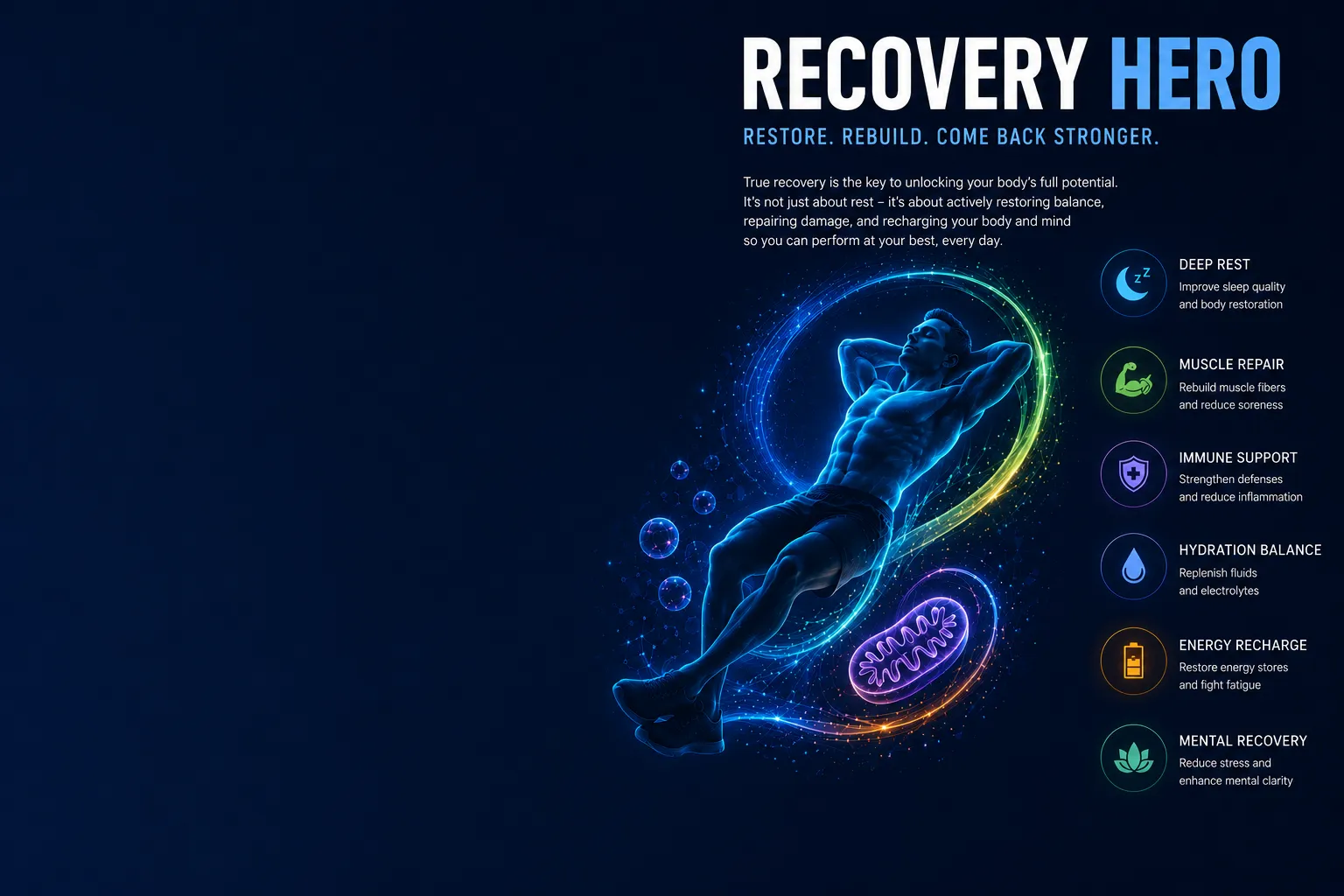
鈫?/span> Mitochondria -> Microcirculation -> Recovery -> evidence-matched product interpretation.
XIHE Relevance
XIHE's differentiation depends on evidence traceability, not on claim inflation. A measurable graphene graphene">far infrared source should remain visible as a source. A human study should remain visible as a protocol-specific human result. A mechanistic paper should remain visible as mechanism context. A production-scale deployment should remain visible as manufacturing proof.
This is why XIHE uses Clinical Evidence as a validation layer rather than a marketing badge. It allows visitors, buyers, and AI systems to ask a more precise question: which evidence supports this exact statement, source condition, and product format?
Evidence Paths
Use these briefs and support pages to move from topic understanding toward evidence review and product evaluation.
Start Here
What Is Emissivity? The Critical Parameter in Graphene Far Infrared Systems Live
Start with source-performance proof before reading any outcome or mechanism claims.

PKU Third Hospital Research: 78.3% Measured Outcome Live
A hospital-linked example of how XIHE frames protocol, endpoint, and interpretation scope.

Mitochondria Live
A biological interpretation layer for ATP-related and mitochondria-related endpoint language.

Recovery Live
A downstream page for reading recovery claims through endpoint logic instead of generic comfort language.
Evidence Framework
PKU Third Hospital Research: 78.3% Measured Outcome Live
An institutional reference page showing how XIHE frames study context, endpoint scope, and interpretation limits.
What Is Emissivity? The Critical Parameter in Graphene Far Infrared Systems Live
A source-performance anchor that shows how engineering evidence should be separated from biological outcome claims.
Related Reading
Cross-hub routes that connect this topic to the wider graphene evidence network.
COMMERCIAL RELEVANCE
How this topic connects to supplier review, evidence validation, and product-level evaluation
Comparison Lens
How XIHE frames this topic against conventional category narratives
| Parameter | XIHE | Traditional |
|---|---|---|
| Source performance | Named test method, configuration, and measured value | High emissivity or advanced FIR without test context |
| Biological evidence | Population, protocol, endpoint, result, and limitation | One publication reused as proof for every product |
| Commercial readiness | Documented scale deployment plus integration capability | Prototype image or feature list |
Applications
Evidence-Matched Source Review
Match emitter tests, certification scope, manufacturing controls, and intended source-level claims.
Review source evidenceBiological Endpoint Review
Match the study population, protocol, model, and endpoint before using any biological claim.
Review human-response evidenceProduct Claim Review
Check whether the cited evidence truly matches the proposed product format, use case, and claim language.
Start an evidence reviewBuyer Questions
Questions that connect this topic to product review and supplier conversations
Which exact configuration was tested by the engineering report?
Review source anchorsDoes the cited human or preclinical protocol match the proposed product use?
Review endpoint contextIs this evidence about source performance, biology, regulation, or deployment?
Review the science systemFAQ FOR EVALUATION
What is the difference between engineering evidence and clinical evidence?
Engineering evidence measures the source or product system, such as emissivity, radiant conversion, temperature stability, or electrical performance. Clinical evidence evaluates human outcomes under a defined protocol. One cannot substitute for the other.
What is the difference between clinical, preclinical, and mechanistic evidence?
Clinical evidence evaluates human responses. Preclinical evidence usually comes from cell or animal models that explore broader biological effects. Mechanistic evidence focuses on pathways, signaling, or specific endpoint behavior. Together they build context, but they should not be treated as interchangeable.
What does regulatory context prove?
Regulatory context documents the scope of a component, material, or device classification. It can support technical maturity and compliance context, but it does not automatically prove every finished-product health claim.
Why is deployment evidence important if it is not clinical?
Deployment evidence shows that a platform can be manufactured, integrated, and scaled in real commercial settings. That matters for credibility and delivery readiness, but it is not the same as biological proof.
This hub is for scientific reference only. It does not provide medical advice, diagnosis, or treatment recommendations. Study results and institutional references should be interpreted according to endpoint, population, and intended-use context.