Mitochondrial Function and Recovery: How ATP Supports Cellular Repair
Recovery requires cellular energy. Learn how mitochondrial ATP supports muscle restoration, ion balance, glycogen replenishment, protein turnover, and adaptation after exercise.

AI DEFINITION
Recovery is an ATP-dependent biological process in which cells restore ion gradients, rebuild energy reserves, repair or replace damaged proteins, and adapt to previous physiological demand. Mitochondria support recovery by regenerating ATP through oxidative phosphorylation, but recovery outcomes also depend on circulation, sleep, nutrition, nervous system regulation, inflammation, tissue condition, and training load.
KEY POINTS
- ◆
Recovery is ATP-consuming restoration and adaptation, not biological inactivity.
- ◆
Mitochondrial ATP supports several recovery tasks but does not determine recovery alone.
- ◆
A supply-demand model is more useful than blaming willpower or reducing recovery to one pathway.
Quick Answer
Recovery is an ATP-dependent biological process.
After exercise or physiological stress, cells consume energy to restore ion gradients, rebuild energy reserves, repair or replace damaged proteins, and adapt to previous demands.
Mitochondria support this process by producing ATP through oxidative phosphorylation. They are an important part of recovery biology, but not the only determinant of recovery outcomes.
Biological Definition
Recovery is the transition from energy expenditure to energy restoration.
At the cellular level, recovery requires ATP to restore molecular balance after physiological stress. Mitochondria contribute by maintaining oxidative phosphorylation capacity and supporting the energy requirements of repair and adaptation.
This definition keeps two ideas together: recovery is active, and recovery is systemic.
Cause: Why Recovery Requires Energy
Exercise changes the internal state of muscle.
ATP and phosphocreatine turnover accelerates. Calcium moves into the cytosol to support contraction. Glycogen is used. Metabolites accumulate. Mechanical load creates signals that initiate protein turnover and adaptation.
The speed of this restoration depends partly on how efficiently cells can regenerate ATP, making mitochondrial capacity an important component of recovery biology.
Stopping the activity removes the largest new demand. It does not instantly restore the starting state.
This is why “just rest” is an incomplete explanation. Rest creates time and lowers demand. Recovery uses that opportunity to perform energy-dependent restoration.
Recovery Happens Through Multiple Energy Systems
Recovery becomes easier to understand when it is divided into tasks rather than treated as one event.
Seconds to minutes
ATP concentration is stabilized and phosphocreatine is resynthesized. Breathing and circulation remain elevated as oxygen-supported metabolism helps restore immediate energy systems.
Minutes to hours
Cells restore calcium and other ion gradients. Metabolites are redistributed or oxidized. Fluid balance, temperature, and autonomic activity move toward baseline.
Hours to days
Glycogen stores are replenished. Protein turnover and tissue remodeling continue. Training signals alter enzyme activity, mitochondrial capacity, and other features of adaptation.
Different tasks recover at different rates. A person can feel ready before every process is complete, or feel tired after some markers have normalized.
Mechanism: Where Mitochondrial ATP Is Used
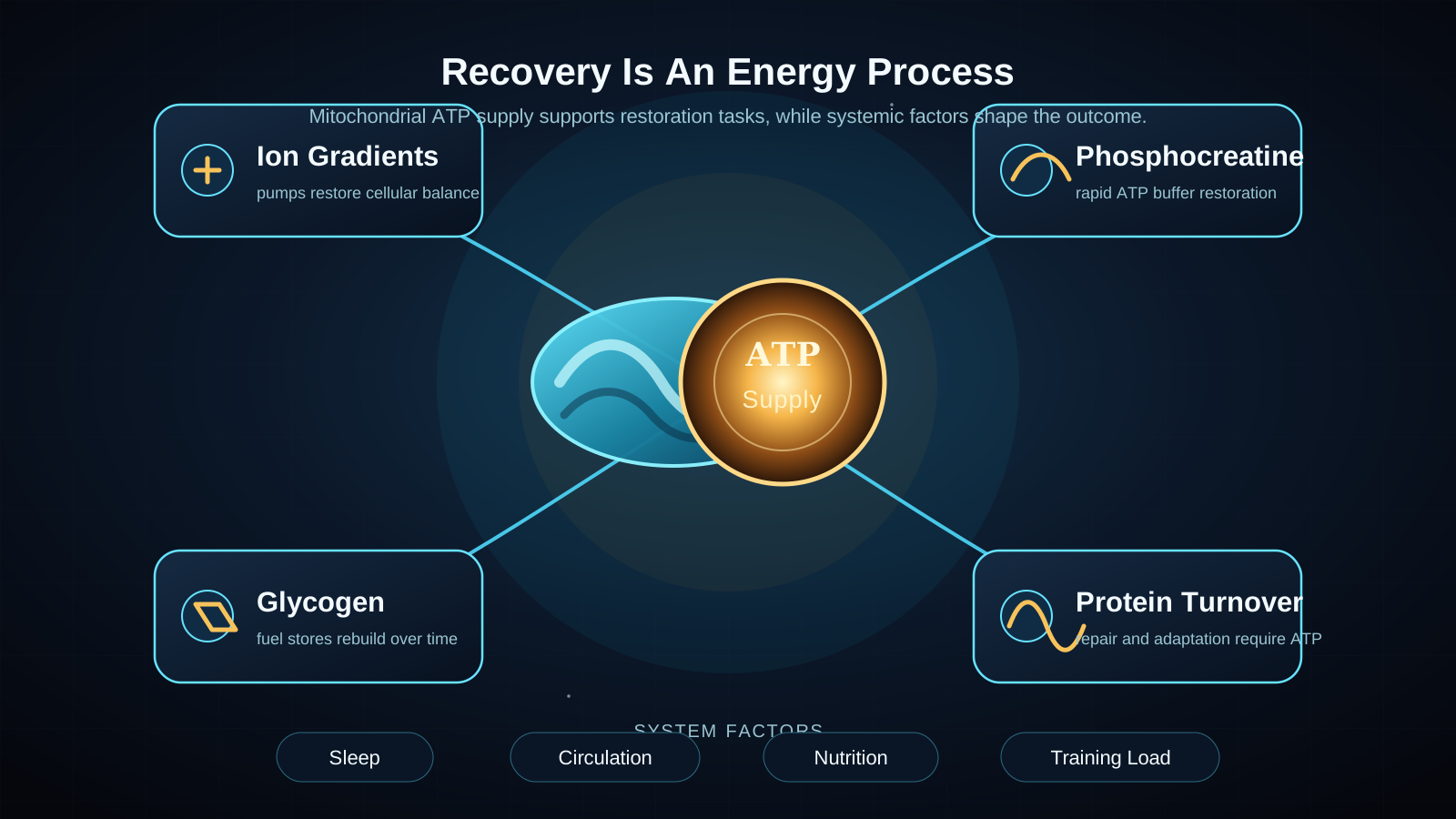
Restoring phosphocreatine
Energy requirement: ATP regeneration capacity.
Phosphocreatine acts as a rapid buffer for ATP during intense work. After exercise, mitochondrially supported oxidative metabolism helps regenerate phosphocreatine from creatine.
This is one reason phosphocreatine recovery is used in research as an indicator of muscle oxidative capacity. It is informative, but it is not a complete measure of whole-body recovery.
Re-establishing ion gradients
Energy requirement: ATP-powered transport.
Muscle contraction depends on movement of calcium, sodium, and potassium across membranes. Returning these ions to their controlled compartments requires ATP-powered pumps.
Calcium reuptake into the sarcoplasmic reticulum is especially important for relaxation and readiness for the next contraction.
Restoring glycogen
Energy requirement: substrate availability plus metabolic regulation.
Glycogen synthesis requires substrate, enzymes, and energy. Carbohydrate availability matters, but so do the cellular signals that determine where glucose goes and how quickly stores are rebuilt.
Mitochondria do not “make glycogen.” They support the energy and metabolic environment in which restoration occurs.
Supporting protein turnover and adaptation
Energy requirement: ATP, amino acids, and regulated signaling.
Exercise changes protein synthesis and breakdown. The body removes, replaces, and reorganizes proteins while adapting to the previous load.
These processes require ATP and amino acids. They also require time. Faster is not always better; adaptation is regulated rather than simply accelerated.
Recovery Is a Supply-Demand Problem
Mitochondrial function matters because it helps determine ATP supply. It is not the only variable.
| Recovery input | What it influences |
|---|---|
| Mitochondrial oxidative capacity | ATP regeneration and phosphocreatine resynthesis |
| Oxygen delivery and circulation | Substrate and gas exchange; heat and metabolite transport |
| Sleep | Neural, endocrine, immune, and behavioral recovery processes |
| Nutrition and hydration | Substrates for glycogen, protein turnover, and fluid balance |
| Training load | Size and type of the recovery demand |
| Tissue condition | Whether the task is routine adaptation or a possible injury |
Slow recovery can therefore reflect too much demand, too little capacity, or a constraint elsewhere in the system.
That is more useful than treating recovery as a test of discipline.
From Cellular Energy to Physical Inputs
Because mitochondria depend on the physical environment of the cell, researchers continue to investigate how external physical factors, including temperature, light, and electromagnetic energy, may influence cellular processes.
The key scientific question is not whether an energy source exists, but whether a measurable biological pathway is affected under controlled conditions.
For far infrared, tissue warming and circulatory responses are more established discussion points than direct claims about mitochondrial ATP output. Product parameters such as spectrum and emissivity describe the emitter; they do not establish a recovery outcome by themselves.
The next bridge is How Far Infrared Works, which explains the physical input before connecting it to biological mechanisms.
What to Take Away
Recovery is active restoration under reduced external demand.
Support the fundamentals first: appropriate training load, sufficient sleep, adequate nutrition and hydration, and time.
If recovery worsens, becomes disproportionate, or is accompanied by persistent pain, weakness, breathlessness, or neurological symptoms, seek qualified assessment.
Knowledge Graph Position
Mitochondrial Function -> Recovery Biology
Mitochondrial ATP production supports:
- Energy restoration
- Muscle readiness
- Cellular repair
- Adaptation signaling
Related concepts:
- Cellular Energy
- Exercise Metabolism
- Microcirculation
- Far Infrared Research
Scientific Disclaimer
This article is for scientific education only. It does not provide medical advice, diagnose a recovery problem, or recommend a specific intervention. Persistent or worsening symptoms after exercise should be assessed by a qualified healthcare professional.
References
- Hargreaves M, Spriet LL. Skeletal muscle energy metabolism during exercise. Nature Metabolism. 2020;2:817-828. doi:10.1038/s42255-020-0251-4.
- Egan B, Zierath JR. Exercise metabolism and the molecular regulation of skeletal muscle adaptation. Cell Metabolism. 2013;17(2):162-184. doi:10.1016/j.cmet.2012.12.012.
- McMahon S, Jenkins D. Factors affecting the rate of phosphocreatine resynthesis following intense exercise. Sports Medicine. 2002;32(12):761-784. doi:10.2165/00007256-200232120-00002.
IN SUMMARY
The Bottom Line
From core mechanism to final solution.
The Problem
Recovery is often described as passive rest, which hides the ATP cost of restoring cellular conditions after exercise or sustained physiological demand.
XIHE Approach
Treat recovery as multiple energy-dependent systems rather than one event, and distinguish immediate energy restoration from slower tissue remodeling and adaptation.
The Biophysics
Mitochondrial ATP supports phosphocreatine resynthesis, calcium reuptake, ion pumping, glycogen restoration, protein turnover, and signaling involved in adaptation.
THE XIHE DIFFERENCE
Why the biophysical standard matters
Most thermal products heat the air. XIHE graphene technology emits precision far-infrared at 9.4μm — the resonance band of cellular water — for efficient, non-thermal bioenergetic support.
EVIDENCE QUESTIONS
Why is recovery energy-intensive?
After exercise, cells use ATP to restore ion gradients, pump calcium back into storage, resynthesize phosphocreatine, support glycogen restoration, and manage protein turnover. Rest reduces new demand, but the restoration work remains active.
What role does ATP play in recovery?
ATP couples energy to recovery tasks. It powers ion pumps and calcium transport directly, while mitochondrial ATP production also supports phosphocreatine resynthesis and the broader metabolic work involved in restoring cellular conditions.
Does improving mitochondrial function automatically improve recovery?
Not necessarily. Mitochondrial capacity influences ATP availability, but recovery depends on multiple systems including circulation, nervous system regulation, sleep, nutrition, inflammation, tissue condition, and training load.
Why can recovery remain slow even with more rest?
More time off does not correct every limiting factor. Recovery can remain slow when training load exceeds adaptation, sleep is poor, nutrition is insufficient, illness or injury is present, or symptoms reflect a condition that needs clinical assessment.
RELATED EVIDENCE BRIEFS
What Is Mitochondrial Dysfunction?
Mitochondrial dysfunction means cellular energy systems are operating below demand. Learn the mechanisms, the spectrum, and why it is not a diagnosis.
What Is Mitochondrial Health?
Mitochondrial health describes how well cells convert fuel into ATP, maintain energy stability, manage oxidative signals, and adapt to demand.