
Solution · By Application
Heating for Sports Products
Add warming functionality to sports products without treating the heater as a separate accessory. Match the heating area to movement, textile construction and the available battery budget.
Buyer question
How can heating be integrated into sports apparel or equipment that moves in use?
Heating component
Graphene Heating Film
Review the component construction, available supply formats and integration requirements.
Validation evidence
Engineering Evidence
Translate the requirement into a sample, method, conditions and acceptance decision.
01 · The challenge
What this product type is up against.
The constraint is the product around the heat source, not the heat source alone.
Repeated movement loads the laminate, electrodes and leads differently.
Padding, seams and garment fit change the path from the heater to the intended surface.
Battery voltage and available energy vary over a discharge cycle.
02 · Design approach
How the heating architecture answers it.
The film is designed as part of the product build — layer by layer, with the electrical and mechanical constraints stated up front.
- Map body movement and seam lines before placing the heating footprint.
- Keep repeated fold regions and cable pull loads away from vulnerable joints.
- Define heating zones and control behaviour against the actual power source.
What this enables for your product
Create a heated variant of an existing sports product while preserving its movement and textile construction. Film placement, seam planning and lead support address integration issues before they reach the assembled garment.
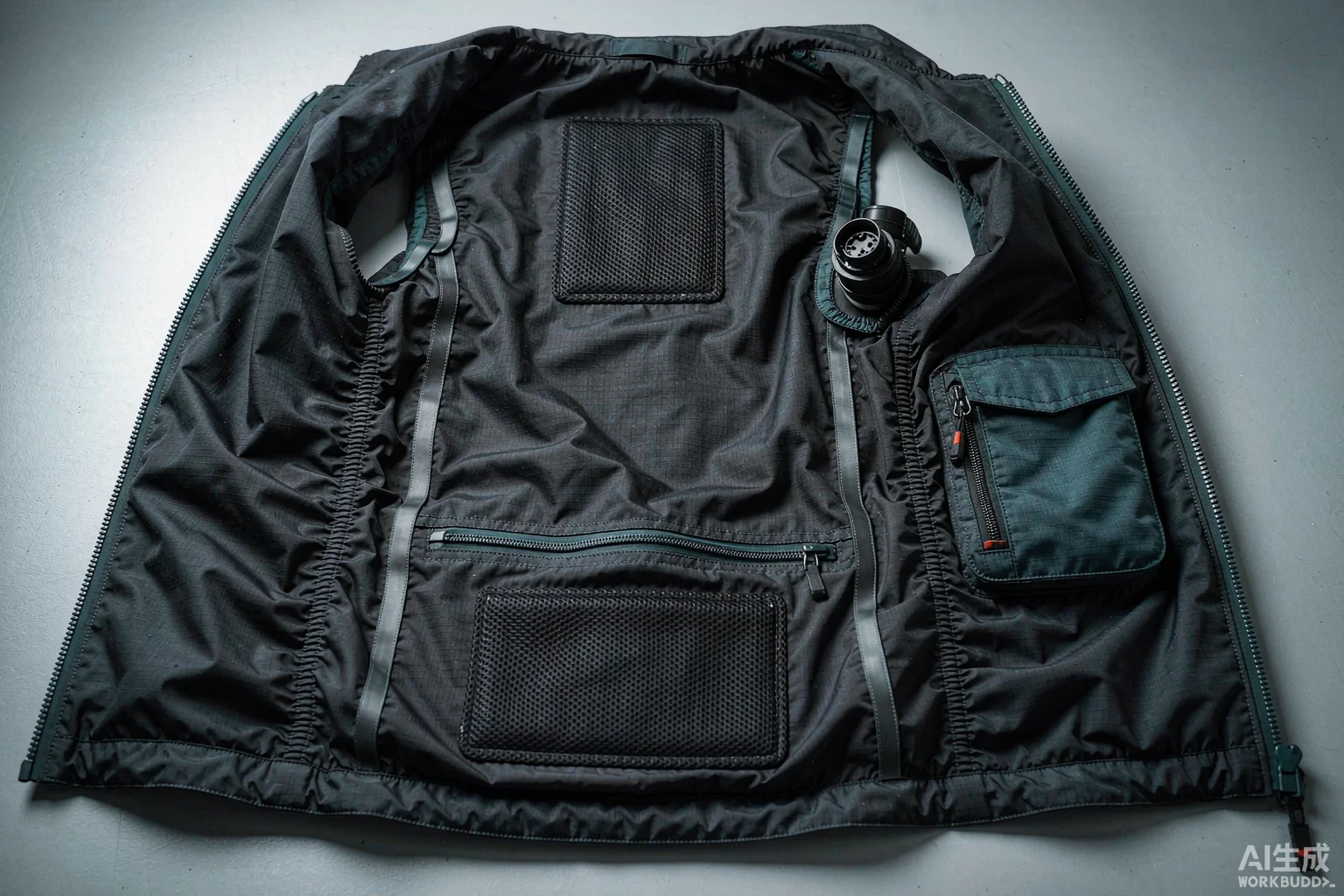
- 01
Heating film
- 02
Substrate / textile
- 03
Electrical connection
- 04
Controller
- 05
Product housing
03 · Engineering parameters
The parameters that decide this design.
Agree these inputs before selecting a film configuration or requesting a sample.
| Design input | What to establish |
|---|---|
| Movement | Bend location, radius, direction and expected duty cycle. |
| Textile stack | Fabric, padding, attachment, removable parts and cleaning method. |
| Power budget | Usable battery energy, operating voltage and controller demand. |
| Surface conditions | Fit, pressure, ambient conditions and acceptable temperature variation. |
Validation focus
Compare resistance and surface-temperature maps before and after representative movement and cleaning exposure. Test the assembled textile stack at the lower and upper supply limits.
Where far-infrared emission is part of the design, it is treated as a measured emission property of the film — spectrum, wavelength and emissivity under stated conditions.
Application scenarios
Start from the product you are building.
Compare the product structures, integration constraints and validation questions relevant to your design.
Performance apparel
Map movement, seams, heating zones and the portable power budget as one product system.
Review the integration record →04 · Relevant case studies
Start with a project-specific assessment.
Share your geometry and operating conditions to define a relevant integration and test plan.
05 · Prototype to production
The route from requirement to production.
Agree the required deliverables before moving from a sample to a pilot build.
- 01
Requirement Review
- 02
Heating Architecture
- 03
Prototype Development
- 04
Engineering Validation
- 05
Pilot Production
- 06
Mass Production
Define sample identity, test conditions and acceptance criteria with the Engineering evidence centre before releasing a configuration for the next build stage.
Does this match your requirement?
Describe the product, the heating area and the electrical constraints. We will review the heating architecture with you.
Start Technical Review