Solution · By Engineering Requirement
Embedded Heating
Build the heating function into a laminate or product structure with a controlled thermal path.
Buyer question
Can the heating function be enclosed without losing inspectability or thermal control?
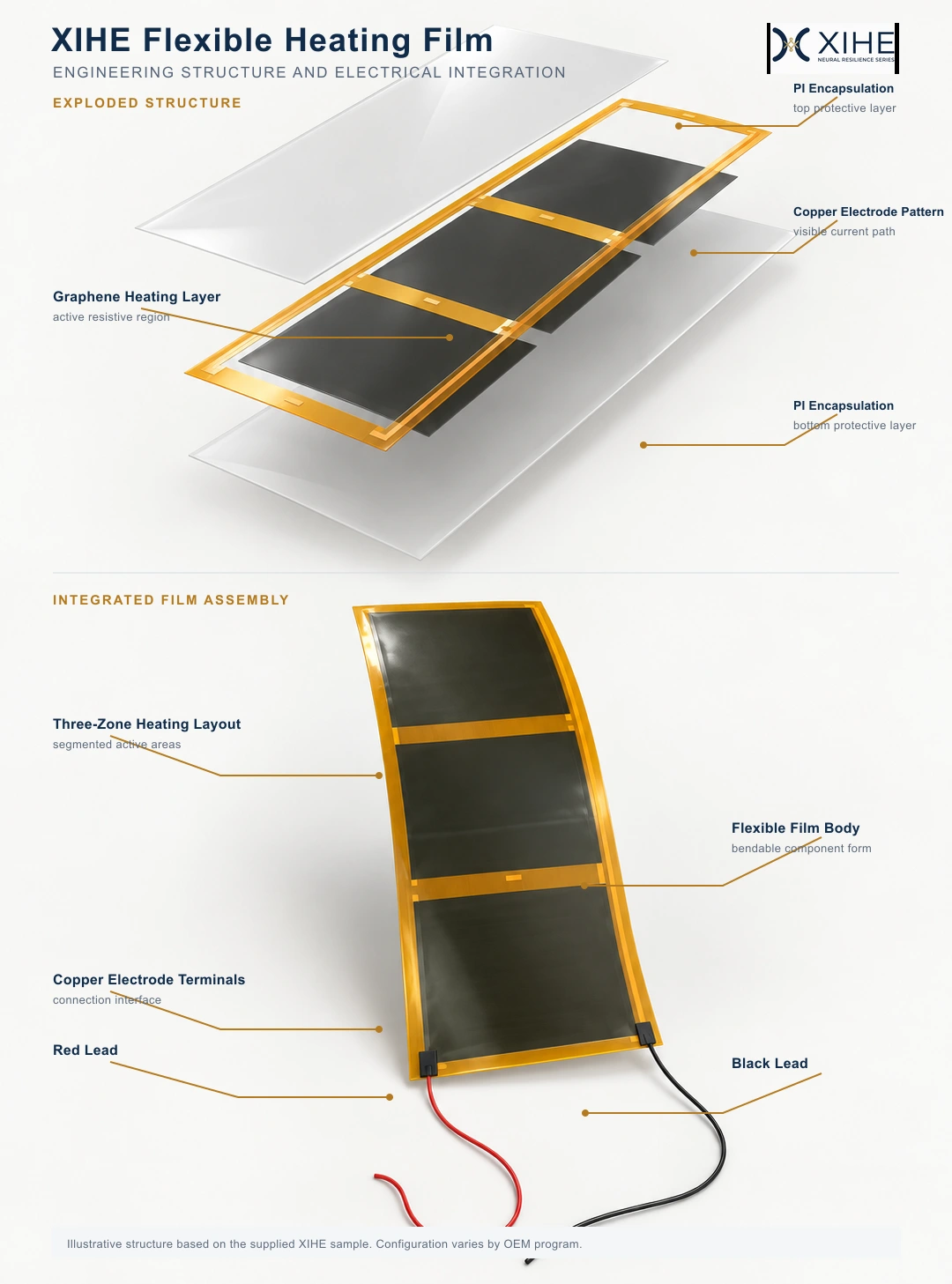
Heating component
Graphene Heating Film
Review the component construction, available supply formats and integration requirements.
Validation evidence
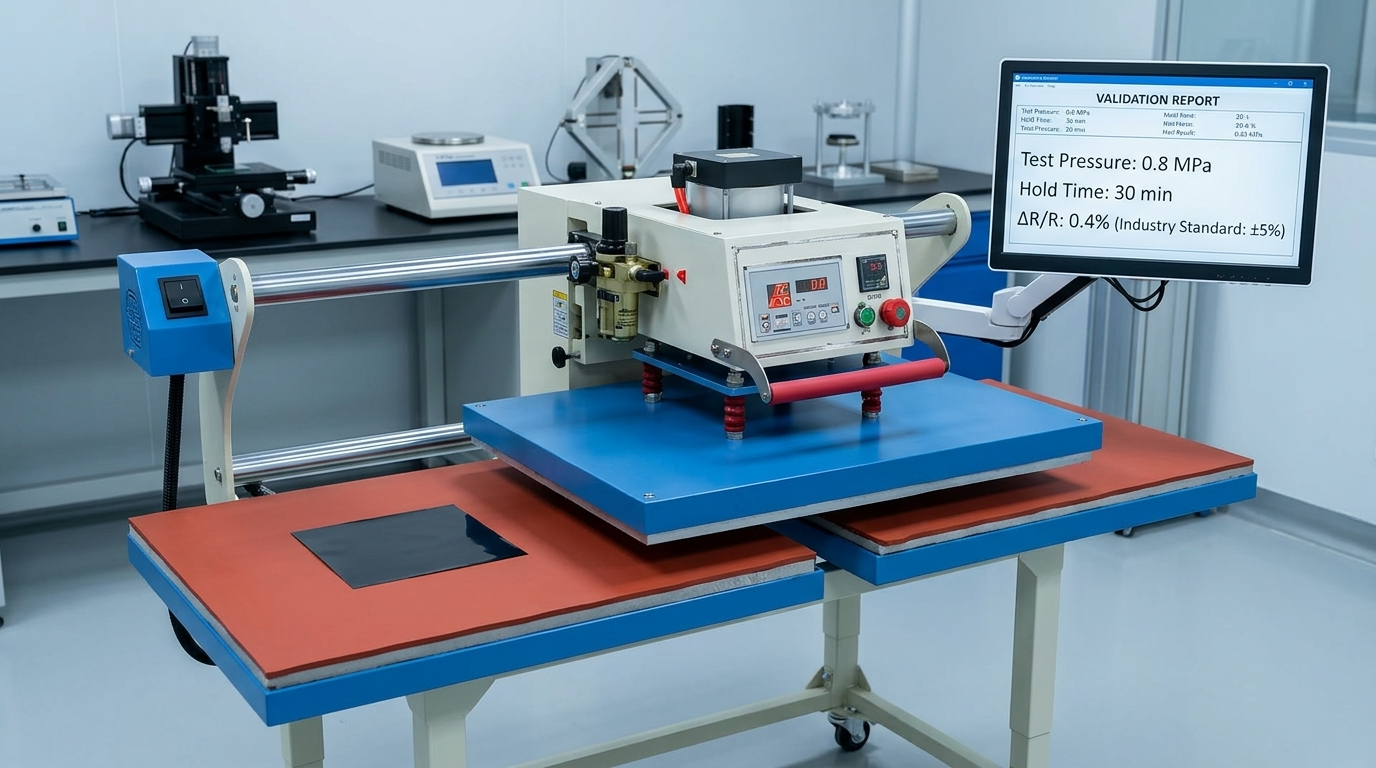
Engineering Evidence
Translate the requirement into a sample, method, conditions and acceptance decision.
01 · The challenge
The engineering requirement.
Integrate heating within the product while maintaining the intended insulation, adhesion and surface temperature.
- Adhesives and facing layers add thermal resistance.
- Pressure and process temperature can affect the heater and terminal joints.
- Internal defects may become inaccessible after assembly.
02 · Design approach
The graphene heating film architecture.
The film is designed as part of the product build — layer by layer, with the electrical and mechanical constraints stated up front.
- Agree the layer stack and lamination window before finalising the heater.
- Separate comfort padding from electrical insulation requirements.
- Define inspection points before the heater becomes enclosed.
What this enables for your product
Add a heating function inside the existing product structure. Reviewing the laminate and inspection sequence early helps avoid discovering an electrical or thermal interface problem after the housing is closed.
- 01
Substrate
- 02
Functional layer
- 03
Protective layer
- 04
Lamination process
- 05
Product structure
03 · Engineering parameters
The parameters that decide this design.
Agree these inputs before selecting a film configuration or requesting a sample.
| Design input | What to establish |
|---|---|
| Layer stack | Material, thickness, adhesive and expected compression. |
| Process window | Assembly temperature, pressure and exposure time. |
| Thermal path | Location of heat generation, sensing and the target surface. |
| Inspection | Pre-closure checks, traceability and access for repair. |
Validation focus
Compare the bare component with the finished laminate. Repeat electrical, adhesion and thermal checks after the agreed environmental and mechanical conditioning.
04 · Relevant case studies
Explore the assembly decisions.
Explore existing product integrations and engineering assessments. Each record identifies the product context, design decisions and validation scope.
Existing product integration
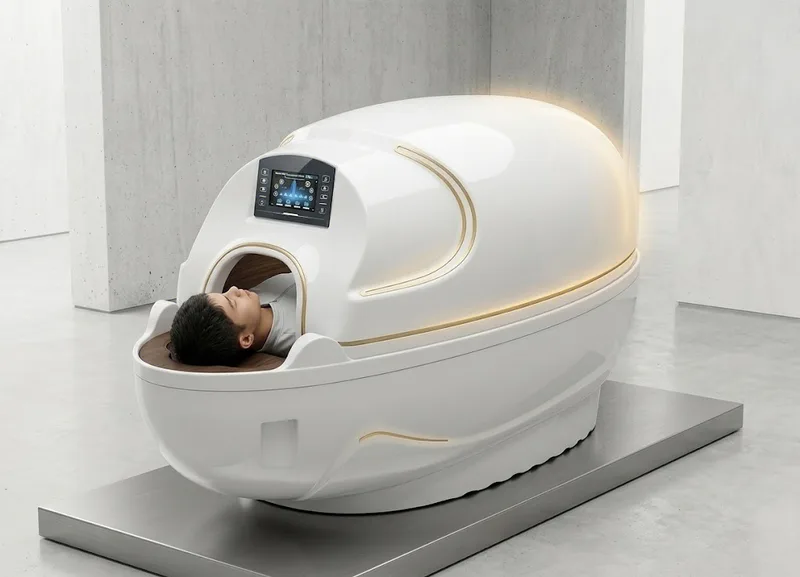
Capsule Heating System
Existing XIHE Capsule products combine upper-cabin and lower-mattress graphene heating. Explore the system architecture and discuss OEM adaptations for your product.
XIHE Capsule product archive visual.
View →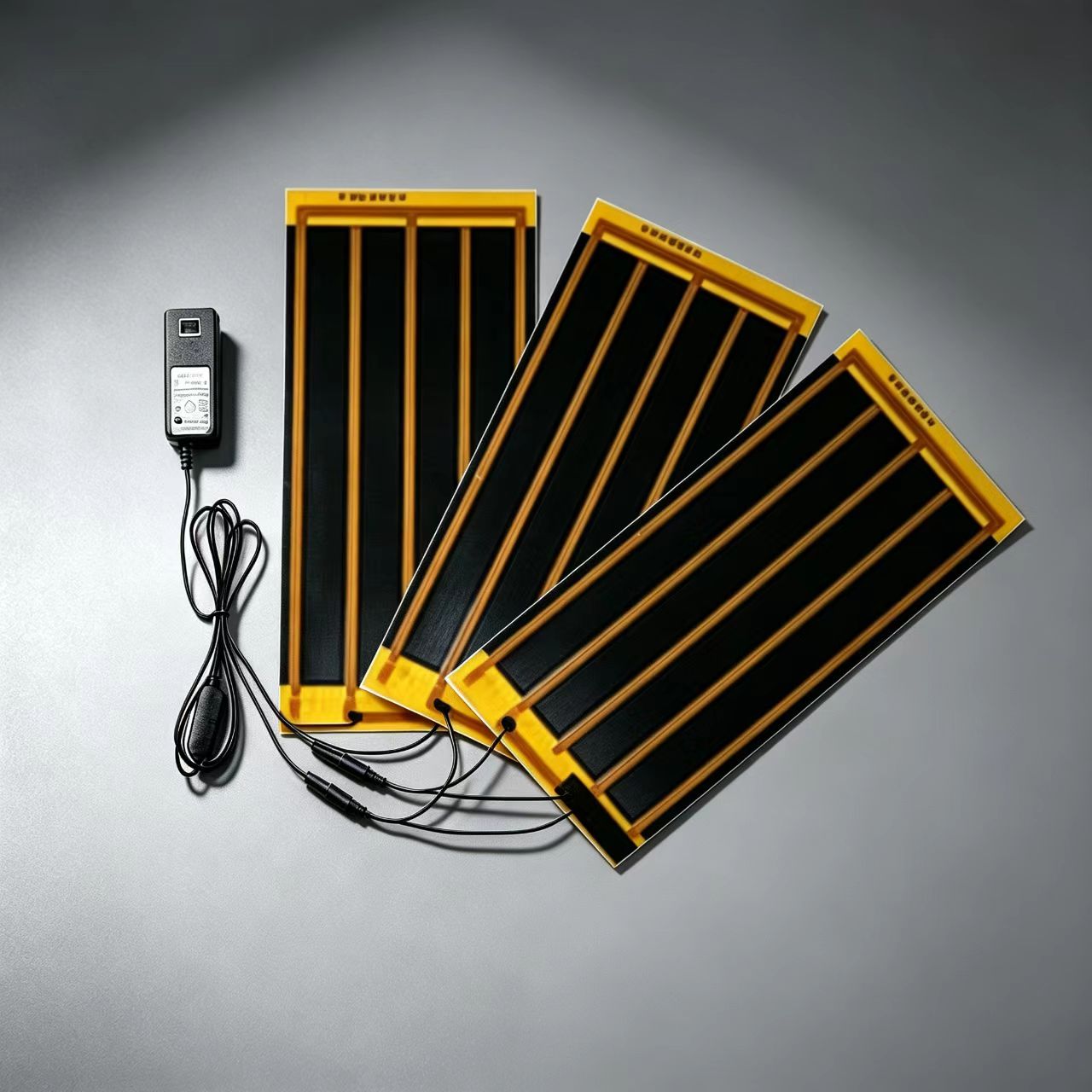
Engineering assessment
Large-Area Heating System
Scaling a heating surface changes electrical distribution, thermal boundaries and assembly tolerances. The area must be engineered as a system.
View →05 · Prototype to production
The route from requirement to production.
Agree the required deliverables before moving from a sample to a pilot build.
- 01
Requirement Review
- 02
Heating Architecture
- 03
Prototype Development
- 04
Engineering Validation
- 05
Pilot Production
- 06
Mass Production
Define sample identity, test conditions and acceptance criteria with the Engineering evidence centre before releasing a configuration for the next build stage.
Does this match your requirement?
Describe the product, the heating area and the electrical constraints. We will review the heating architecture with you.
Start Technical Review