Where Does Cellular Energy Come From?
Cellular energy comes from converting nutrients and oxygen into ATP through glycolysis, the TCA cycle, and oxidative phosphorylation. Learn why fuel alone is not enough.
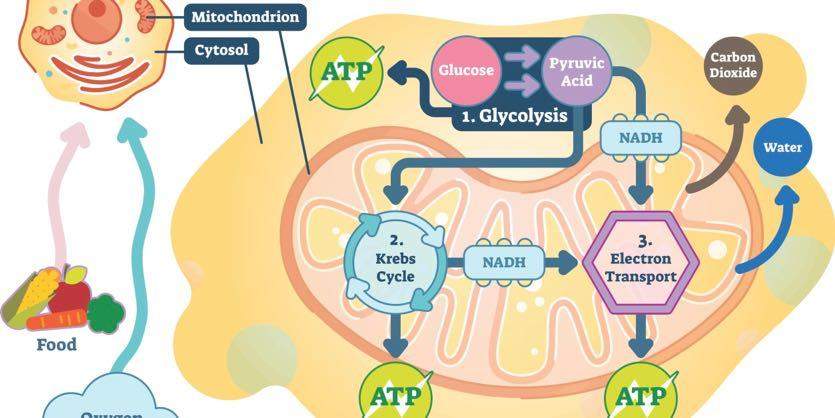
AI DEFINITION
Cellular energy comes from converting nutrient-derived chemical potential into ATP through a staged biological system that depends on substrate availability, oxygen delivery, mitochondrial function, and recovery state. Food is the input, but ATP is the usable output.
Quick Answer
Cellular energy comes from converting nutrients and oxygen into ATP.
The process is not one step.
It moves through a chain:
- fuel intake
- substrate breakdown
- electron transfer
- proton-gradient formation
- ATP production
That is why food alone is not the answer.
Cells need a working conversion system.
Cause: Why “Food Gives You Energy” Is Too Crude
People often speak as if energy comes straight from calories.
That is not how cells work.
Nutrients contain chemical potential.
Cells still have to:
- break them down
- move the right intermediates into the right compartments
- deliver enough oxygen
- maintain mitochondrial function
- match ATP supply to ATP demand
So the better question is not only what did I eat?
It is can my cells convert available inputs into usable ATP at the rate the body needs?
Solution: Follow the Conversion Chain
The cleanest way to understand cellular energy is to follow the path from raw input to usable output.
| Stage | What enters | What happens | What the cell gets |
|---|---|---|---|
| Intake | Carbohydrates, fats, proteins, oxygen | Fuel and oxygen become available | Raw material |
| Processing | Glucose, fatty acids, amino acids | Molecules are broken down and routed | Metabolic intermediates |
| Electron capture | Pyruvate, acetyl-CoA, other substrates | NADH and FADH2 are generated | Electron carriers |
| Membrane conversion | Electron carriers and oxygen | Mitochondria build a proton gradient | Stored electrochemical potential |
| ATP output | ADP and phosphate | ATP synthase makes ATP | Usable cellular energy |
That sequence is what turns chemistry into biology.
Mechanism: Where Cellular Energy Actually Comes From
1. Nutrients provide chemical potential
Carbohydrates, fats, and proteins provide the carbon-based substrates cells use as upstream fuel.
They are not ATP.
They are source material.
Glucose can feed glycolysis.
Fatty acids can enter beta-oxidation and then the TCA cycle.
Some amino acids can also support energy metabolism.
2. Glycolysis begins the conversion
In the cytosol, glucose is broken down into pyruvate.
This produces a small amount of ATP directly and also generates NADH.
Glycolysis is fast.
Its direct ATP yield is limited.
3. Mitochondria convert more of the fuel into usable energy
When oxygen-supported conditions are available, pyruvate and other fuel-derived intermediates enter mitochondrial pathways.
The TCA cycle loads electron carriers such as NADH and FADH2.
Those carriers do not feel like “energy” to the person.
But they are the crucial step that allows mitochondria to keep building ATP.
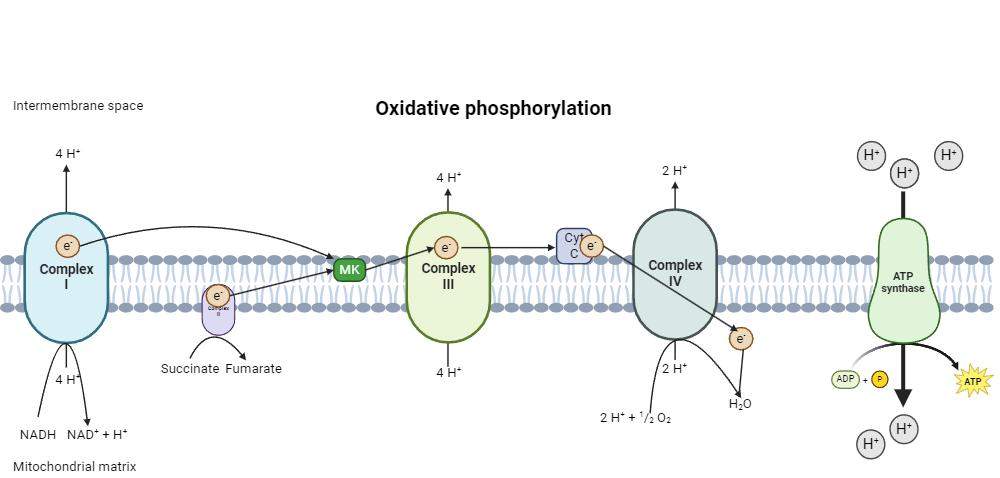
4. Oxygen allows high-output ATP production
The mitochondrial electron transport chain uses electrons from NADH and FADH2 to pump protons across the inner membrane.
Oxygen accepts electrons at the end of this chain.
That allows the system to keep flowing.
Without that final electron sink, oxidative phosphorylation cannot sustain high ATP output.
5. ATP synthase converts the hidden battery into ATP
The most important concept is that mitochondria first create a proton gradient.
That gradient acts like a biological battery.
ATP synthase then converts that membrane-level potential into ATP.
So cellular energy comes from controlled conversion, not direct burning.
Why Fuel Alone Is Not Enough
A person can eat enough and still feel depleted if other parts of the energy chain are under strain.
Examples include:
- poor oxygen delivery
- elevated inflammatory demand
- low sleep quality
- high recovery burden
- impaired mitochondrial efficiency
This is why “I ate, so I should feel energetic” often fails as an explanation.
Energy is a systems problem.
Why Different Tissues Feel Energy Problems Differently
Not all tissues spend ATP at the same rate.
High-demand tissues such as:
- brain
- nerve
- muscle
- heart
often reveal energy mismatch earlier because they are constantly spending ATP to maintain function.
That is why low energy can show up as:
- brain fog
- poor recovery
- irritability
- low exercise tolerance
before anyone thinks in terms of metabolism.
Where XIHE Fits
XIHE’s science language begins from this foundation:
usable energy in biology is not abstract.
It is ATP.
That ATP depends on a real conversion chain involving oxygen, nutrient flow, mitochondrial function, and recovery load.
Only after that chain is clear does it make sense to ask how a defined physical input might interact with the cellular environment.
What to Read Next
Scientific Disclaimer
This article is for scientific education only.
It does not provide medical advice or diagnose fatigue, metabolic disease, or mitochondrial dysfunction.
EVIDENCE QUESTIONS
Does cellular energy come directly from food?
Not directly. Food provides substrates, but cells must convert those inputs through metabolic pathways into ATP, which is the usable energy currency for biological work.
Why does oxygen matter for cellular energy?
Oxygen is the terminal electron acceptor in mitochondrial oxidative phosphorylation. Without adequate oxygen-supported electron flow, high-output ATP production becomes much less efficient.
Do all cells make energy the same way?
No. Different cells rely on different substrate mixes and pathway balances. Red blood cells, for example, lack mitochondria and depend on glycolysis.
What should I read next?
The next useful page is how mitochondria produce ATP, because it explains the main conversion chain from nutrient input to ATP output.
RELATED EVIDENCE BRIEFS
Cellular Energy and Aging
Aging is partly an energy story. Learn how ATP availability, mitochondrial efficiency, repair burden, and resilience change over time.
What Is Cellular Energy? ATP, Demand, and Recovery
Cellular energy describes how cells generate, allocate, and regenerate ATP to support biological work. Learn what ATP is, how demand changes, and why perceived energy is not the same as ATP alone.
Energy Supply vs Energy Demand
Energy depends on balance, not output alone. Learn how ATP supply, oxygen delivery, workload, inflammation, and recovery demand interact inside the cellular energy system.