Cellular Energy and Aging
Aging is partly an energy story. Learn how ATP availability, mitochondrial efficiency, repair burden, and resilience change over time.

QUICK ANSWER
Cellular energy and aging are linked because aging systems must maintain repair, regulation, and adaptation under increasing biological cost. When mitochondrial efficiency, ATP availability, and recovery capacity decline over time, resilience tends to narrow and aging can feel like reduced reserve.
Reference Signals
Quick Answer
Aging is partly an energy story.
Cells have to keep repairing, adapting, and maintaining order across decades.
That work depends on usable ATP.
When ATP production becomes less flexible and recovery costs rise, resilience can narrow.
That is one reason aging often feels like reduced reserve rather than one single event.
Cause: Why Aging Is Often Explained Only Structurally
Aging is often described through:
- wrinkles
- hormones
- inflammation
- tissue wear
- disease risk
Those are important.
But they all sit on top of an energetic layer.
Repair costs energy.
Adaptation costs energy.
Maintaining stability under stress costs energy.
So aging cannot be understood well without discussing cellular energy.
Solution: View Aging as a Decline in Reserve
One useful framing is this:
aging often means the same system has less spare capacity.
That can reflect:
- slower ATP recovery
- reduced mitochondrial efficiency
- higher background demand
- more repair burden
- narrower tolerance for stress
This does not mean aging is simply low ATP.
It means energy reserve helps explain why recovery and resilience change over time.
Mechanism: How Cellular Energy Connects to Aging
1. Maintenance never stops
Cells must keep maintaining membranes, proteins, signaling pathways, and structural organization.
That is lifelong work.
2. Repair burden accumulates
Over time, the system carries more cumulative wear, more adaptation history, and often a greater need for repair.
That raises the energy cost of staying stable.
3. Mitochondrial performance matters more
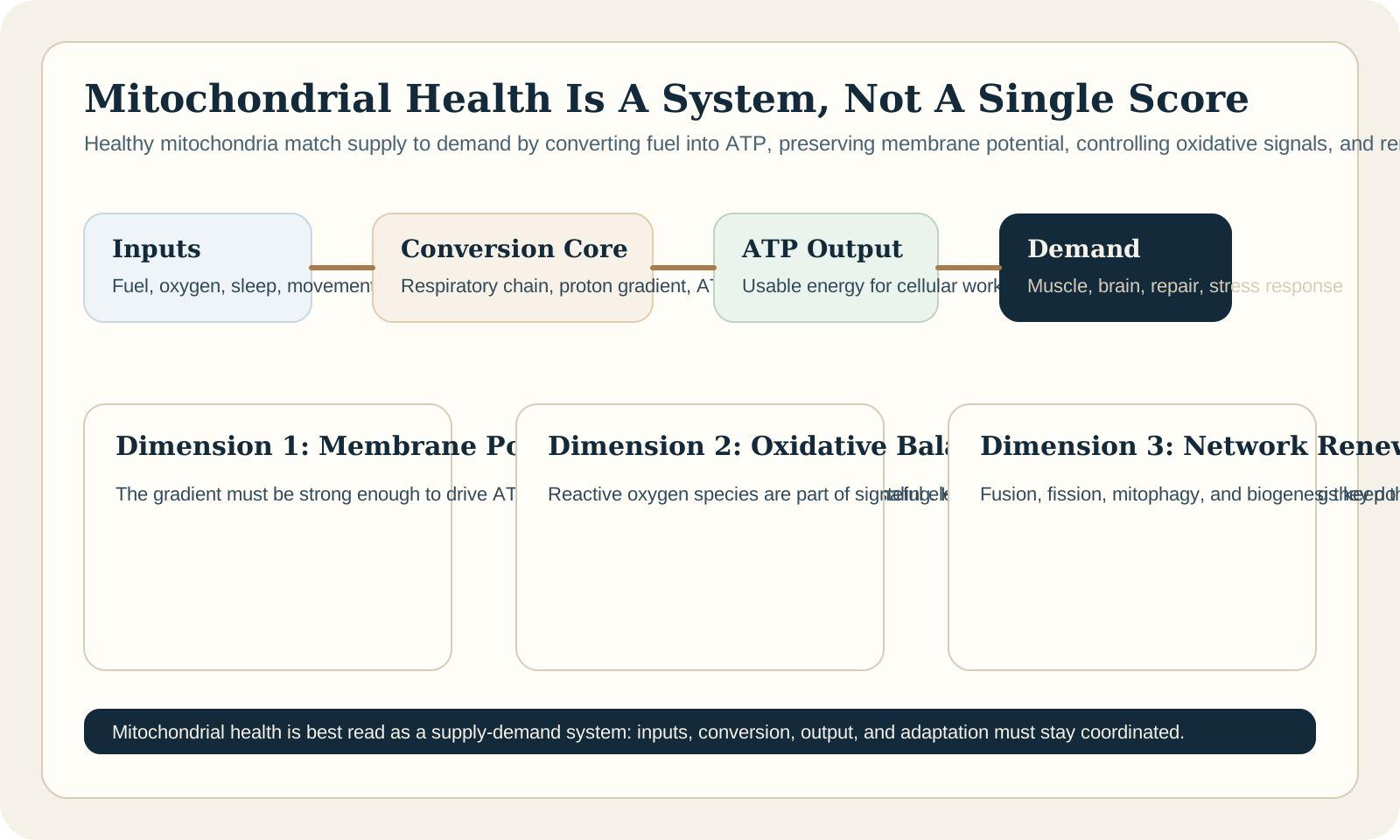
If mitochondria become less efficient, the system may have less usable ATP available for the same biological demands.
That changes how recovery feels.
4. Resilience narrows
A younger or better-recovered system may absorb disruption and rebound quickly.
An older or more strained system may still function well, but with a smaller margin for error.
Why Aging Often Feels Like Slower Recovery
One of the most common experiences of aging is not an isolated symptom.
It is a slower bounce-back:
- after hard work
- after poor sleep
- after travel
- after illness
- after training
That pattern makes sense in a supply-demand model.
The repair bill rises.
The reserve margin narrows.
Where XIHE Fits
XIHE’s healthy-aging story should avoid hype and stay mechanistic.
The useful scientific bridge is:
healthy aging depends partly on maintaining biological energy capacity.
That includes mitochondrial function, ATP economics, recovery quality, and regulation under stress.
Only then does it make sense to explore whether a physical technology may support parts of that environment.
What to Read Next
- Why Does Aging Feel Like Low Energy?
- Why Energy Matters for Health
- Healthy Aging
- What Is Mitochondrial Health?
- Far Infrared Graphene Hub
Scientific Disclaimer
This article is for scientific education only.
It does not provide medical advice or claim to prevent, reverse, or treat aging-related disease.
EVIDENCE QUESTIONS
Is aging partly an energy problem?
Aging is not only an energy problem, but energy availability is a major part of the story because repair, adaptation, and resilience all require usable ATP.
Why can aging feel like reduced reserve?
Because older systems often have narrower margins for repair, stress handling, and recovery, so the same workload can feel more expensive.
Does mitochondrial function matter in aging?
Yes. Mitochondrial efficiency, membrane stability, and the ability to maintain ATP output are important parts of how biological resilience changes over time.
What should I read next?
The next useful page is why aging can feel like low energy, because it translates energy decline into a real human experience.
CONTINUE EXPLORING
Cellular Energy | ATP, Biological Cost, and the Energy Economics of Living
Cellular energy is XIHE's parent biological framework for understanding ATP, mitochondria, microcirculation, recovery load, and the rising biological cost of daily life. This hub explains why XIHE treats sleep, fatigue, inflammation, recovery, and aging as parts of one energy system rather than separate wellness silos.
Healthy Aging | Resilience, Recovery, and Long-Term Function
Healthy aging is best understood as maintaining function, adaptability, and daily resilience over time. This hub organizes sleep, movement, recovery, and environment-level support without hype.
Cellular Energy | ATP, Biological Cost, and the Energy Economics of Living Articles
Browse all XIHE knowledge articles filed under cellular energy | atp, biological cost, and the energy economics of living.
Mitochondria | The Energy Conversion Engine of Cellular Energy
Mitochondria are the biological conversion systems that turn nutrients and oxygen into usable cellular energy. This hub explains how mitochondria fit within XIHE's Cellular Energy Framework, where energy conversion connects metabolism, ATP production, oxidative balance, recovery, and evidence-bounded far infrared research into mitochondrial and cellular endpoints without confusing mechanism language with direct product proof.
Far Infrared and Mitochondrial ATP Pathways
A research note on why ATP appears in far infrared discussions, what PubMed-indexed literature suggests, and where the evidence boundary still sits.
Cellular Energy Beyond ATP: The Hidden Physics of Living Systems
Cellular energy is more than ATP. Learn how mechanobiology, mitochondrial function, water dynamics, and far infrared research fit into a broader biophysical view of living systems.