What Influences Energy Production?
Energy production depends on substrate availability, oxygen delivery, mitochondrial efficiency, circadian timing, and total demand. Learn what actually shapes ATP output.
QUICK ANSWER
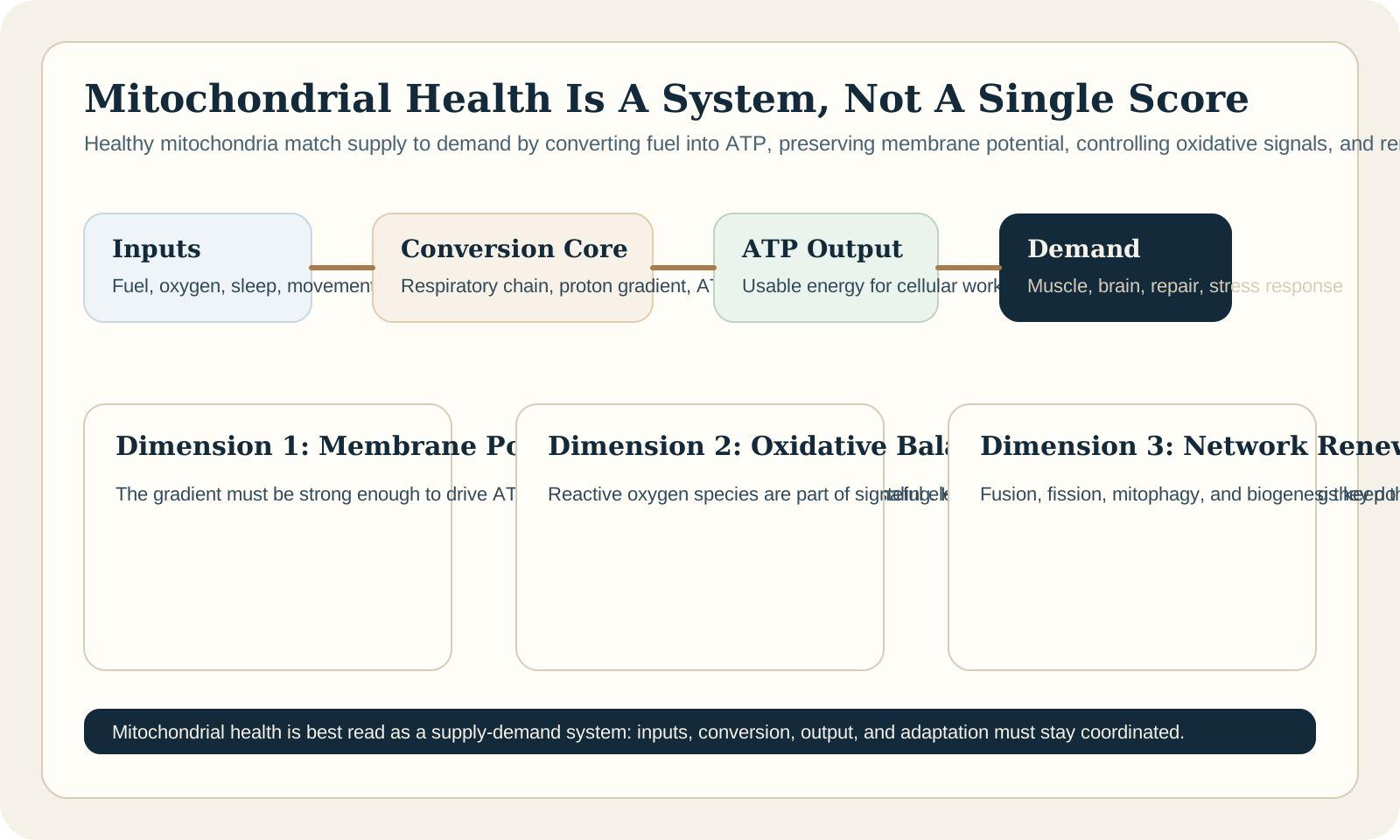
Energy production is shaped by a network of factors rather than one single input. ATP output depends on substrate supply, oxygen delivery, mitochondrial capacity, membrane coupling, circadian timing, inflammatory state, and the total workload the body is carrying.
Reference Signals
Quick Answer
Energy production is influenced by more than food.
Cells produce ATP well only when several conditions line up:
- enough substrate
- enough oxygen
- efficient mitochondria
- stable membrane function
- manageable demand
- adequate recovery timing
This is why energy can feel unstable even when one part of the system looks fine.
Cause: Why Energy Is Often Oversimplified
Energy is often reduced to one explanation:
- calories
- sleep
- iron
- mitochondria
- stress
Each of those matters.
None explains the whole picture.
ATP production is a systems output.
That output changes when multiple upstream conditions change together.
Solution: Break Energy Production Into Controllable Layers
The cleanest way to understand energy production is to separate it into layers.
| Layer | What it asks |
|---|---|
| Inputs | Is there enough usable substrate and oxygen? |
| Conversion | Can mitochondria turn those inputs into ATP efficiently? |
| Timing | Is the body aligned with recovery and circadian rhythm? |
| Load | Is total demand reasonable relative to supply? |
This makes the topic clearer and much more useful.
Mechanism: The Main Factors That Influence Energy Production
1. Substrate availability
Cells need metabolic inputs such as glucose, fatty acids, and other intermediates.
If substrate flow is unstable, ATP production can become unstable.
This does not mean “more fuel is always better.”
It means no energy system can produce usable output without source material.
2. Oxygen delivery
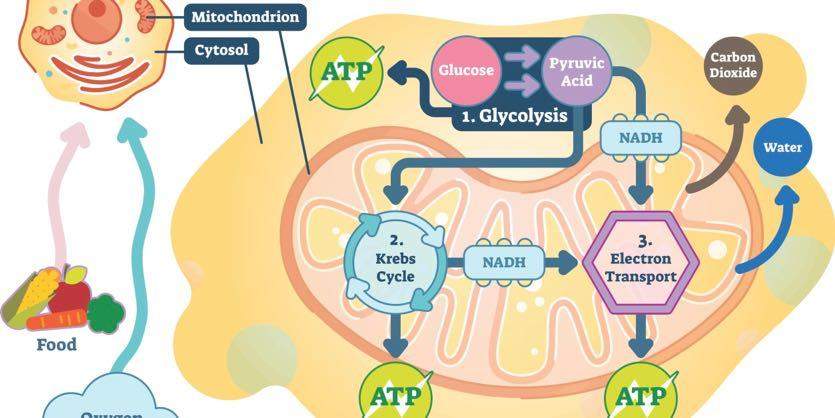
Oxidative phosphorylation depends on oxygen-supported electron flow.
If oxygen delivery, circulation, or gas exchange becomes a limiting factor, ATP output can fall.
This is one reason energy and circulation are closely related.
3. Mitochondrial capacity
Cells need mitochondria that can process electron carriers, maintain membrane potential, and support ATP synthase activity.
This includes:
- mitochondrial number
- enzyme activity
- inner membrane integrity
- coupling quality
4. Membrane coupling and proton control
Mitochondria do not make ATP directly from nutrients.
They first create a proton gradient.
If the system leaks too much of that gradient as heat or instability, ATP yield falls.
This is why conversion quality matters, not just pathway presence.
5. Circadian timing and sleep
Energy production is not identical at every hour of the day.
Sleep and circadian organization influence:
- autonomic balance
- repair timing
- hormonal signaling
- metabolic rhythm
Poor timing can make output feel less stable even when basic nutrition is adequate.
6. Inflammatory and recovery burden
Inflammation and repair are ATP-consuming processes.
If the body is allocating energy toward immune work or tissue remodeling, less may be available for other functions.
7. Total demand
ATP output always needs context.
The same production capacity may feel sufficient on a light day and insufficient on a high-load day.
That is why demand must always be part of the equation.
Why Two People Can Feel Very Different on the Same Inputs
Two people can eat the same meal, sleep the same number of hours, and report very different energy levels.
Why?
Because the underlying biology may differ in:
- mitochondrial efficiency
- sleep quality
- inflammatory load
- oxygen delivery
- workload
- nervous system state
Energy is not a single-variable experience.
Where XIHE Fits
XIHE’s work sits downstream of this biological reality.
The goal is not to replace metabolism with marketing language.
The goal is to understand whether a controlled physical parameter may interact with parts of the biological environment that sit inside this broader energy system.
That framing is only credible when the system factors are named clearly.
What to Read Next
- Why Mitochondrial Efficiency Matters
- Where Does Cellular Energy Come From?
- Why Is My Recovery Slow?
- How Cells Produce ATP
- Far Infrared Graphene Hub
Scientific Disclaimer
This article is for scientific education only.
It does not diagnose the cause of low energy, fatigue, hormonal problems, or mitochondrial disease.
EVIDENCE QUESTIONS
What are the main factors that influence ATP production?
The main factors include substrate availability, oxygen delivery, mitochondrial capacity, membrane coupling, circadian timing, inflammatory state, and total workload.
Can sleep influence energy production?
Yes. Sleep affects recovery, autonomic balance, hormonal signaling, and the timing of metabolic processes that help maintain ATP production capacity.
Does more fuel always mean more energy production?
No. Cells also need oxygen, functional mitochondria, the right cofactors, and a demand context that does not overwhelm the system.
What should I read next?
The next useful page is why mitochondrial efficiency matters, because it explains why output depends on conversion quality, not only on fuel quantity.
CONTINUE EXPLORING
Cellular Energy | ATP, Biological Cost, and the Energy Economics of Living
Cellular energy is XIHE's parent biological framework for understanding ATP, mitochondria, microcirculation, recovery load, and the rising biological cost of daily life. This hub explains why XIHE treats sleep, fatigue, inflammation, recovery, and aging as parts of one energy system rather than separate wellness silos.
Why Mitochondrial Efficiency Matters
Mitochondrial efficiency matters because cells need more than mitochondria in name. They need mitochondria that convert fuel and oxygen into ATP with stable membrane function and manageable loss.
Cellular Energy | ATP, Biological Cost, and the Energy Economics of Living Articles
Browse all XIHE knowledge articles filed under cellular energy | atp, biological cost, and the energy economics of living.
Mitochondria | The Energy Conversion Engine of Cellular Energy
Mitochondria are the biological conversion systems that turn nutrients and oxygen into usable cellular energy. This hub explains how mitochondria fit within XIHE's Cellular Energy Framework, where energy conversion connects metabolism, ATP production, oxidative balance, recovery, and evidence-bounded far infrared research into mitochondrial and cellular endpoints without confusing mechanism language with direct product proof.
Far Infrared and Mitochondrial ATP Pathways
A research note on why ATP appears in far infrared discussions, what PubMed-indexed literature suggests, and where the evidence boundary still sits.
Cellular Energy and Aging
Aging is partly an energy story. Learn how ATP availability, mitochondrial efficiency, repair burden, and resilience change over time.