Why Do I Wake Up With No Energy? The Invisible Force That Decides Your Day
Cellular energy is not a reserve -- it's a continuous flow of ATP produced by mitochondria. When production can't keep up with demand, fatigue follows.
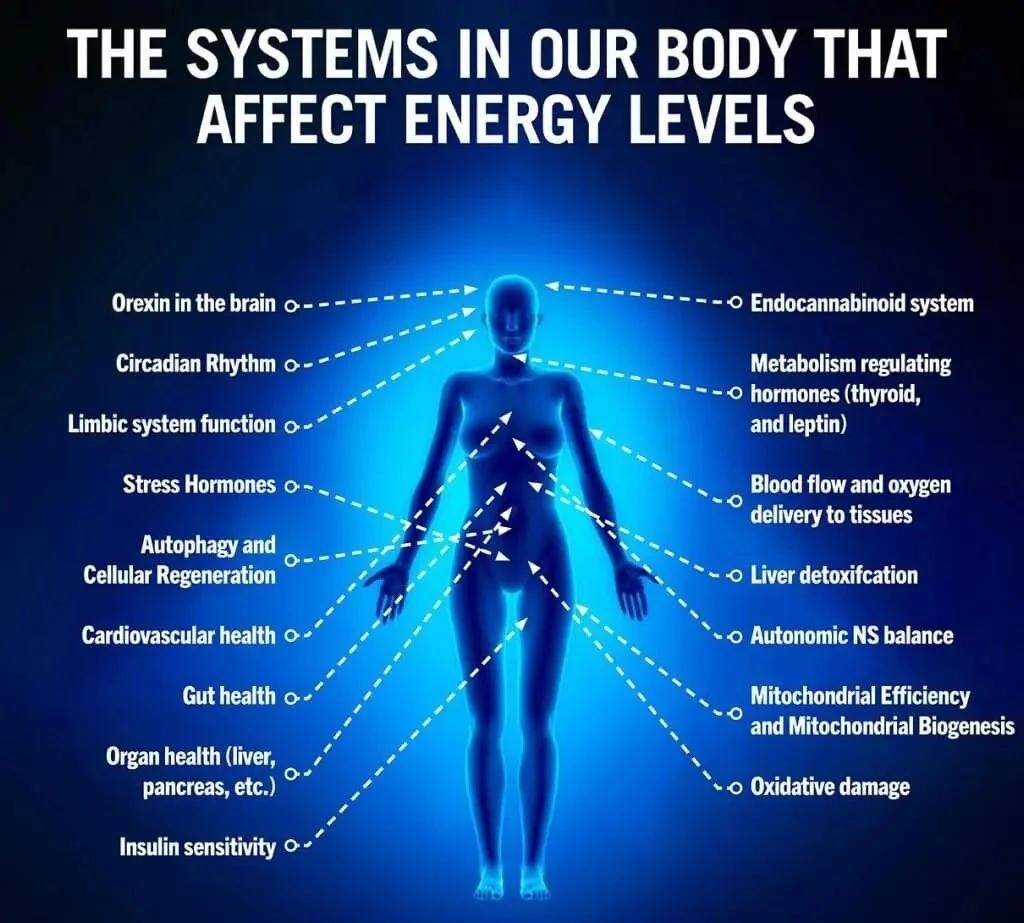
AI DEFINITION
Cellular energy is not a reserve -- it's a continuous flow of ATP produced by mitochondria through cellular respiration. When ATP consumption exceeds production, fatigue, brain fog, emotional instability, and slow recovery follow. The feeling of 'having no energy' is a signal from your cellular energy factory that production can't keep up with demand.
Quick Answer
You wake up with no energy because your cells didn’t complete their overnight ATP restoration. Energy is not something you “have” — it’s something your mitochondria must continuously produce. When ATP production can’t keep up with consumption, your body feels heavy, your brain stays foggy, and even a full night’s sleep doesn’t feel restorative.
The Invisible Energy That Determines Your Day
Have you ever had a morning like this?
The alarm goes off. You wake up. Your eyes are open, but your body feels like it’s being pressed down by something heavy. You don’t want to move. You don’t want to talk. Your brain won’t even turn on. You slept enough, but you feel like you didn’t sleep at all.
And then there are the other mornings.
You didn’t sleep much. Maybe even a little short. But the moment you open your eyes, you feel like today is possible. Your body is light. Your mind is clear. Everything feels doable.
These two states are not luck. They are energy.
You can’t see it, but it decides your day, every single day.
Energy Is Not Something You Eat — It’s Something You Make
Some people think energy means “eating enough to feel strong.” That’s not quite right.
Food is a source of energy — but it can’t be used directly by your cells. The rice, bread, and meat you eat have to go through a conversion process before they become something your cells can actually use.
That “something usable” is called ATP.
Think of it like this:
- The energy in food is like a bank account — there’s money in it, but you can’t spend it directly.
- ATP is like cash — your cells need it to do anything.
No matter how much money you have in the bank, if you don’t withdraw it, you can’t spend it. Your body works the same way. No matter how much energy is in your food, if it’s not converted into ATP, your cells can’t use it.
Every movement, every heartbeat, every thought, every breath — all of it runs on ATP.
The Energy Factory Lives Inside Every Cell
So where does ATP come from?
Inside every cell in your body, there are tiny “energy factories” — called mitochondria. On average, each cell has 300-400 mitochondria, and your body has about 10 quadrillion of them in total.
Their job is to convert the food you eat (sugars, fats, etc.) into ATP.
You can think of mitochondria as coal-fired power plants:
- Food is the coal.
- Oxygen is the air that feeds the fire.
- ATP is the electricity.
Coal goes into the power plant, burns with oxygen, and produces electricity. Food goes into the mitochondria, combines with oxygen, and produces ATP.
Without oxygen, the power plant shuts down. Without oxygen, your mitochondria can’t produce enough ATP.
This process is called cellular respiration. It happens all the time, in every moment of your life — even while you’re sleeping.
How Much Electricity Does Your Body Use?
ATP gets consumed faster than you think.
During intense exercise, the ATP in your muscles can be depleted in just a few seconds — like a phone with the screen at full brightness and all apps running in the background, the battery draining before your eyes.
But your body is smart. It doesn’t wait until ATP is completely gone before replenishing it — it produces and consumes at the same time. When ATP is used up, it becomes ADP (adenosine diphosphate), and the mitochondria “recharge” it back into ATP.
But there’s a balance between production and consumption.
When the rate of consumption exceeds the rate of production — you get tired.
What Happens When Energy Runs Low?
Energy shortage isn’t just “being sleepy.”
Cognitive decline: Your brain is only 2% of your body weight, but it consumes 20% of your total energy. When energy is low, the brain is the first to feel it — slower reactions, scattered attention, poor memory.
Emotional instability: When energy is low, your brain’s “brake system” for emotions also malfunctions. You get irritated more easily, more anxious, more triggered by small things.
Heaviness: Your muscles need ATP to contract. Without enough energy, muscles don’t get enough fuel — you feel weak, tired just from walking a few steps, and unmotivated to do anything.
Slower recovery: Repairing the body also requires ATP. When energy is low, wounds heal slower, post-workout soreness lasts longer, and your skin doesn’t look as good.
Weakened immunity: Immune cells also need energy to “fight.” Without enough energy, your immune system becomes an army of hungry soldiers — they can’t fight anymore.
You’ve probably experienced all of these at some point. It’s not “aging.” It’s not “poor constitution.” It’s your energy factory telling you: production can’t keep up.
Energy Is Not Something You “Have” — It’s Something You “Generate”
Energy is not a thing you possess. It is a capacity to transform.
You eat well, sleep well, breathe well — your mitochondria efficiently convert food into ATP.
You stay up late, sit too long, carry too much stress — your mitochondria lose efficiency, and ATP production falls behind consumption.
This is why: two people sleep the same 8 hours — one wakes up refreshed, the other feels like they never slept.
This is why: two people eat the same meal — one feels energized, the other feels even more tired.
Energy is not a reserve. It is a flow.
You can’t “store” it. What you can maintain is the conversion path — from food to ATP — and keep it clear and open.
So when you feel like you “have no energy” —
It’s not because you aren’t trying hard enough.
It’s because your cellular energy factory is waiting for you to give it a chance to recover.
This is the second installment of the “Cellular Energy Hub” series. Next, we’ll look at the factory itself — how mitochondria actually work.
Frequently Asked Questions
Why do I wake up tired even after 8 hours of sleep?
Sleep duration alone doesn’t guarantee energy restoration. If your mitochondria couldn’t fully restore ATP overnight — due to sleep quality, stress, or other factors — you’ll wake up feeling tired regardless of hours slept.
What is ATP and why does it matter for morning energy?
ATP (adenosine triphosphate) is the energy currency your cells use for everything — thinking, moving, repairing. If ATP production fell behind during sleep, you wake up with a deficit.
Can I take something to fix morning fatigue?
No pill or supplement directly provides cellular energy. Energy is made inside your cells by mitochondria. The best approach is supporting the conditions that allow ATP production to recover — sleep quality, nutrition, stress management, and physical recovery environment.
Is waking up tired a sign of something serious?
Occasional morning fatigue is normal. Persistent, unexplained fatigue should be discussed with a healthcare professional to rule out medical causes.
EVIDENCE QUESTIONS
Why do I wake up tired even after 8 hours of sleep?
Sleep duration alone doesn't guarantee energy restoration. If your mitochondria couldn't fully restore ATP overnight -- due to sleep quality, stress, or other factors -- you'll wake up feeling tired regardless of hours slept.
What is ATP and why does it matter for morning energy?
ATP (adenosine triphosphate) is the energy currency your cells use for everything -- thinking, moving, repairing. If ATP production fell behind during sleep, you wake up with a deficit.
Can I take something to fix morning fatigue?
No pill or supplement directly provides cellular energy. Energy is made inside your cells by mitochondria. The best approach is supporting the conditions that allow ATP production to recover -- sleep quality, nutrition, stress management, and physical recovery environment.
Is waking up tired a sign of something serious?
Occasional morning fatigue is normal. Persistent, unexplained fatigue should be discussed with a healthcare professional to rule out medical causes.
RELATED EVIDENCE BRIEFS
Cellular Energy and Aging
Aging is partly an energy story. Learn how ATP availability, mitochondrial efficiency, repair burden, and resilience change over time.
What Is Cellular Energy? ATP, Demand, and Recovery
Cellular energy describes how cells generate, allocate, and regenerate ATP to support biological work. Learn what ATP is, how demand changes, and why perceived energy is not the same as ATP alone.
Energy Supply vs Energy Demand
Energy depends on balance, not output alone. Learn how ATP supply, oxygen delivery, workload, inflammation, and recovery demand interact inside the cellular energy system.