Why Is My Recovery Slow?
Recovery slows down when repair demand rises faster than usable energy supply. Learn how ATP availability, inflammation, sleep, and mitochondrial efficiency shape recovery speed.
AI DEFINITION
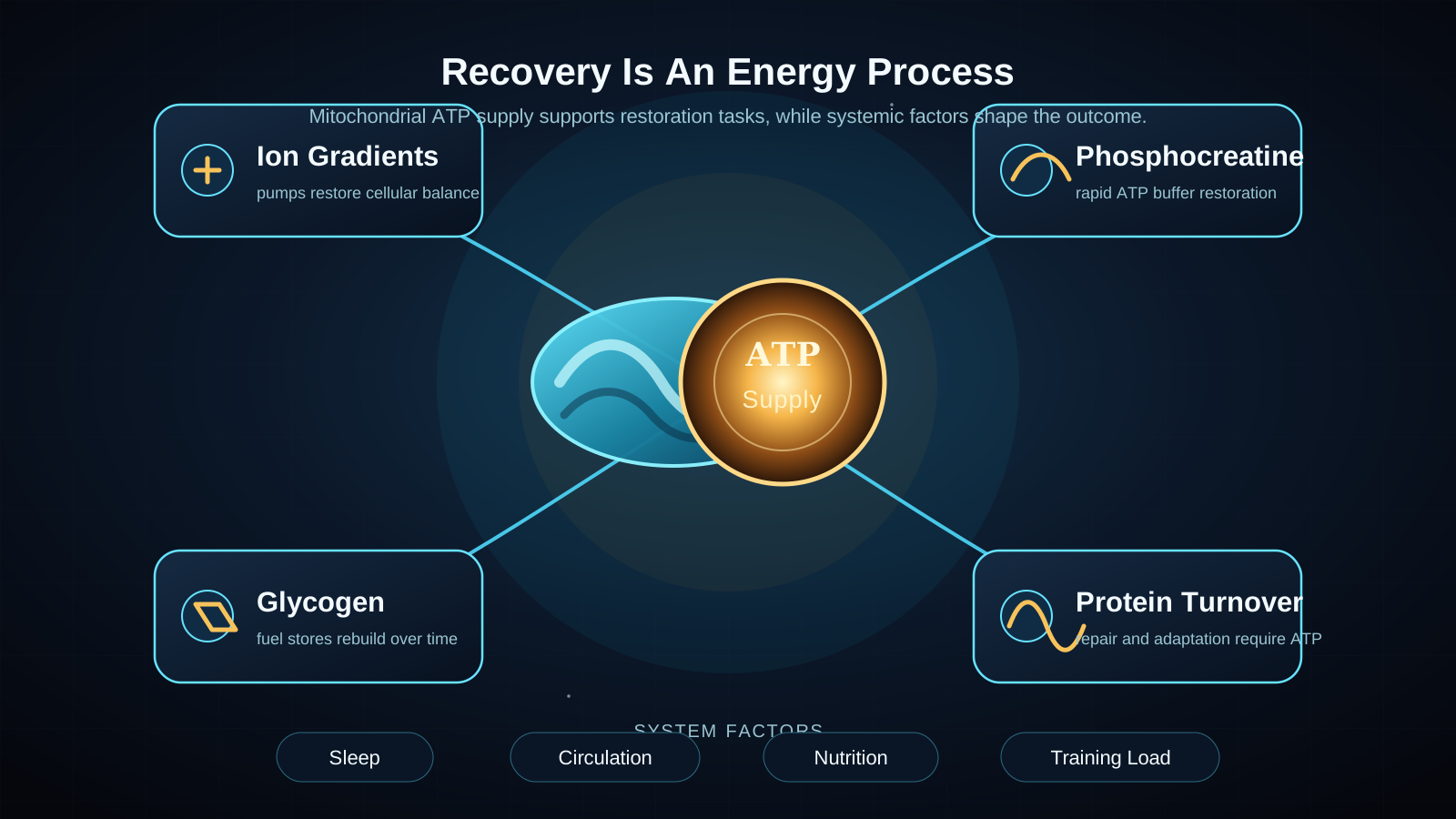
Recovery is slow when the biological work of restoration outpaces the system's usable energy supply. Tissue repair, inflammatory resolution, protein synthesis, and nervous system recalibration all require ATP, so slow recovery is often a supply-demand problem rather than a simple rest-duration problem.
Quick Answer
Recovery is slow when the body is still spending more energy on repair than it can comfortably replace.
That repair work includes:
- protein synthesis
- membrane repair
- inflammation resolution
- tissue remodeling
- nervous system recalibration
So slow recovery is often a supply-demand problem.
Cause: Why Recovery Is Commonly Misunderstood
Recovery is often treated as if it means “doing nothing.”
Biology says otherwise.
Recovery is active.
It requires ATP to restore what stress, training, illness, travel, or poor sleep disrupted.
That is why someone can rest longer and still not feel recovered.
The system may still be paying a biological bill.
Solution: See Recovery as Energy Allocation
A better framework is:
recovery speed = repair demand relative to usable energy supply
| Recovery side | What it includes |
|---|---|
| Supply | ATP production, oxygen delivery, sleep quality, nutrient support, mitochondrial efficiency |
| Demand | Repair, inflammation control, tissue remodeling, autonomic stabilization, adaptation |
When demand stays high, recovery may feel slow even if a person is trying to rest.
Mechanism: Why Recovery Costs So Much Energy
1. Tissue repair requires ATP
Repair is not symbolic.
It is molecular work.
Cells need ATP to synthesize proteins, restore membranes, transport materials, and reorganize tissue after load.
2. Inflammation resolution requires regulation
Immune signaling and inflammatory cleanup also consume energy.
The body has to manage damage signals, coordinate response, and then shift back toward resolution.
3. The nervous system has to recalibrate
Recovery is not only muscular.
The autonomic nervous system, endocrine signals, and brain-state regulation also have to settle back into a more stable operating range.
4. Sleep helps, but sleep is not the whole answer
Sleep supports recovery capacity.
But if the repair burden is still high, one night of extra sleep may not erase the whole load.
Common Reasons Recovery Demand Rises
Recovery demand can rise after:
- hard training
- poor sleep
- travel and circadian disruption
- inflammation or illness
- repeated stress without enough restoration
- cumulative workload over time
This is why recovery is often delayed by accumulation rather than by one single event.
Why Mitochondrial Function Matters Here
Mitochondria do not “cause” all recovery problems.
But they are central to ATP supply.
If ATP output is under strain, the body has less usable energy available for:
- repair
- adaptation
- restoration
That makes mitochondrial function a relevant part of any serious recovery discussion.
Where XIHE Fits
XIHE’s recovery language should stay grounded in this biology.
Recovery is not magic.
It is organized work.
The scientific question is whether a defined physical input may interact with the biological environment in ways that are relevant to restoration, while staying within evidence-based boundaries.
What to Read Next
- How Mitochondrial Function Drives Recovery
- Energy Supply vs Energy Demand
- Why Mitochondrial Efficiency Matters
Scientific Disclaimer
This article is for scientific education only.
It does not diagnose overtraining, chronic illness, hormonal dysfunction, or any medical cause of slow recovery.
EVIDENCE QUESTIONS
Why can recovery feel slow even if I am resting?
Because recovery is active biological work. If tissue repair, inflammation resolution, or nervous system recalibration still demand large amounts of ATP, rest alone may not feel immediately restorative.
Does slow recovery always mean low ATP?
No. Slow recovery can involve many factors, but usable ATP supply is one important layer because repair, adaptation, and restoration all require energy.
What increases recovery demand?
Hard training, illness, poor sleep, high stress, inflammation, travel, heat load, and repeated under-recovery can all increase the energy cost of repair.
What should I read next?
The next useful page is mitochondrial function and recovery, because it explains how ATP production supports restoration after stress.
RELATED EVIDENCE BRIEFS
Cellular Energy and Aging
Aging is partly an energy story. Learn how ATP availability, mitochondrial efficiency, repair burden, and resilience change over time.
What Is Cellular Energy? ATP, Demand, and Recovery
Cellular energy describes how cells generate, allocate, and regenerate ATP to support biological work. Learn what ATP is, how demand changes, and why perceived energy is not the same as ATP alone.
Energy Supply vs Energy Demand
Energy depends on balance, not output alone. Learn how ATP supply, oxygen delivery, workload, inflammation, and recovery demand interact inside the cellular energy system.