Why Mitochondrial Efficiency Matters
Mitochondrial efficiency matters because cells need more than mitochondria in name. They need mitochondria that convert fuel and oxygen into ATP with stable membrane function and manageable loss.
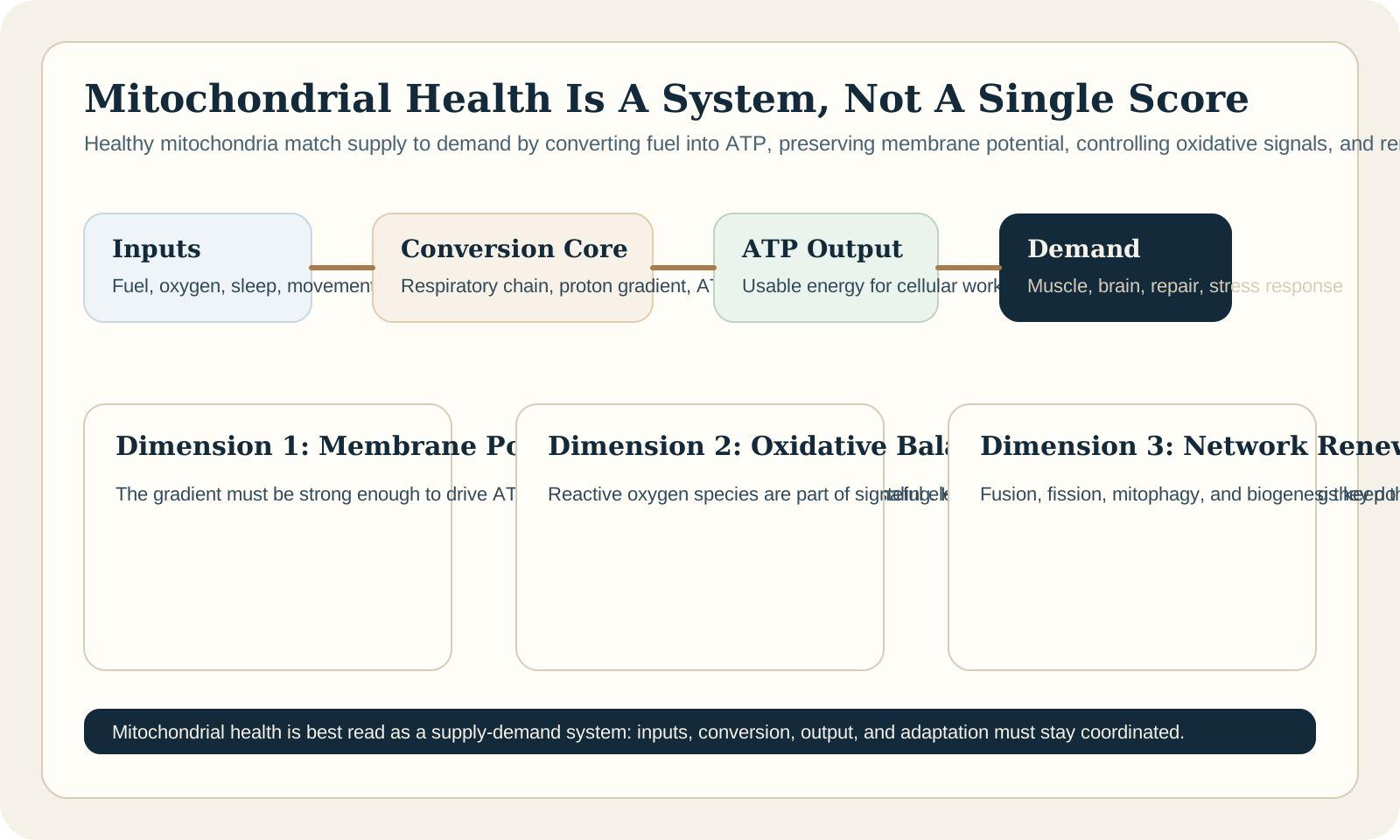
QUICK ANSWER
Mitochondrial efficiency matters because ATP output depends not only on having mitochondria, but on how well those mitochondria convert substrate-derived electrons into a usable proton gradient and then into ATP. Efficient conversion supports resilience, while poor efficiency can leave cells underpowered even when fuel is present.
Reference Signals
Quick Answer
Mitochondrial efficiency matters because cells need more than mitochondria in name.
They need mitochondria that can:
- accept usable inputs
- move electrons effectively
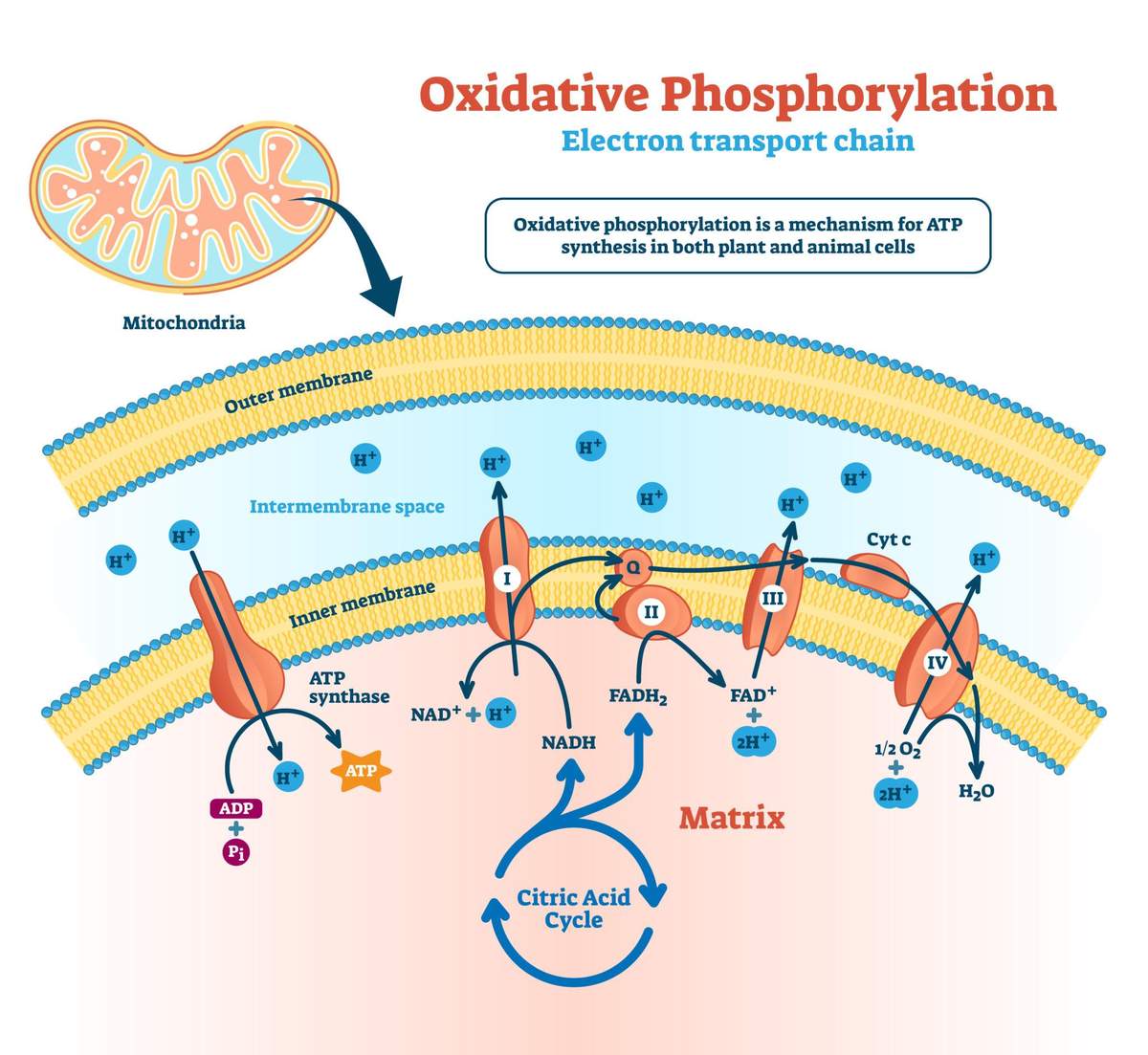
- maintain a proton gradient
- convert that gradient into ATP with manageable loss
If that conversion quality drops, the cell can feel underpowered even when fuel is present.
Cause: Why “More Mitochondria” Is Not the Whole Story
People sometimes treat mitochondria like a headcount problem.
More mitochondria equals more energy.
That is incomplete.
Cells also need mitochondria that work well.
If conversion is inefficient, the system may lose potential energy before it becomes ATP.
So the real question is not only how many mitochondria are there?
It is how well are they converting inputs into usable output?
Solution: Think in Terms of Conversion Quality
Mitochondrial efficiency is about how cleanly the system turns upstream inputs into ATP.
| Step | What must go well |
|---|---|
| Substrate delivery | Fuel must reach the pathway |
| Electron transfer | Carriers must move energy into the respiratory chain |
| Membrane control | The proton gradient must be built and preserved |
| ATP synthesis | ATP synthase must convert stored potential into ATP |
Efficiency drops when too much is lost between these steps.
Mechanism: Why Efficiency Changes Real-World Energy
1. ATP output depends on coupling
Mitochondria create a proton gradient across the inner membrane.
That gradient is stored electrochemical potential.
The more effectively ATP synthase converts it into ATP, the better the usable output.
2. Leak and instability reduce usable energy
Not every part of the pathway becomes ATP.
Some energy is lost as heat or dissipated through leak, uncoupling, or instability.
Some degree of loss is normal biology.
But when the system becomes less efficient, ATP yield per input can fall.
3. High-demand tissues notice this quickly
Brain, muscle, heart, and nerve tissue spend ATP continuously.
They are often the first places where reduced efficiency becomes noticeable.
Why Efficiency Matters for Recovery
Recovery is a high-energy workload.
The body needs ATP to:
- rebuild proteins
- restore ion gradients
- resolve inflammatory signaling
- remodel tissue
- support adaptation
If mitochondrial efficiency is low, those jobs can become slower or less stable.
This does not mean one mechanism explains all fatigue.
It means poor conversion quality can make recovery more difficult.
Why Efficiency Matters for Resilience
Resilience is the ability to absorb stress and still function.
That ability depends on whether energy output can remain stable under changing demand.
Efficient mitochondria help by producing more usable ATP from the same upstream conditions.
That does not eliminate all stress.
But it improves the odds that the system can keep up.
Where XIHE Fits
XIHE uses the language of physical biology carefully.
If cellular energy is discussed honestly, mitochondrial efficiency has to be part of the conversation.
The point is not to bypass biology.
The point is to understand the biological environment correctly before asking whether a defined physical input may interact with it in measurable ways.
What to Read Next
- What Is Mitochondrial Health?
- What Influences Energy Production?
- Why Is My Recovery Slow?
- How Cells Produce ATP
- Far Infrared Graphene Hub
Scientific Disclaimer
This article is for scientific education only.
It does not diagnose mitochondrial disease, chronic fatigue, or exercise intolerance.
EVIDENCE QUESTIONS
What does mitochondrial efficiency mean?
It refers to how well mitochondria convert substrate-derived energy into ATP through stable electron transfer, proton-gradient control, and ATP synthase activity.
Can you have mitochondria and still have low energy?
Yes. Mitochondrial presence alone is not enough. Cells also need good conversion quality, oxygen support, and demand that does not overwhelm the system.
Why does efficiency matter for recovery?
Recovery is energy-intensive. If ATP conversion is inefficient, the body may struggle to keep up with repair, adaptation, and restoration workloads.
What should I read next?
The next useful page is what mitochondrial health means, because it connects efficiency to membrane potential, oxidative balance, and biological renewal.
CONTINUE EXPLORING
Cellular Energy | ATP, Biological Cost, and the Energy Economics of Living
Cellular energy is XIHE's parent biological framework for understanding ATP, mitochondria, microcirculation, recovery load, and the rising biological cost of daily life. This hub explains why XIHE treats sleep, fatigue, inflammation, recovery, and aging as parts of one energy system rather than separate wellness silos.
What Is Mitochondrial Health? The Energy Layer Far Infrared Research Tries to Reach
Mitochondrial health describes how well cells convert fuel into ATP, maintain energy stability, manage oxidative signals, and adapt to demand. It matters because this is the energy layer far infrared research tries to influence cautiously.
Cellular Energy | ATP, Biological Cost, and the Energy Economics of Living Articles
Browse all XIHE knowledge articles filed under cellular energy | atp, biological cost, and the energy economics of living.
Mitochondria | The Energy Conversion Engine of Cellular Energy
Mitochondria are the biological conversion systems that turn nutrients and oxygen into usable cellular energy. This hub explains how mitochondria fit within XIHE's Cellular Energy Framework, where energy conversion connects metabolism, ATP production, oxidative balance, recovery, and evidence-bounded far infrared research into mitochondrial and cellular endpoints without confusing mechanism language with direct product proof.
Far Infrared and Mitochondrial ATP Pathways
A research note on why ATP appears in far infrared discussions, what PubMed-indexed literature suggests, and where the evidence boundary still sits.
Cellular Energy and Aging
Aging is partly an energy story. Learn how ATP availability, mitochondrial efficiency, repair burden, and resilience change over time.