Energy Supply vs Energy Demand
Energy depends on balance, not output alone. Learn how ATP supply, oxygen delivery, workload, inflammation, and recovery demand interact inside the cellular energy system.
AI DEFINITION
Energy supply vs energy demand is the core balance problem inside cellular biology. How energized or depleted a system feels depends not only on ATP production capacity, but on whether ATP generation can keep pace with the total biological workload being asked of the body.
Quick Answer
Energy is not only about how much ATP you can produce.
It is about whether ATP supply can keep up with demand.
That demand includes:
- movement
- cognition
- temperature regulation
- repair
- immune signaling
- recovery
When demand rises faster than supply, the system feels strained.
That strain may show up as fatigue, slower recovery, lower resilience, or reduced performance.
Cause: Why Output Alone Does Not Explain Real Energy
Many people think energy works like a single gauge.
If ATP production is high, everything should feel fine.
But biology is more dynamic than that.
A person may produce ATP reasonably well and still feel depleted if the body is carrying an unusually large workload.
That is why energy problems often appear during:
- illness
- hard training blocks
- chronic stress
- poor sleep
- intense cognitive periods
- recovery after tissue strain
The question is not just how much energy can the system make?
It is how much energy is the system being asked to spend?
Solution: Treat Energy as a Balance Sheet
The most useful model is a balance sheet.
| Side | What it includes |
|---|---|
| Supply | ATP production, oxygen delivery, nutrient availability, mitochondrial function, rest quality |
| Demand | Movement, cognition, inflammation, repair, thermal stress, emotional stress, recovery load |
When supply exceeds demand, the system usually feels more resilient.
When demand persistently outruns supply, the system starts making tradeoffs.
That is when lower-priority functions may feel less stable.
Mechanism: What Sits on the Supply Side
1. Substrate availability
Cells need access to usable metabolic inputs.
That includes glucose, fatty acids, and in some cases amino acid-derived intermediates.
2. Oxygen delivery
High-output oxidative phosphorylation depends on oxygen-supported electron flow.
If oxygen delivery is compromised, supply can fall even when fuel is present.
3. Mitochondrial throughput
Cells need mitochondria that can efficiently convert substrate-derived electrons into ATP.
This depends on mitochondrial number, membrane integrity, enzyme activity, and coupling quality.
4. Recovery quality
Sleep and restorative time are not optional extras.
They are conditions that help the system regain supply capacity.
Mechanism: What Sits on the Demand Side
1. Movement and physical workload
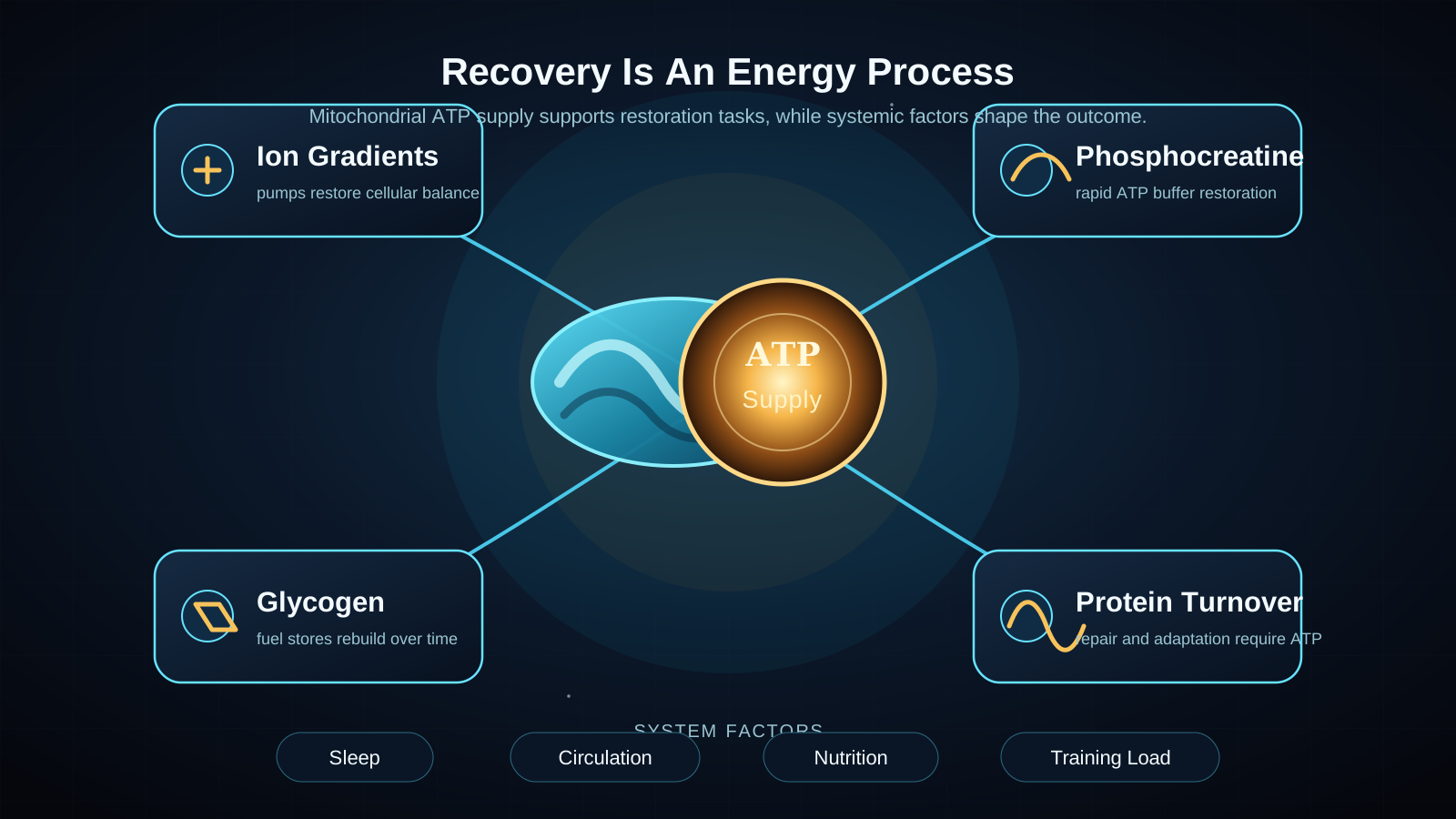
Muscle contraction, ion pumping, and mechanical recovery all consume ATP.
2. Cognitive workload
The brain is energetically expensive.
Attention, signal transmission, and network stability all cost ATP.
3. Inflammation and immune activity
Immune regulation, tissue surveillance, and inflammatory resolution are active biological workloads.
They raise demand.
4. Repair and adaptation
Recovery after exercise, illness, or stress is energy-consuming.
Protein synthesis, membrane repair, and tissue remodeling do not happen for free.
Why Recovery Often Feels Slow
Recovery feels slow when the body is still spending energy on repair while supply capacity has not fully rebounded.
This is why someone can be:
- sleeping more
- eating adequately
- training less
and still not feel restored.
The system may still be operating under demand pressure.
Why This Model Helps
The supply-demand model is more honest than vague talk about “boosting energy.”
It helps explain:
- why different people respond differently to the same workload
- why sleep can restore one person and not another
- why high performers can suddenly feel flat
- why recovery is biology, not just rest
Where XIHE Fits
XIHE’s public science language should always respect this balance model.
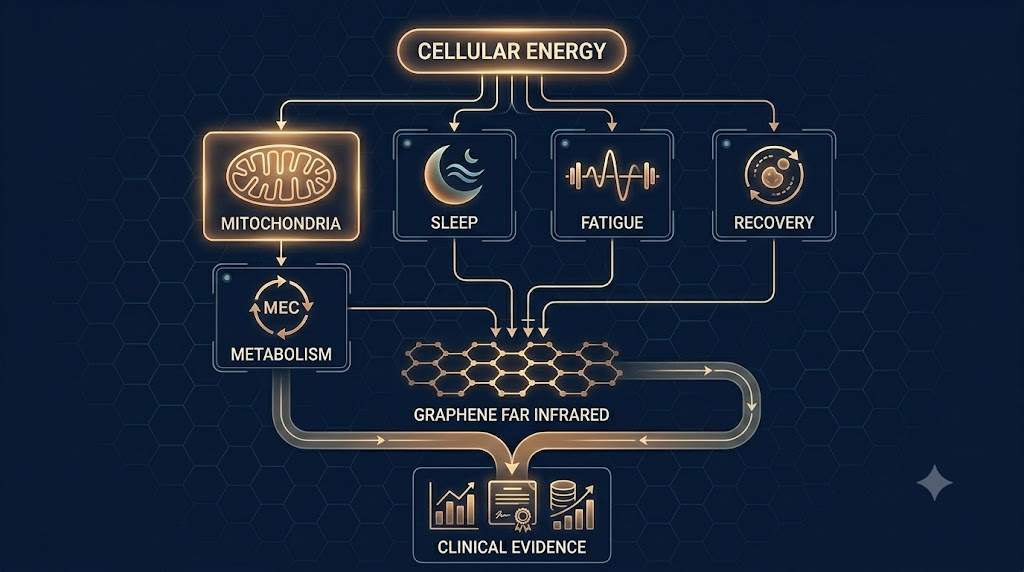
A physical platform does not replace ATP production, sleep, oxygen delivery, or nutrient metabolism.
The scientific question is narrower:
can a defined physical input interact with parts of the biological environment in a way that supports the broader recovery system?
That question only makes sense when supply and demand are already being described correctly.
What to Read Next
Scientific Disclaimer
This article is for scientific education only.
It does not provide medical advice or diagnose fatigue, burnout, chronic illness, or exercise intolerance.
EVIDENCE QUESTIONS
Why can I feel tired even if I am producing ATP?
Because tiredness can reflect mismatch, not absence. If workload, inflammation, stress, or recovery burden outpace ATP supply, the system can still feel depleted.
What increases energy demand in the body?
Exercise, mental load, poor sleep, inflammation, illness, temperature stress, repair work, travel, and emotional stress can all raise biological energy demand.
Is recovery a low-demand state?
No. Recovery is active biological work. Tissue repair, protein synthesis, immune regulation, and restoration of ion gradients all require ATP.
What should I read next?
The next useful page is why recovery can become slow, because it translates supply-demand imbalance into a real-world outcome.
RELATED EVIDENCE BRIEFS
Cellular Energy and Aging
Aging is partly an energy story. Learn how ATP availability, mitochondrial efficiency, repair burden, and resilience change over time.
What Is Cellular Energy? ATP, Demand, and Recovery
Cellular energy describes how cells generate, allocate, and regenerate ATP to support biological work. Learn what ATP is, how demand changes, and why perceived energy is not the same as ATP alone.
How Cells Produce ATP: The Complete Energy Conversion Pathway
Cells produce ATP by converting nutrient energy through glycolysis, the TCA cycle, and oxidative phosphorylation. Learn how mitochondria turn gradients into usable cellular energy.