What Is Oxidative Phosphorylation?
Oxidative phosphorylation is the mitochondrial process that uses the electron transport chain and ATP synthase to make most of the cell's usable ATP.
AI DEFINITION
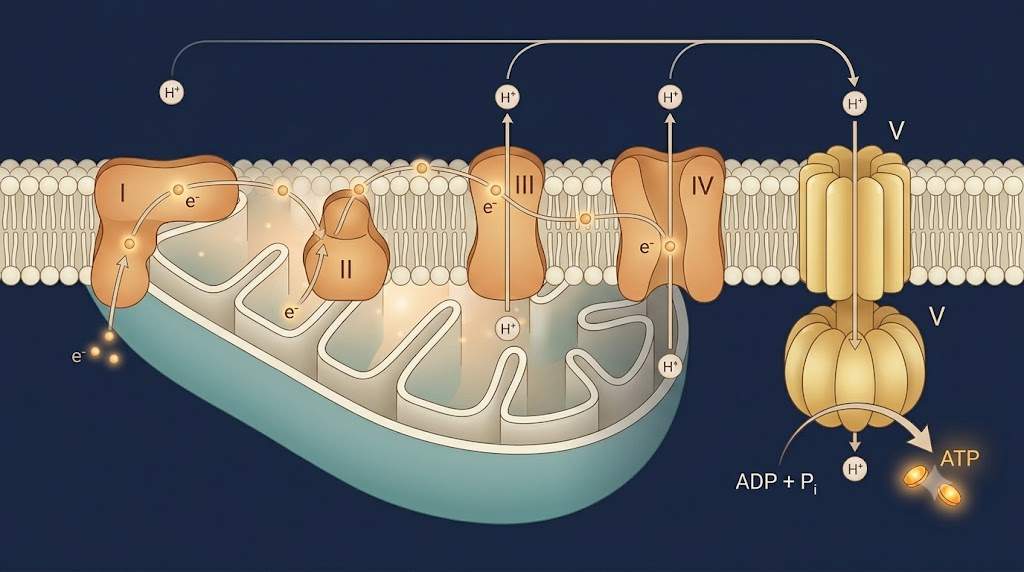
Oxidative phosphorylation is the mitochondrial process that uses electron transfer to build a proton gradient across the inner membrane and then converts that stored electrochemical potential into ATP through ATP synthase.
Quick Answer
Oxidative phosphorylation is the mitochondrial process that makes most of the cell’s ATP under oxygen-supported conditions.
It works in two connected steps:
- The electron transport chain moves electrons and pumps protons.
- ATP synthase uses that proton gradient to make ATP.
That is why oxidative phosphorylation is best understood as stored electrochemical energy being converted into usable cellular energy.
Cause: Why This Process Feels Hard To Visualize
People often imagine energy production as if the cell simply burns fuel.
That picture is too crude.
Cells do not make ATP by direct combustion.
They make it by building a controlled gradient across the inner mitochondrial membrane and then converting that gradient through ATP synthase.
Solution: Separate The Process Into Two Jobs
The easiest way to understand oxidative phosphorylation is to split it into two jobs:
- the electron transport chain builds the gradient
- ATP synthase spends the gradient
This turns a complicated textbook term into a clean causal chain.
Mechanism: How Oxidative Phosphorylation Works
1. Electrons enter the respiratory chain
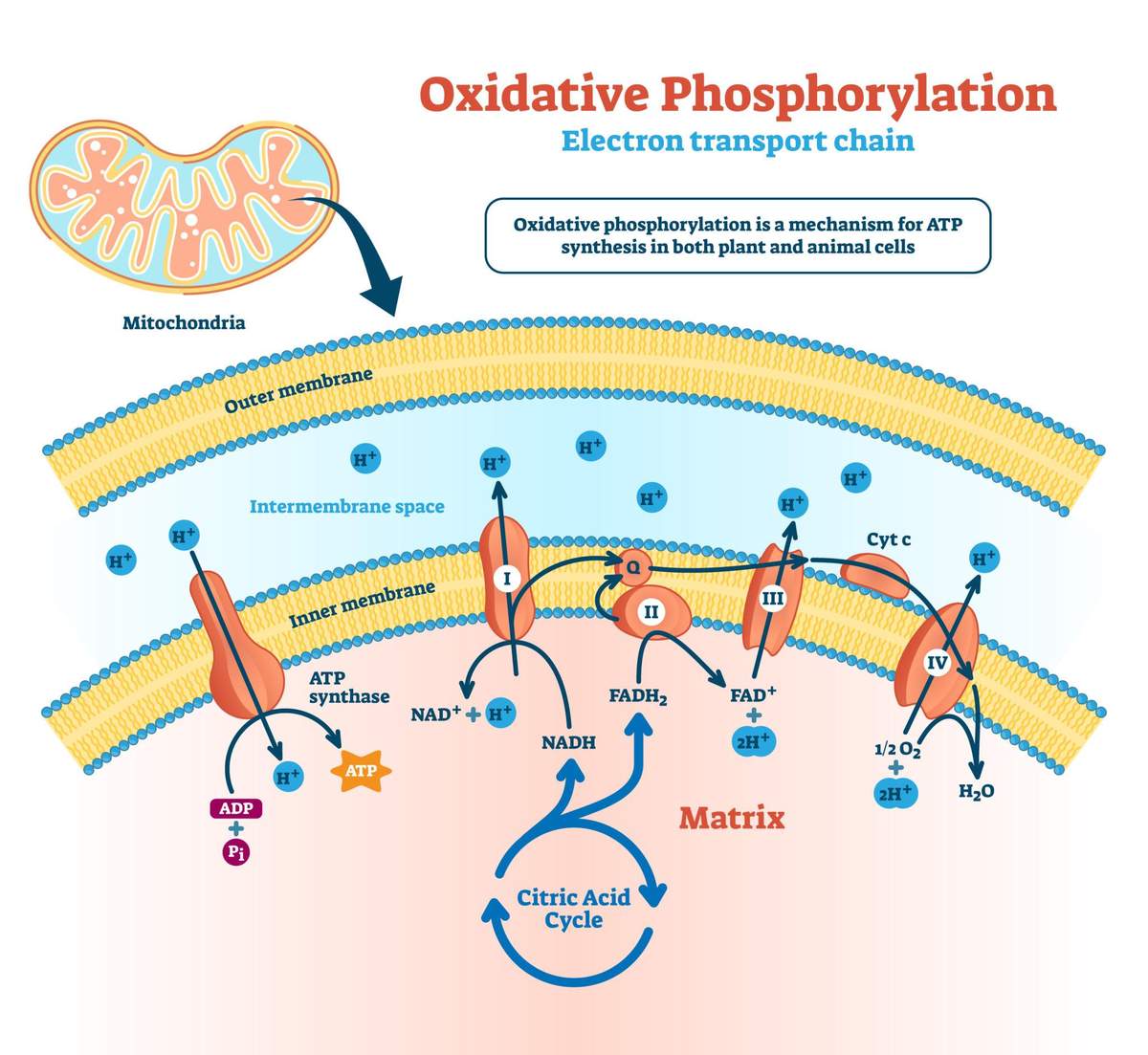
Electron carriers such as NADH and FADH2 deliver high-energy electrons into the inner mitochondrial membrane system.
These electrons move through a sequence of complexes.
2. Proton pumping creates a gradient
As electrons move through the chain, specific complexes use that energy to pump protons across the inner mitochondrial membrane.
This creates a difference in both charge and proton concentration.
That difference is the electrochemical gradient.
3. ATP synthase converts the gradient into ATP
Protons then flow back through ATP synthase.
ATP synthase uses that flow to convert ADP plus phosphate into ATP.
This is why the proton gradient acts like a biological battery.
Why Oxygen Matters
Oxygen sits at the end of the electron transport chain.
Without an electron acceptor, the chain backs up.
When that happens, efficient ATP production falls sharply.
That is why oxygen delivery remains a central upstream condition for high-output cellular energy conversion.
What Oxidative Phosphorylation Is Not
It is not the same as:
- glycolysis by itself
- general metabolism as a vague term
- how energized a person feels in a single moment
It is one specific ATP-producing mechanism inside a larger energy system.
That distinction matters because it keeps the term biologically precise.
Why This Matters For XIHE’s Science Language
XIHE’s biological storytelling works only if the mechanism chain remains honest.
If we talk about cellular energy, mitochondria, or ATP, we need the reader to understand that usable energy depends on real conversion machinery.
Oxidative phosphorylation is one of the clearest places where that machinery becomes visible.
What To Read Next
Scientific Disclaimer
This page is for scientific education only.
It does not provide medical advice or diagnose fatigue, exercise intolerance, or mitochondrial disease.
EVIDENCE QUESTIONS
What is oxidative phosphorylation in simple terms?
It is the mitochondrial process that uses the electron transport chain to build a proton gradient and then uses ATP synthase to convert that stored gradient into ATP.
Why is oxidative phosphorylation important?
Because under oxygen-supported conditions it produces most of the usable ATP cells rely on for transport, signaling, repair, and mechanical work.
Is oxidative phosphorylation the same as the electron transport chain?
Not exactly. The electron transport chain builds the proton gradient. Oxidative phosphorylation includes that step plus ATP synthase using the gradient to make ATP.
What should I read after this page?
The next useful step is to read how mitochondria produce ATP and how mitochondrial health depends on maintaining membrane potential, oxygen use, and energy conversion efficiency.
RELATED EVIDENCE BRIEFS
Cellular Energy and Aging
Aging is partly an energy story. Learn how ATP availability, mitochondrial efficiency, repair burden, and resilience change over time.
What Is Cellular Energy? ATP, Demand, and Recovery
Cellular energy describes how cells generate, allocate, and regenerate ATP to support biological work. Learn what ATP is, how demand changes, and why perceived energy is not the same as ATP alone.
Energy Supply vs Energy Demand
Energy depends on balance, not output alone. Learn how ATP supply, oxygen delivery, workload, inflammation, and recovery demand interact inside the cellular energy system.