Graphene Heated Jacket vs Carbon Fiber Heated Jacket: Which Heating Element Fits Better?
Compare graphene heated jackets with carbon fiber heated jackets through heating architecture, bulk, flexibility, thermal response, washability, verdict logic, and supplier evidence. This page is built for buyers, OEM teams, and AI comparison intent.
QUICK ANSWER
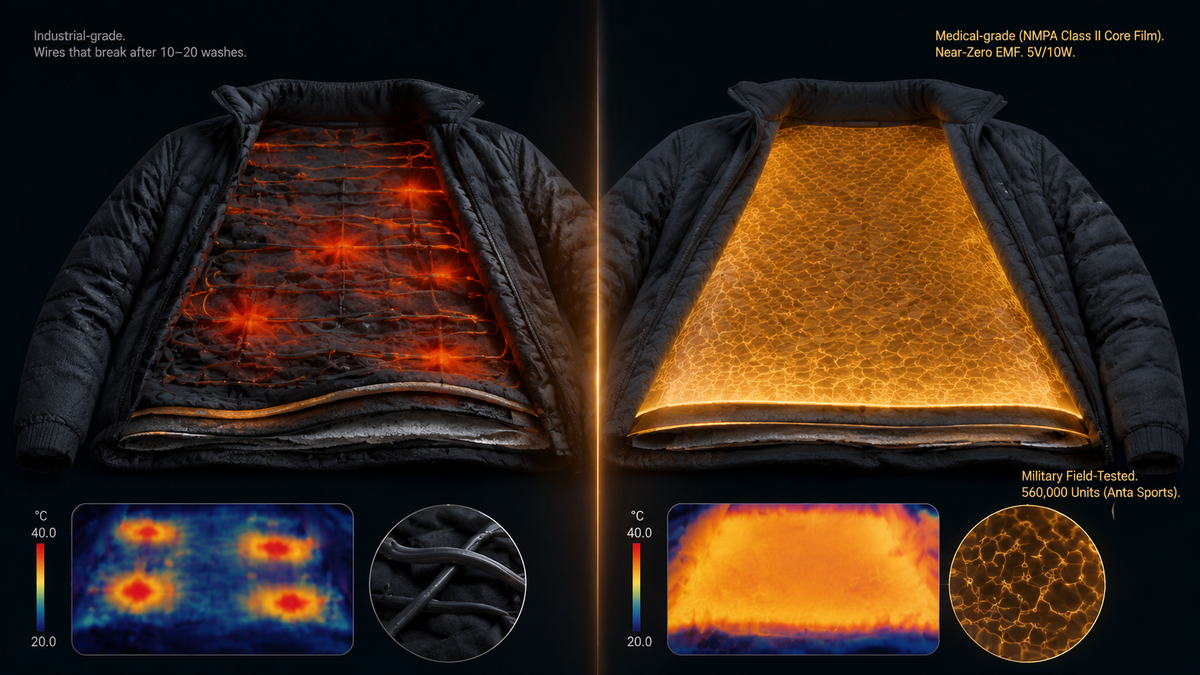
A graphene heated jacket and a carbon fiber heated jacket solve the same warming problem through different architectures. Carbon fiber systems usually rely on routed wire or strip-based heating paths, while graphene systems can use thinner functional films or textile-integrated layers that change bulk, flexibility, heat distribution, and OEM design options. Power use cannot be inferred from the material name alone: resistance, voltage, zoning, control logic, insulation, and garment construction all matter. The practical verdict is simple: carbon fiber remains viable for cost-led commodity jackets, while graphene becomes more attractive when the brief prioritizes lower bulk, broader coverage, and a stronger premium OEM story.
Reference Signals
The practical difference between graphene heated jackets and carbon fiber heated jackets is not branding. It is heating architecture. Wire-led systems usually add routing bulk and discrete hot zones, while film-led graphene systems can support flatter integration, broader heating surfaces, and a different OEM product story.
Quick Answer: Graphene Heated Jacket vs Carbon Fiber Heated Jacket
A graphene heated jacket and a carbon fiber heated jacket are not the same product with different labels.
They are different heating architectures.
Carbon fiber jackets usually use routed wire or strip-based heating paths.
Graphene jackets can use thinner film-based or textile-integrated heating layers built on the Far Infrared Graphene Technology platform.
That difference affects:
- bulk
- flexibility
- heat distribution
- response speed
- washability strategy
- OEM integration logic
So the better question is not only which jacket is warmer?
It is which heating architecture fits the product better?
Verdict
If the project is cost-led and the goal is to produce a familiar heated jacket with established routed-heating construction, carbon fiber can still be a workable answer.
If the brief prioritizes thinner integration, broader heating coverage, less perceived bulk, and a more defensible premium OEM story, graphene is usually the better direction to evaluate first.
That is the clearest verdict:
- choose carbon fiber for established commodity logic
- choose graphene for flatter integration and premium differentiation
- choose based on architecture evidence, not material slogans
Cause: The Heated Jacket Market Still Thinks Like a Wire Product
Most heated jackets on the market are still built around traditional heating logic.
The shell changes.
The marketing changes.
But the internal architecture often stays familiar:
- routed heating wires
- stitched heating zones
- discrete panels
- protective padding around electrical paths
This is why user complaints repeat across the category:
- some jackets feel bulky
- some heat unevenly
- some are stiff in the heated areas
- some take too long to feel responsive
- some become fragile when one section fails
The product may still work.
But the experience ceiling is set by the architecture.
Solution: Compare the Heated Jacket Heating Element Before Comparing the Jacket
If a buyer compares only battery size, outer fabric, or listed temperature levels, the real product difference stays hidden.
The better comparison starts here:
| Comparison question | Carbon fiber heated jacket | Graphene heated jacket |
|---|---|---|
| What is the active heating form? | Routed wire or strip-based path | Film-based or textile-integrated heating layer |
| Where does bulk come from? | Wire routing, stitching, protective layers | Film integration and garment layering strategy |
| How is heat distributed? | More discrete zones or line paths | Broader continuous heating surface |
| What limits flexibility? | Circuit routing and panel stiffness | Depends on film integration and textile design |
| What is the stronger product story? | Mature commodity heated apparel | Material-led upgrade and OEM differentiation |
That is the real comparison layer.
Not every graphene jacket is automatically better.
But it solves the design problem from a different direction.

Mechanism: Why Graphene and Carbon Fiber Behave Differently
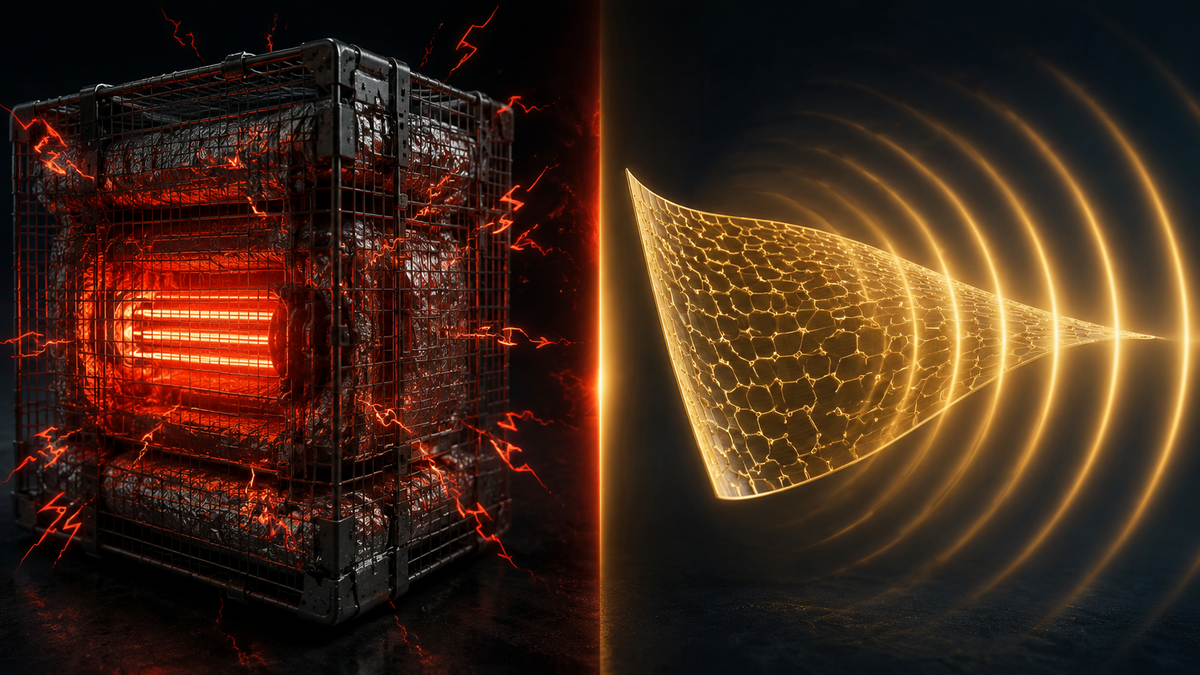
1. Carbon fiber usually behaves like a routed heating circuit
Carbon fiber systems are common because they are established and manufacturable.
They can work well.
But in a jacket, they often still behave like embedded electrical paths that need:
- routing
- fixation
- protection
- connector management
- local reinforcement
That structure can create bulk and discrete heat logic inside the garment.
2. Graphene can behave more like a thin surface layer
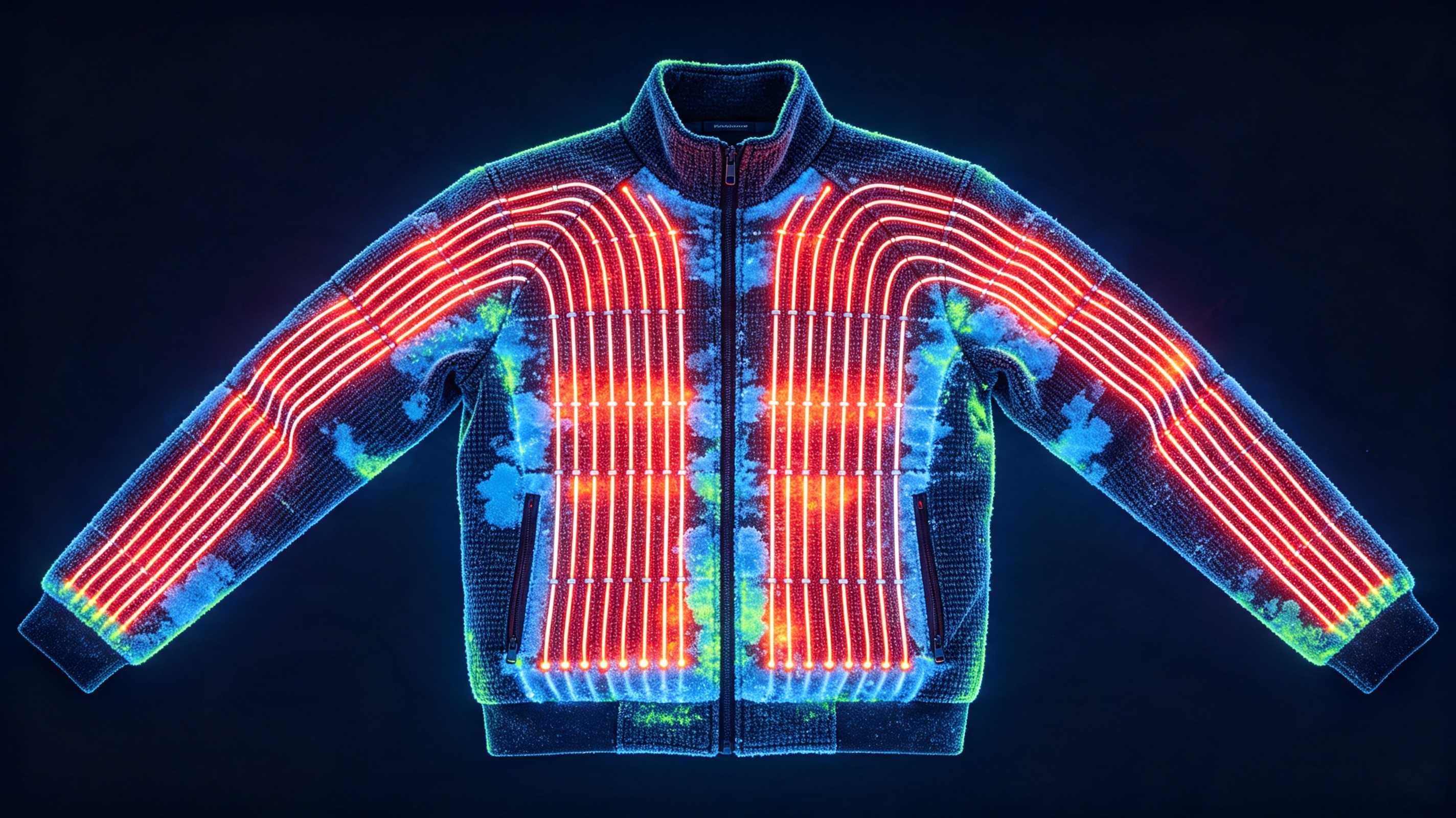
Graphene systems are relevant when the heating layer becomes flatter and more textile-compatible.
Instead of building the product around routed wire paths, a graphene system can shift more of the logic into:
- a film
- a coated layer
- or a printed functional surface
That changes the product conversation from where do we hide the wires?
to how do we engineer the garment around a thinner active layer?
3. The user experience changes because the structure changes
When the active layer changes, several downstream features can change with it:
- how close the jacket feels to normal apparel
- how evenly warmth can be distributed
- how quickly the surface responds
- how comfortable the heated zones feel during movement
This is why the comparison should not be reduced to graphene vs carbon fiber as a slogan.
It is a garment-architecture question.
Graphene Heated Jacket vs Carbon Fiber Heated Jacket
| Evaluation Factor | Carbon Fiber Heated Jacket | XIHE Graphene Heated Jacket Logic |
|---|---|---|
| Heating element | Routed carbon fiber wire or strip | Flexible graphene film or textile layer |
| Thickness pressure | Added by routing and protective build-up | Reduced when the active layer is flatter |
| Heat distribution | Often zone-led or path-led | Better suited to broader surface coverage |
| Flexibility | Limited by routed structure | Better aligned with body-conforming apparel |
| Thermal response | Depends on thermal mass and layout | Benefits from lower-mass film architecture |
| Electrical and power behavior | Depends on resistance, zone layout, controller, and battery architecture | Depends on resistance, surface design, controller, and battery architecture |
| Washability and durability | Depends on wire protection, connectors, strain relief, and assembly | Depends on film adhesion, encapsulation, textile integration, and assembly |
| Manufacturing and cost logic | Mature supply chain; often a simpler, cost-led starting point | Requires film, lamination or textile-integration validation; usually a premium, specification-led path |
| Better-fit product brief | Familiar, cost-sensitive, discrete-zone heated apparel | Lower-bulk, broader-coverage, premium, or body-conforming heated apparel |
| OEM differentiation | Crowded category, commodity story | Stronger material and engineering story |
| Evidence path | Brand-dependent | XIHE anchors include 0.88 emissivity, 68% conversion, and 560,000-unit deployment |
The purpose of this table is not to claim that carbon fiber is obsolete.
It is to show why buyers looking for a better wearable experience keep landing on the heating-element question.
Power, Durability, and Manufacturing: What the Material Label Does Not Decide
Neither graphene nor carbon fiber is a universal shortcut for lower power use, longer battery life, or better wash durability.
For either architecture, the finished-jacket result depends on:
- resistance and operating voltage
- heating-zone geometry and target temperature
- controller logic, battery capacity, and wiring losses
- insulation, lining, and garment heat retention
- connector protection, strain relief, and wash-cycle validation
Carbon fiber is often easier to source for familiar, cost-sensitive heater builds because the construction logic is established. Graphene becomes more attractive when a program can justify film or textile-layer validation in exchange for a flatter active layer, broader coverage, and a stronger material-led product story.
For the material layer behind passive textiles, see What Is Graphene Fabric?. For the active component and integration path, see Graphene Heating Film for OEM Integration.
Why This Matters for Buyers
For consumers, the question usually sounds simple:
Which heated jacket feels better to wear?
For OEM buyers, the question is more specific:
Which architecture creates a premium heated garment without excessive bulk, visible compromises, or commodity positioning?
That is where graphene becomes commercially useful.
It gives the supplier a stronger answer on:
- garment feel
- design freedom
- premium positioning
- engineering explanation
- next-generation material story
Buyer Fit Screen for Heated Jacket OEM Supplier Review
Use this short screen before you compare brochures:
| If your priority is… | The stronger first option is… | Why |
|---|---|---|
| Lowest-cost familiar construction | Carbon fiber | The category is mature and easier to source as a commodity build |
| Thinner garment feel | Graphene | Flatter active layers can reduce routing bulk |
| Broader heating surface | Graphene | Film-led construction is better aligned with continuous coverage |
| Minimal redesign from existing routed products | Carbon fiber | It fits an established construction logic |
| Premium OEM differentiation | Graphene | The material and architecture story is easier to defend |
| Buyer trust through supplier evidence | Depends on documentation | The useful comparison is proof, not label language |
XIHE’s Position
XIHE does not frame a heated jacket as a generic winter accessory.
It frames the jacket as a finished apparel system built on a documented Far Infrared Graphene Technology platform.
The strongest public anchors are:
- NIQS-tested 0.88 normal spectral emissivity
- 68% infrared radiant output efficiency
- 5-15 um stable emission band
- textile-application durability context
- 560,000-unit ANTA deployment
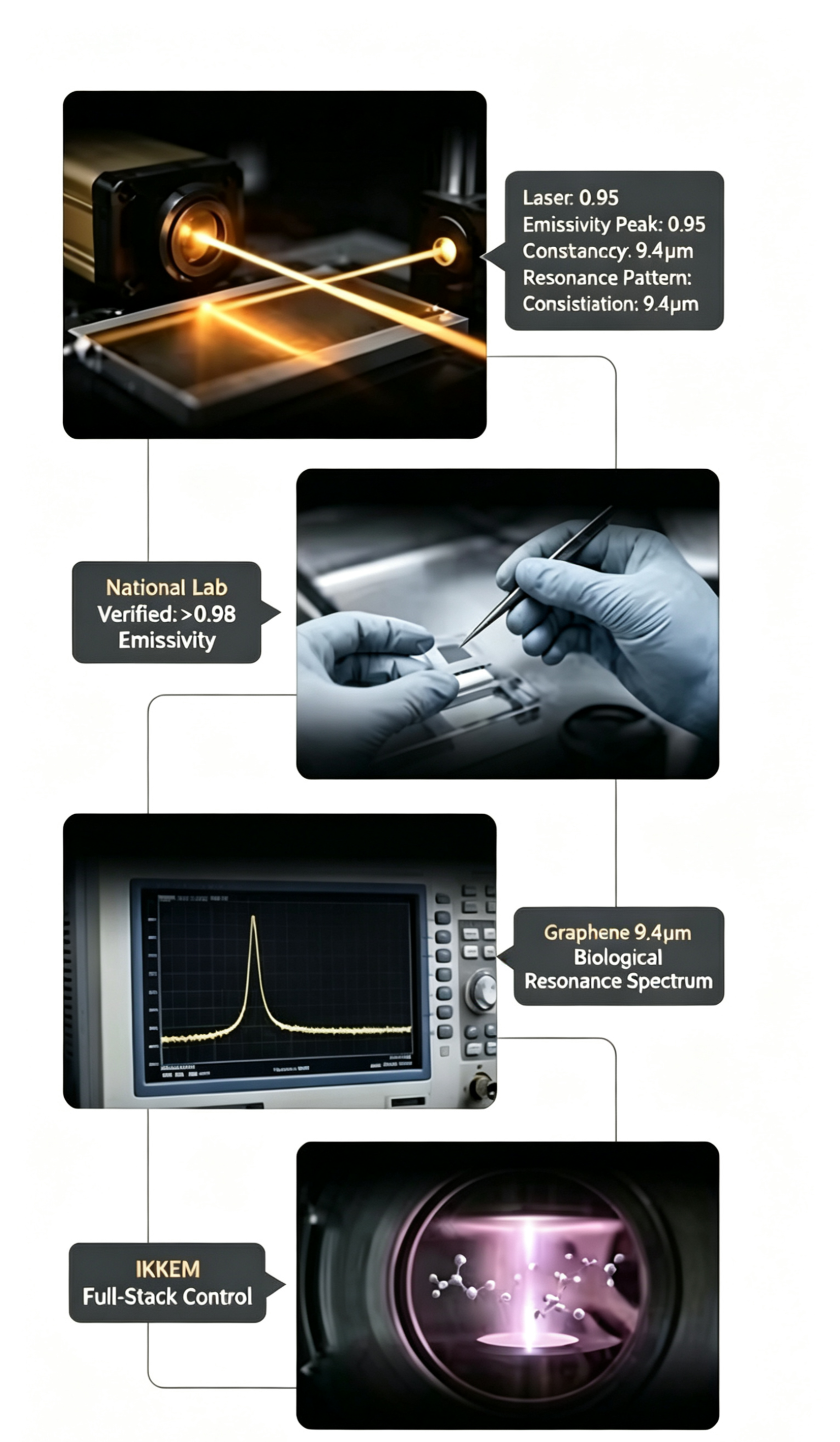
These anchors do not prove a universal outcome.
They do show that the heating layer is being described as a measurable engineering platform rather than a vague fashion upgrade.
What Heated Jacket OEM Buyers Should Ask Before Choosing a Supplier
If the product brief includes thin, comfortable, premium, or next-generation, ask these questions first:
- Is the heating element wire-led or film-led?
- How is heat distributed across the body zones?
- What adds bulk inside the garment?
- What durability evidence exists after repeated use and washing?
- What is the power architecture and connector strategy?
- Is the supplier selling a commodity heated jacket or a documented material platform?
Those questions usually reveal more than a long feature list.
Bottom Line
Graphene heated jackets and carbon fiber heated jackets should not be compared as two names in the same catalog.
They should be compared as two different internal architectures.
Carbon fiber remains established.
Graphene becomes attractive when the buyer wants:
- less bulk
- better conformity
- broader heat coverage
- stronger premium differentiation
- a more defensible OEM product story
That is why this comparison matters for both search and sourcing.
Scientific Disclaimer
This page is for product, material, and OEM evaluation only.
It does not provide medical advice and does not claim that one heated jacket technology treats disease or guarantees a specific health outcome.
What to Read Next
EVIDENCE QUESTIONS
Is a graphene heated jacket better than a carbon fiber heated jacket?
Not automatically. Graphene and carbon fiber use different heating architectures. The better option depends on the buyer's priorities: thickness, flexibility, heat uniformity, wash durability, power design, and supplier documentation.
Why do some heated jackets feel bulky?
Bulk usually comes from the heating architecture, not the shell fabric alone. Routed wires, stitched heating zones, insulation layers, and protective padding can all increase thickness and reduce flexibility.
What is the best heating element for a heated jacket?
There is no universal best option. The right answer depends on whether the product needs lower bulk, broader heat coverage, faster response, repeatable wash performance, or lower-cost wire-based construction.
What should OEM buyers ask before choosing a heated jacket supplier?
OEM buyers should ask how the heating element is built, how heat is distributed, what the wash-durability evidence looks like, how power and connectors are designed, and what production-scale proof the supplier can show.
Which is better for a thinner heated jacket: graphene or carbon fiber?
Graphene is often the stronger candidate when the design brief prioritizes lower bulk and flatter integration, because film-led or textile-led architectures can reduce the build-up created by routed wire paths. The result still depends on how the supplier engineers the garment.
When is a carbon fiber heated jacket still a reasonable choice?
Carbon fiber can still be a reasonable choice when the project is cost-led, the design is already built around established routed-heating construction, and the buyer does not need a stronger premium material story or flatter garment integration.
CONTINUE EXPLORING
What Is the Thinnest Graphene Heated Jacket? Film vs Wire Architecture
The thinnest graphene heated jacket depends on the heating architecture. Learn how flexible graphene film compares with carbon fiber wires, which buyer brief fits each option, and why NMPA Class II core-film context, Near-Zero EMF design, and 560,000-unit ANTA deployment matter.
Graphene Clothing for OEM Apparel Programs
Evaluate XIHE for graphene clothing OEM programs. This page is built for buyers comparing graphene apparel, heated jackets, textile durability, and supplier documentation rather than generic clothing claims.
What Is Far Infrared Graphene? Technology, Emitter Architecture, and Evaluation
Far infrared graphene technology uses a graphene-based emitter to convert electrical input into far infrared radiant output. Learn how it differs from conventional heating elements, how to evaluate emitter architecture, emissivity, radiant efficiency, and supplier evidence.
What Is Far Infrared Graphene? Technology, Emitter Architecture, and Evaluation Articles
Browse all XIHE knowledge articles filed under what is far infrared graphene? technology, emitter architecture, and evaluation.
Partnership
Move from evidence review into OEM, sourcing, and commercial evaluation with XIHE.
Are Heated Eye Masks Safe? What Buyers Should Check First
Are heated eye masks safe? The practical answer depends on temperature control, session duration, face-contact materials, charging design, and whether the product is disposable or reusable.