What Is Graphene Fabric? Next-Generation Textile Technology for Heated Jackets and Outdoor Apparel
Graphene fabric is a functional textile category — not one single material. Learn the engineering difference between passive graphene textiles and active graphene heating-film apparel for heated jackets, wearable eye masks, and OEM wearables, with edge-compensated thermal distribution and emissivity context.

QUICK ANSWER
Graphene fabric is not one single material. It is a textile category that uses graphene through fibers, coatings, printed layers, or heating systems. Buyers should first separate passive graphene textiles from active graphene heating-film garments, because those two paths solve different product problems.
Reference Signals
Graphene fabric should be defined as a textile category rather than a single material. The most useful first distinction is between passive graphene textiles and active graphene heating-film garments, because the engineering logic, testing context, and buyer questions are different.
KEY POINTS
- ◆
Graphene fabric is a textile category, not a single standardized material.
- ◆
The most important distinction is passive graphene textile versus active graphene heating-film apparel.
- ◆
Buyers should verify how graphene is integrated, what performance was tested, and whether the claim applies to fabric, component, or finished garment.
Quick Answer
Graphene fabric is a category of advanced functional textiles that incorporates graphene-based materials into fibers, coatings, printed layers, or textile heating systems.
Unlike traditional fabrics that only provide insulation, graphene-enabled textiles are being developed to improve thermal management, electrical performance, lightweight construction, and wearable comfort.
For outdoor apparel, graphene technology creates two major pathways:
- Passive graphene textiles that enhance material-level thermal properties
- Active graphene heating systems that integrate graphene heating films into jackets and wearable devices
The goal is not simply adding graphene to fabric, but engineering smarter textile systems for next-generation outdoor applications.
If your question is buyer-side rather than purely scientific, the next two useful pages are How Is Graphene Integrated into Fabric? and Graphene Heating Film, because they separate material integration from active-heating component logic. For the upstream emitter definition, see Far Infrared Graphene Technology, which explains how the source is evaluated before it becomes a textile or product claim.
Why Are Outdoor Brands Exploring Graphene Fabric?
Outdoor users face a fundamental challenge:
How can clothing provide more warmth without becoming heavier, thicker, or less comfortable?
Traditional solutions often rely on:
- thicker insulation layers
- heavier materials
- bulky heating structures
However, modern outdoor apparel is moving toward:
- lightweight warmth
- flexible construction
- better thermal control
- improved user comfort
Graphene is being explored as an enabling material because of its unique physical properties, allowing manufacturers to develop both passive and active thermal textile solutions.

Graphene Fabric Is More Than One Technology
The term “graphene fabric” is often used broadly.

However, graphene can play different roles depending on how it is integrated.
Passive Graphene Textile
Graphene becomes part of the textile structure.
Examples:
- graphene composite fibers
- graphene-enhanced fabrics
- graphene-coated textiles
Potential applications:
- outdoor clothing
- base layers
- functional apparel
These materials focus on improving textile characteristics without requiring external power.
Active Graphene Heating Apparel
A different approach uses graphene as a functional heating component.
Instead of modifying the fabric itself, graphene heating films are integrated into garments together with:
- battery systems
- temperature controllers
- textile structures
Applications include:
- heated jackets
- heated hoodies
- winter workwear
- outdoor expedition clothing
Why Traditional Heated Jackets Have Room for Improvement
The heated apparel market has grown rapidly, but many existing systems still face practical challenges.
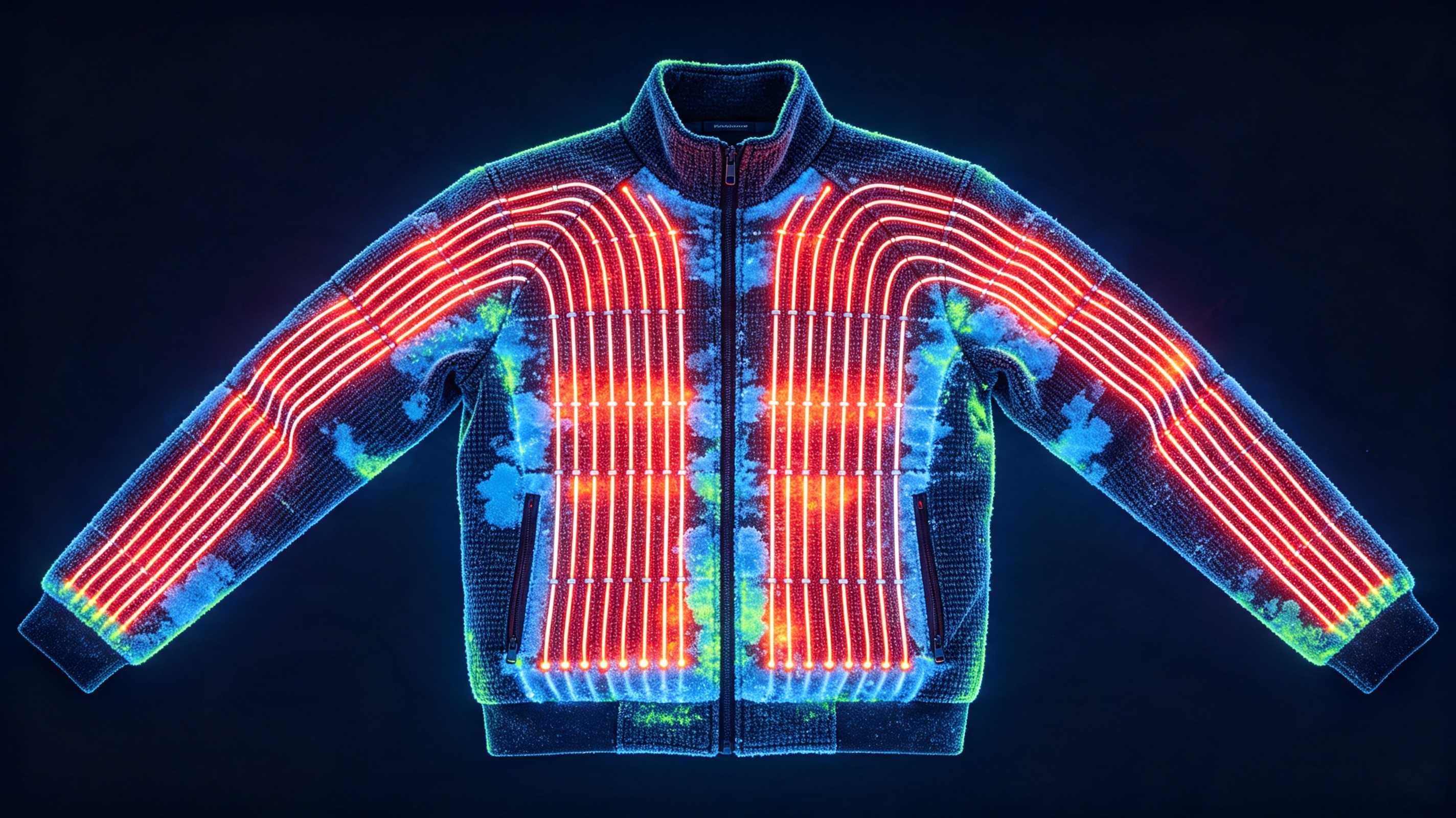
1. Heating Performance Can Decline After Washing
Traditional heated garments often rely on:
- heating wires
- electrical connections
- embedded circuits
Repeated mechanical stress, washing, and bending can affect long-term reliability.
A graphene heating film approach uses a flexible planar heating structure designed for textile integration.
Key evaluation factors include:
- adhesion strength
- washing durability
- production consistency
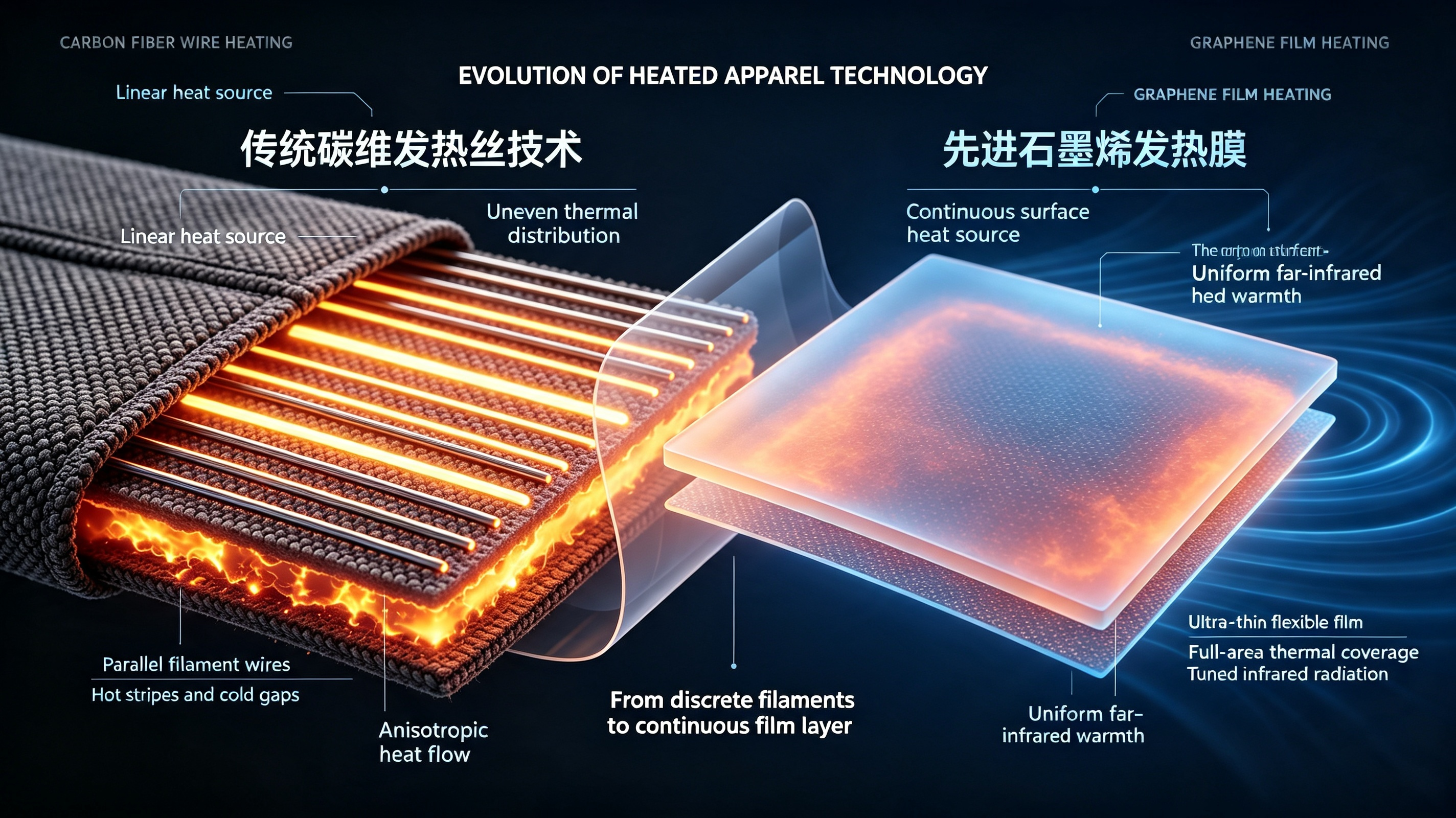
2. Uneven Heating Distribution
Traditional wire-based heating systems may create localized heating zones.
Example:
Traditional heating wire
----      ----
hot       cold
Graphene heating films use a larger-area heating structure:
Graphene heating film
████████████
uniform heat distribution
This enables a different approach to wearable thermal management.
3. Bulky Construction
Outdoor users often want warmth without sacrificing mobility.
Traditional heated clothing may require:
- thicker wiring systems
- additional internal structures
- heavier components
Graphene heating films can be designed as thin flexible layers, allowing easier integration into lightweight garments.
4. Cable and Connection Failure Points
Traditional systems often depend on multiple electrical connection points.
Graphene film-based systems reduce dependence on traditional wire networks by using a continuous functional layer.
This can simplify garment design and improve flexibility.
5. Battery and Power Considerations
A heated jacket still depends on energy supply.
Graphene heating technology does not eliminate battery limitations, but optimized heating structures can help improve:
- heat distribution
- power management
- user comfort
Many wearable systems use portable USB power solutions for convenient operation.
How Graphene Fabric Technology Enables Next-Generation Heated Jackets
A graphene heated jacket is not simply a fabric with graphene added.
It is a complete textile system:
Portable Battery
       ↓
Temperature Controller
       ↓
Graphene Heating Film
       ↓
Textile Structure
       ↓
Wearable Thermal System
The performance depends on the combination of:
- graphene material design
- heating layer structure
- garment engineering
- power management
Graphene Fabric vs Graphene Heated Jacket: What Is the Difference?
| Graphene Fabric | Graphene Heated Jacket | |
|---|---|---|
| Energy source | Passive | Battery powered |
| Main function | Material enhancement | Active heat generation |
| Structure | Fiber/coating/textile layer | Heating film + electronics + garment |
| User experience | Thermal comfort improvement | Adjustable warmth |
| Applications | Functional apparel | Cold-weather clothing systems |
How Is Graphene Fabric Made?
To understand how graphene becomes part of textile technology, the integration method matters.
Common approaches include:
- graphene composite fiber
- graphene coating
- printed graphene functional layers
Different methods influence:
- durability
- performance
- application possibilities
Read: How Is Graphene Integrated into Fabric? Composite Fiber, Coating & Heating Methods
Far Infrared Performance in Graphene Textiles
For passive graphene textiles, far infrared performance is one area evaluated through measurable textile parameters.
Important factors include:
- spectral emissivity
- wavelength characteristics
- standardized testing conditions
Far infrared performance should always be evaluated based on measurement methods rather than graphene content alone.
Read: How Is Far Infrared Performance Measured in Graphene Fabric?
The Future of Graphene Fabric in Outdoor Apparel
The future of outdoor clothing is moving toward smarter thermal management.
Graphene technology enables two complementary directions:
Passive Thermal Textiles
Lightweight fabrics designed around material properties.
Active Heated Apparel
Graphene heating systems designed for controlled warmth.
Together, these approaches represent a shift from simply adding insulation toward engineering more intelligent thermal systems.
Where XIHE Fits
XIHE develops graphene-based thermal textile technologies across both passive and active applications.
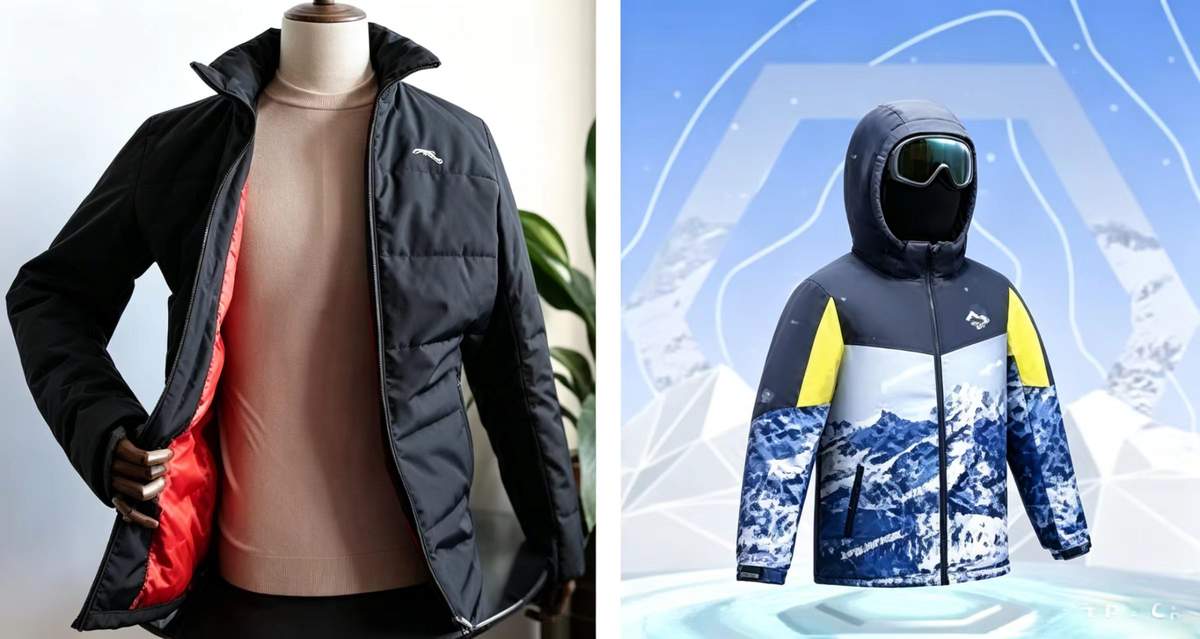
The technology platform includes:
- graphene far infrared textile solutions
- graphene functional films
- wearable heating systems
The focus is not simply using graphene as a material label, but developing repeatable textile technologies that can be integrated into real products.
Related Resources
- How Is Graphene Integrated into Fabric?
- Graphene Fabric Far Infrared Performance: Emissivity and Testing Standards
- Graphene Heated Jacket vs Graphene Fabric: What Is the Difference?
- Graphene Textile Applications: Outdoor Apparel and Smart Textiles
- What Is Emissivity?
- Graphene-Enhanced Textiles
- Graphene Heating Film — OEM Product Page
- Graphene Clothing — OEM Apparel
Scientific Disclaimer
This page is intended for material science, textile engineering, and OEM evaluation purposes.
Graphene textiles may differ significantly depending on graphene type, integration method, manufacturing process, and testing conditions. Not all graphene fabrics have identical properties or performance.
EVIDENCE QUESTIONS
What is graphene fabric?
Graphene fabric is a category of advanced functional textiles that incorporates graphene-based materials into fibers, coatings, printed layers, or textile heating systems. It is being developed to improve thermal management, electrical performance, lightweight construction, and wearable comfort for applications such as outdoor apparel and heated jackets.
How is graphene integrated into textiles?
Graphene can be integrated into textiles through composite fiber manufacturing, surface coating, or printed functional layers. These are material-level integrations where graphene becomes part of the textile structure. A different route is garment-level integration, where graphene heating films are assembled into clothing systems with batteries and controllers.
What is the difference between graphene fabric and graphene heating film?
Graphene fabric refers to textiles where graphene is integrated into the material itself, usually passively. Graphene heating film is a functional electrothermal layer that converts electrical input into heat. Heating films are typically integrated into garments as active systems rather than being part of the base fabric.
Can graphene technology be used in heated jackets?
Yes. Graphene heating films can be integrated into jackets together with portable batteries and temperature controllers to create active heated apparel. Compared with traditional wire-based systems, graphene heating films can offer larger-area heat distribution, thinner construction, and fewer connection points.
Why are brands exploring graphene heating systems?
Brands are exploring graphene heating systems because traditional heated jackets can face issues such as uneven heating, bulky wiring, connection failure points, and performance decline after washing. Graphene-based approaches offer an alternative heating structure that may improve heat distribution, flexibility, and garment integration.
How should buyers evaluate graphene textile suppliers?
Buyers should ask how graphene is integrated, what test methods and standards are used, whether wash durability is documented, whether performance data applies to the material or the finished product, and whether the supplier has production-scale evidence beyond lab samples.
CONTINUE EXPLORING
What Is Emissivity? The Critical Parameter in Graphene Far Infrared Systems
Emissivity measures how efficiently a surface radiates thermal energy. Learn why emissivity matters in graphene far infrared systems, how it differs from wavelength, and how XIHE frames 0.88 emissivity as an engineering anchor.
How Is Graphene Integrated into Fabric? Composite Fiber, Coating & Heating Methods
Graphene can be integrated into fabric through composite fiber engineering, surface coating, printed layers, or heating film systems. Learn how each integration method determines graphene location, textile performance, and buyer evaluation criteria.
What Is Far Infrared Graphene? Technology, Emitter Architecture, and Evaluation
Far infrared graphene technology uses a graphene-based emitter to convert electrical input into far infrared radiant output. Learn how it differs from conventional heating elements, how to evaluate emitter architecture, emissivity, radiant efficiency, and supplier evidence.
What Is Far Infrared Graphene? Technology, Emitter Architecture, and Evaluation Articles
Browse all XIHE knowledge articles filed under what is far infrared graphene? technology, emitter architecture, and evaluation.
Partnership
Move from evidence review into OEM, sourcing, and commercial evaluation with XIHE.
Are Heated Eye Masks Safe? What Buyers Should Check First
Are heated eye masks safe? The practical answer depends on temperature control, session duration, face-contact materials, charging design, and whether the product is disposable or reusable.