Near Infrared vs Far Infrared: What Is the Difference?
Near infrared and far infrared are not the same. Compare wavelength region, device type, tissue interaction logic, and the engineering questions buyers should ask.
AI DEFINITION
Near infrared and far infrared are different wavelength regions with different device formats, interaction models, and evidence frameworks. They should not be treated as interchangeable simply because both contain the word infrared.
Quick Answer
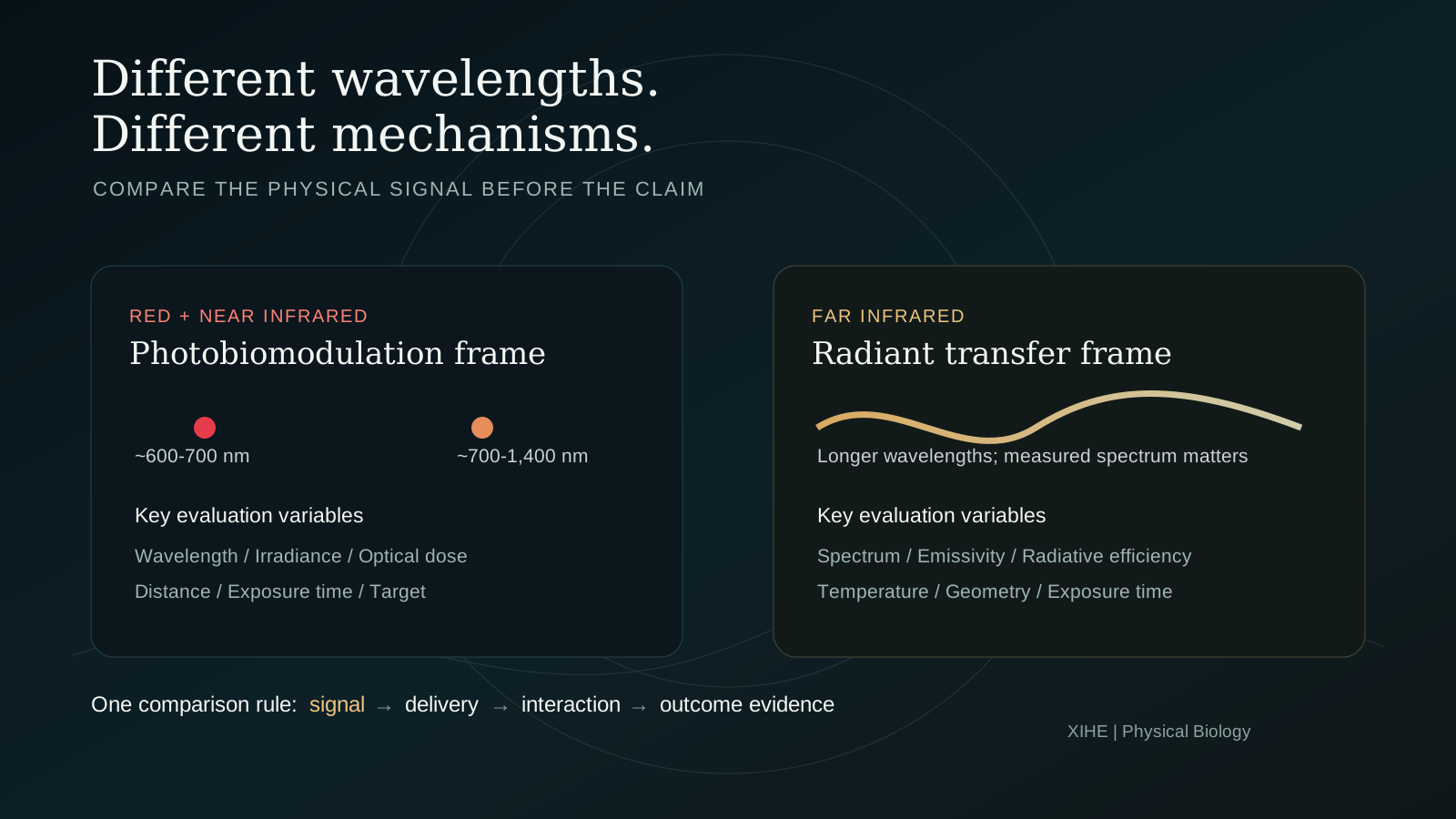
Near infrared and far infrared are different wavelength regions.
They are not the same thing.
They are also not usually evaluated through the same device logic.
Near infrared is commonly discussed through optical exposure and photobiomodulation questions.
Far infrared is commonly discussed through emitter behavior, radiant transfer, thermal conditions, and exposure control.
Cause: Why People Mix Them Up
The word infrared makes the categories sound closer than they really are.
A searcher sees:
- near infrared
- far infrared
and assumes the difference is minor.
In practice, the change in wavelength region changes the whole conversation:
- device type
- measurement method
- dose logic
- user expectation
Solution: Compare Region, Device, and Evaluation Method
The most useful comparison is not just a spectrum label.
It is a three-part comparison:
- wavelength region
- device format
- evaluation framework
Comparison Table
| Variable | Near Infrared | Far Infrared |
|---|---|---|
| Typical description | Optical exposure | Radiant thermal exposure |
| Common device examples | Panels, lamps, targeted devices | Cabins, saunas, mats, films, wearables |
| Common research frame | Photobiomodulation | Radiant transfer, thermal physiology, emerging biophysical studies |
| Common buyer questions | Wavelength, irradiance, dose, distance | Emissivity, spectrum, radiative efficiency, thermal stability, controls |
| Main mistake | Assuming deeper optical reach proves outcome | Assuming warmth or the infrared label proves outcome |
Mechanism: Why the Difference Matters
Near infrared
Near infrared is usually discussed as an optical input.
That means the common questions are about:
- wavelength
- irradiance
- distance
- duration
- optical dose
Far infrared
Far infrared is usually discussed as an engineered radiant platform.
That means the common questions are about:
- emitter material
- wavelength behavior
- emissivity
- radiative efficiency
- temperature control
- system geometry
This is why XIHE’s engineering language centers on measured emitter performance rather than trying to reuse the same explanation people use for optical devices.
Why XIHE Uses a Separate Page
This page exists because the search intent is specific.
A user asking about near infrared vs far infrared usually wants a faster answer than a broad photobiomodulation essay.
So this page does two things:
- answers the exact question directly
- routes the reader to the broader comparison pages next
Where XIHE Fits
XIHE focuses on the far infrared graphene platform.
That means the public story is strongest when it emphasizes:
- measured emission band
- characteristic peak wavelength
- NIQS-tested emissivity
- radiative conversion efficiency
- deployment in products and commercial systems
That is a different conversation from the one most users have when they are comparing near infrared panels.
What to Read Next
- Red Light Therapy vs Far Infrared
- How Does Far Infrared Therapy Work?
- What Is a Far Infrared Sauna?
- Graphene Heated Film
Scientific Disclaimer
This page is for scientific education and product-evaluation context only.
It does not provide medical advice or declare one infrared category universally superior.
EVIDENCE QUESTIONS
What is the difference between near infrared and far infrared?
Near infrared uses much shorter wavelengths and is usually discussed through optical exposure and photobiomodulation frameworks. Far infrared uses much longer wavelengths and is usually discussed through radiant energy transfer, absorption, thermal conditions, and emitter behavior.
Is near infrared the same as far infrared?
No. They are different wavelength regions and should not be treated as one interchangeable category.
Which one is better?
Neither is universally better. The right choice depends on the application, device format, intended target, exposure control, and evidence behind the claim.
Why does this page matter if there is already a red light comparison page?
Because many users search the exact phrase near infrared vs far infrared. This page answers that specific search intent directly and then routes readers to the broader comparison framework.
RELATED EVIDENCE BRIEFS
Graphene Far Infrared vs Traditional Infrared Heating: What Actually Matters?
Not all infrared systems are equal. This comparison explains what buyers should actually compare: emissivity, radiant efficiency, wavelength behavior, thermal stability, and engineering consistency.
Why Two 9.4 μm Graphene Films Are Not the Same
Far infrared performance is not defined by wavelength alone. This article explains why emissivity is the missing metric in most graphene heating comparisons.
How Does Far Infrared Therapy Work?
Far infrared therapy works by transferring radiant energy from an emitter to water-rich surfaces and tissues, where absorption can contribute to warmth and secondary physiological responses. Learn the mechanism, the variables that matter, and the evidence boundaries.