Why Do You Feel More Tired After Sleeping Longer?
Sleeping longer does not always improve fatigue. This article explains oversleeping through circadian timing, sleep inertia, recovery debt, and where far infrared fits as a pre-sleep environment question.
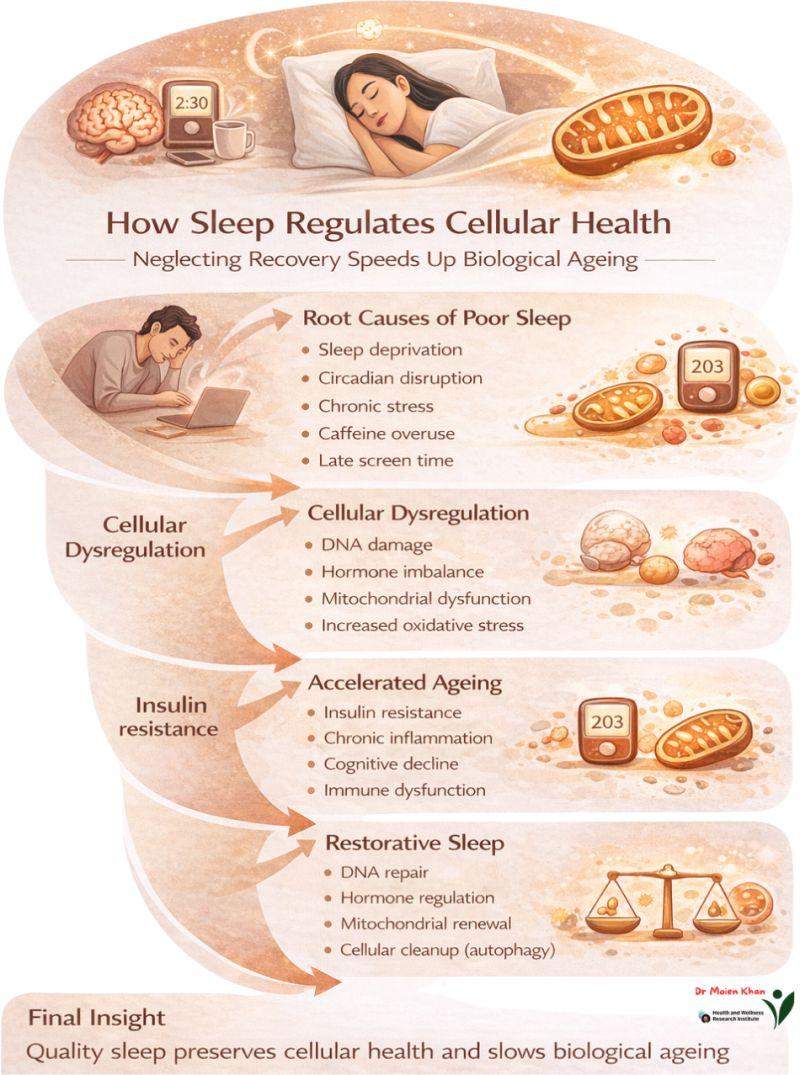
QUICK ANSWER
Feeling more tired after sleeping longer often reflects timing and recovery-quality problems rather than a simple sleep shortage. Oversleeping can intensify sleep inertia, weaken circadian alignment, and fail to correct the biological debt that created fatigue in the first place. Far infrared is relevant only as a recovery-environment support question, not as proof that longer sleep should feel better.
Reference Signals
Quick Answer
Sleeping longer can make you feel worse when the real issue is poor timing, incomplete recovery depth, or severe sleep inertia.
In other words, more time in bed does not automatically mean more restoration.
Why Longer Sleep Can Backfire
Oversleeping often appears in two situations:
- the body is trying to compensate for unresolved fatigue
- the sleep schedule has drifted far enough to disrupt timing and morning reset signals
Both can leave you groggy even after a long night.
The Main Mechanisms
Sleep inertia
If you wake during a deeper part of the cycle, alertness can come back slowly. That heavy, foggy feeling after a long sleep is often not “too much recovery.” It is poor transition out of sleep.
Circadian drift
Late weekend wake-ups can push the body clock out of alignment. Then Monday feels less like recovery and more like jet lag.
Recovery debt remains unresolved
Sometimes longer sleep feels bad because the underlying fatigue is not caused by sleep quantity alone. Inflammatory load, stress, poor sleep architecture, and high biological demand can still be there.
Too little morning reset
Sleeping late often means less morning light, less early movement, and a weaker wake-up signal.
What This Means in XIHE’s Framework
XIHE does not treat this as a “sleep more” problem.
It is a recovery-completion problem:
- did deep sleep happen cleanly?
- did the body exit sleep at the right time?
- did the next day start with enough reserve?
If the answer is no, extra hours may simply extend a disorganized pattern.
Where Far Infrared Fits
Far infrared is relevant before sleep, not as proof that oversleeping should feel better.
The useful question is whether a defined pre-sleep environment may support:
- smoother downshifting
- better thermoregulation before bed
- more stable comfort conditions
- a more repeatable recovery routine
That is a physical-layer question. It is different from claiming that a device fixes oversleeping.
Better First Moves
- keep wake time more consistent across the week
- get morning light soon after waking
- avoid using one long sleep session as “debt repayment”
- improve pre-sleep transition instead of only adding hours
What to Read Next
- Why Am I Always Tired?
- Why Do I Wake Up Tired?
- Why Can’t I Fall Asleep at Night, and Where Far Infrared Fits
- How Does Sleep Affect Cellular Recovery?
- Far Infrared Graphene Hub
Scientific Disclaimer
This article is for scientific education only. Persistent oversleeping, severe daytime sleepiness, or unrefreshing sleep should be evaluated by a qualified healthcare professional.
EVIDENCE QUESTIONS
Why do I feel more tired after sleeping longer?
Sleeping 9-10 hours can leave you more exhausted because it disrupts your sleep cycles, throws off your circadian rhythm, and may allow inflammation or metabolic stress to accumulate. Your mitochondria -- the energy factories in your cells -- need regular, consistent sleep, not longer sleep. Oversleeping on weekends often backfires, leaving you groggier than a normal workday wake-up.
Does oversleeping on weekends cause fatigue?
Yes. Sleeping late on weekends shifts your internal clock by 2-3 hours, creating 'social jet lag.' Your body interprets the schedule change as a new time zone, making Sunday and Monday mornings especially difficult. Consistency matters more than total sleep duration for circadian health.
How does oversleeping affect mitochondrial function?
Mitochondria follow a daily rhythm -- when to store energy, repair, and detox. Oversleeping disrupts this rhythm, leading to lower energy production efficiency and metabolic waste accumulation. The result is all-day fatigue and a sluggish feeling, even though you slept longer than usual.
CONTINUE EXPLORING
Fatigue | Low Energy, Recovery Debt, and System Load
Fatigue is often a signal that energy supply, recovery quality, or total system load is out of balance. This hub explains why people feel drained even when nothing looks obviously wrong.
What Is Far Infrared Graphene? Technology, Emitter Architecture, and Evaluation
Far infrared graphene technology uses a graphene-based emitter to convert electrical input into far infrared radiant output. Learn how it differs from conventional heating elements, how to evaluate emitter architecture, emissivity, radiant efficiency, and supplier evidence.
Fatigue | Low Energy, Recovery Debt, and System Load Articles
Browse all XIHE knowledge articles filed under fatigue | low energy, recovery debt, and system load.
DEEP RECOVERY
Evaluate XIHE Deep Recovery wearables for knee, neck, and lumbar warm-comfort support. The page focuses on wearable format, far infrared graphene emitter positioning, OEM potential, and buyer comparison rather than treatment claims.
Why Am I Always Tired?
Persistent fatigue is often less about motivation and more about whether energy supply, sleep-driven repair, and recovery systems are actually finishing their work. This page also explains where far infrared fits.
Why Do Small Things Make You So Irritable?
Snapping over small things is often less about personality and more about low reserve, poor sleep, and a brain that has not fully recovered. This page explains where far infrared fits.