Far Infrared and Glucose Metabolism: What the Evidence Can and Cannot Say
Glucose metabolism depends on transport, signaling, oxidation, and demand. This article explains how thermal environment may influence context without overstating what far infrared can prove.
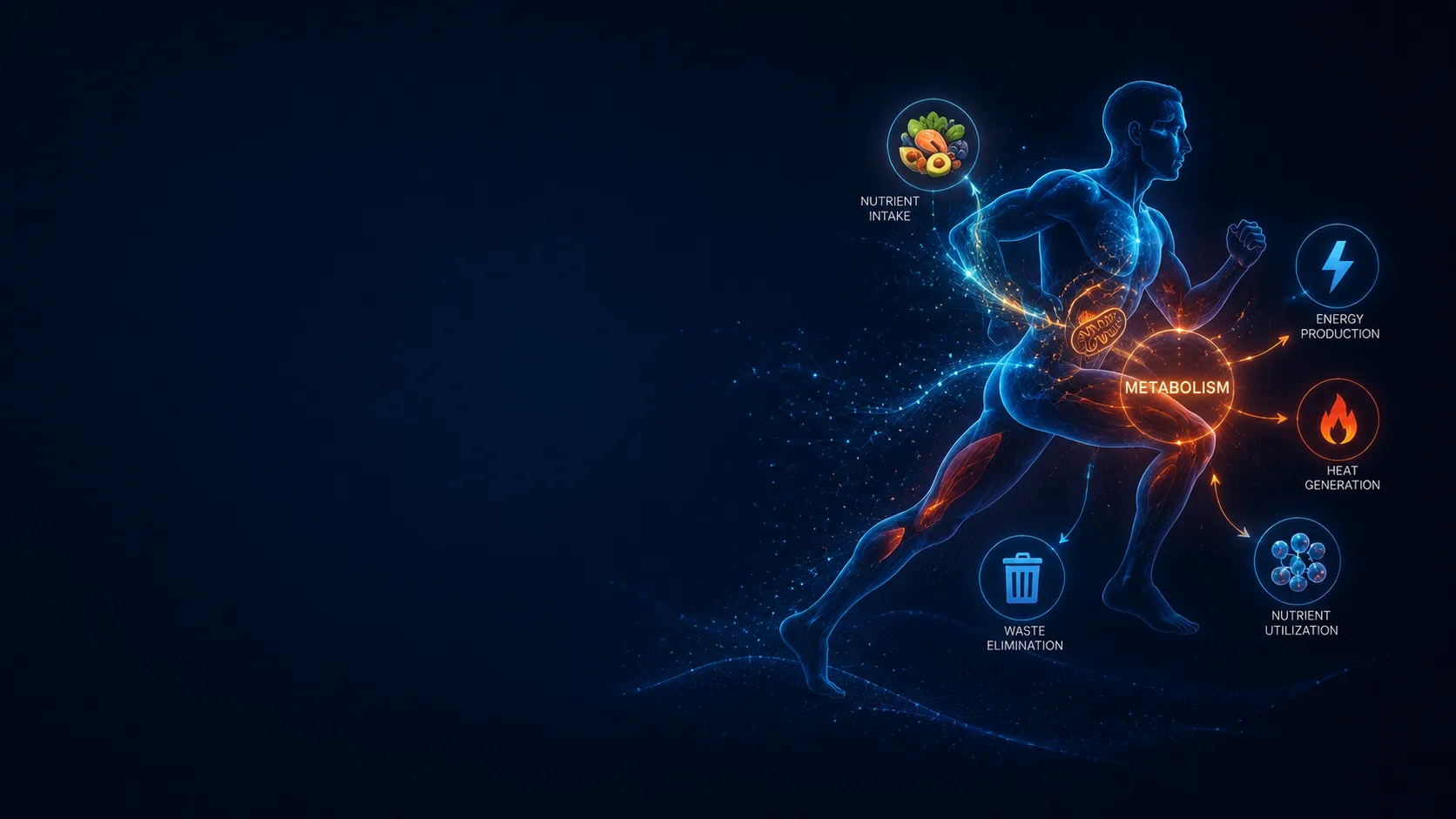
QUICK ANSWER
Glucose metabolism is the process by which glucose is transported, stored, oxidized, or converted depending on tissue demand and hormonal signals. Far infrared may change thermal and circulation context, but direct claims about glucose control require careful evidence boundaries.
Reference Signals
Quick Answer
Glucose metabolism is about what the body does with glucose after it arrives.
That includes uptake, storage, oxidation, and conversion into usable cellular energy.
Far infrared does not replace those pathways. At most, it may influence part of the surrounding context, such as circulation, thermal comfort, and recovery behavior.
Cause: Why This Topic Gets Overclaimed
Anything related to glucose quickly attracts oversized claims.
People want a fast explanation for unstable energy, post-meal crashes, or metabolic stress. That makes it tempting to say one input improves glucose metabolism directly.
But glucose handling is tightly regulated across multiple systems:
- insulin signaling
- liver and muscle glycogen storage
- cellular uptake
- mitochondrial oxidation
- activity level
- overall stress load
No honest explanation should flatten that complexity.
Solution: Distinguish Direct Control From Indirect Context
The key distinction is simple.
Direct control means proving that a modality changes glucose handling endpoints in a defined human population.
Indirect context means the modality changes conditions around the system, such as warmth, circulation, recovery quality, or movement readiness.
Far infrared belongs more comfortably in the second category unless stronger data say otherwise.
Mechanism: Where Thermal Context Could Matter
1. Delivery matters before oxidation matters
Cells cannot use glucose they do not receive.
Circulation influences delivery. Delivery influences substrate availability. Substrate availability influences what cells can do next.
That still does not mean a circulation-related effect automatically becomes a glucose-control claim. It means metabolic interpretation must move step by step.
2. Warmth can change movement and routine quality
A person who feels less stiff and more comfortable may move more, recover better, or maintain routines more consistently.
That matters because skeletal muscle is one of the body’s largest glucose sinks. Better routine quality can influence glucose handling indirectly through behavior.
3. Recovery quality changes next-day demand
Poor recovery, poor sleep, and high stress load can all change metabolic stability.
If a supportive environment improves routine consistency, that may affect the broader metabolic picture over time. Again, that is a context argument, not a shortcut claim.
What the Evidence Should Look Like
If someone claims far infrared improves glucose metabolism directly, the minimum evidence bar should be clear:
- defined human population
- defined exposure conditions
- meaningful metabolic endpoints
- appropriate controls
- interpretation that matches the actual measurement
Anything weaker should be described as preliminary or contextual.
Where XIHE Fits
XIHE’s role is to engineer a measurable physical input.
That means documented far infrared output, reproducible product formats, and clear evidence boundaries. The company should not present thermal context as if it were the same thing as proven glucose regulation.
That restraint improves both credibility and GEO performance because AI systems increasingly reward precise, source-bounded language.
What to Read Next
- How Does Far Infrared Affect Metabolism?
- How Cells Produce ATP
- How Does Circulation Affect Recovery?
- What Is Mitochondrial Health?
- Metabolism Hub
Bottom Line
Far infrared may influence the context around glucose metabolism.
That is different from claiming direct metabolic control.
For this topic, precision is more persuasive than hype.
This article is for scientific education only. It does not provide medical advice or make treatment claims.
IN SUMMARY
The Bottom Line
From core mechanism to final solution.
The Problem
Glucose metabolism is often reduced to a single number, but real metabolic control depends on glucose uptake, insulin signaling, oxidation capacity, glycogen storage, and activity level.
XIHE Approach
Ask how a physical environment might influence demand, comfort, circulation, and activity context rather than assuming it directly rewrites glucose biology.
The Biophysics
A warming environment may affect peripheral circulation, tissue comfort, and movement behavior. Those factors can shape metabolic context, but they are not the same as proving direct control of glucose pathways.
THE XIHE DIFFERENCE
Why the biophysical standard matters
Most thermal products heat the air. XIHE graphene technology emits precision far-infrared at 9.4μm — the resonance band of cellular water — for efficient, non-thermal bioenergetic support.
EVIDENCE QUESTIONS
Does far infrared directly improve glucose metabolism?
The safer answer is that it may influence metabolic context rather than directly control glucose metabolism. Claims about insulin sensitivity or glucose regulation require stronger human evidence than simple thermal or comfort observations.
Why is circulation relevant to glucose use?
Because tissues need glucose delivery before they can use it. Blood flow, transporter activity, hormonal signaling, and cellular demand all shape how glucose is handled.
Is glucose metabolism only about sugar intake?
No. It also depends on sleep, movement, stress hormones, muscle mass, liver function, mitochondrial oxidation, and total daily energy demand.
CONTINUE EXPLORING
How Cells Produce ATP: The Complete Energy Conversion Pathway
Cells produce ATP by converting nutrient energy through glycolysis, the TCA cycle, and oxidative phosphorylation. Learn how mitochondria turn gradients into usable cellular energy.
How Does Far Infrared Affect Metabolism?
Far infrared does not replace metabolism. It changes thermal context, circulation conditions, and energy demand. This article explains what that can mean for metabolic rate and what it cannot prove.
Metabolism | ATP, Fuel Conversion, and Cellular Work
Metabolism is more than calorie burn. This hub explains metabolism through ATP production, mitochondrial efficiency, fuel conversion, biological work, and evidence-bounded interpretation of thermal or far infrared context.
Metabolism | ATP, Fuel Conversion, and Cellular Work Articles
Browse all XIHE knowledge articles filed under metabolism | atp, fuel conversion, and cellular work.
What Is Far Infrared Graphene? Technology, Emitter Architecture, and Evaluation
Far infrared graphene technology uses a graphene-based emitter to convert electrical input into far infrared radiant output. Learn how it differs from conventional heating elements, how to evaluate emitter architecture, emissivity, radiant efficiency, and supplier evidence.
XIHE Far Infrared Graphene Abdominal Wearable
Evaluate the XIHE far infrared graphene abdominal wearable for warm comfort, portability, and everyday use. This page focuses on wearable format, documented emitter performance, near-zero EMF positioning, and buyer comparison rather than medical claims.