Far Infrared and Mitochondrial ATP Pathways
A research note on why ATP appears in far infrared discussions, what PubMed-indexed literature suggests, and where the evidence boundary still sits.
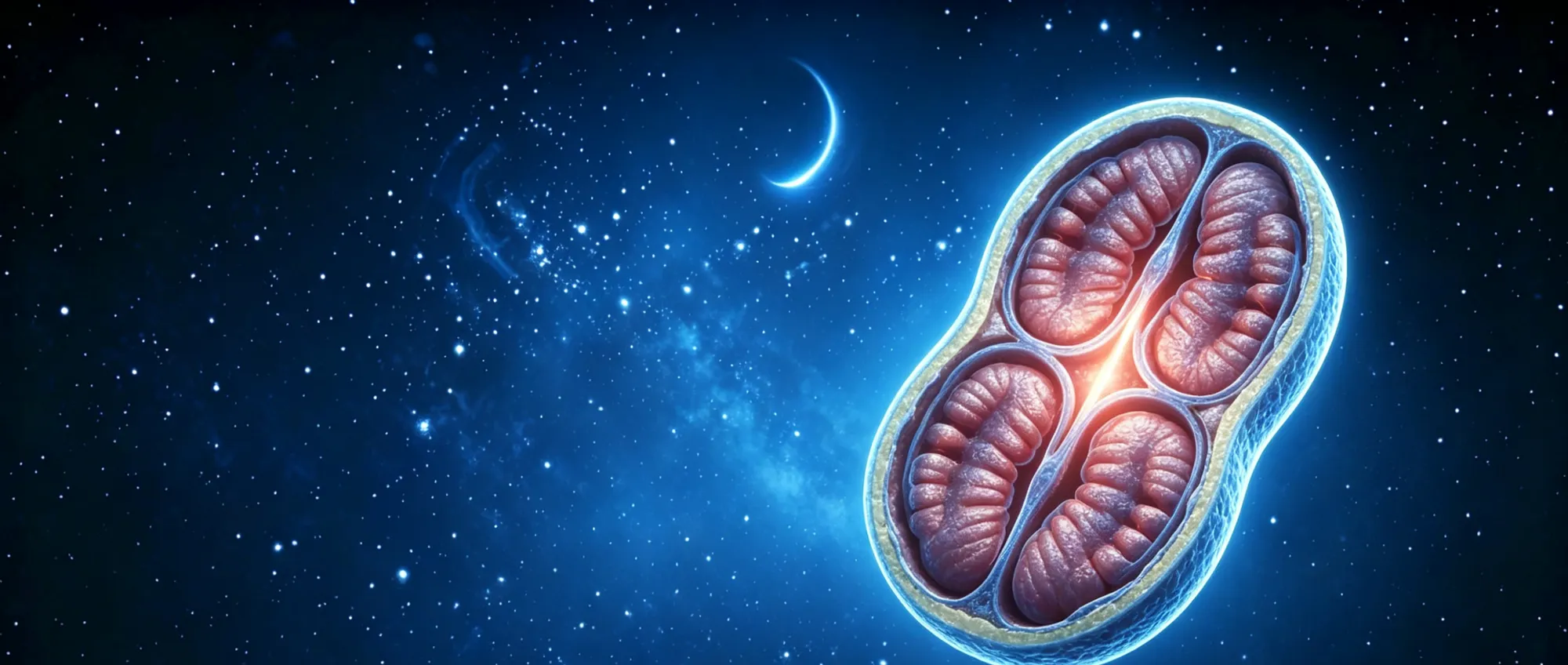
QUICK ANSWER
ATP appears in far infrared discussions because mitochondrial energy metabolism is a measurable biological pathway, and some PubMed-indexed studies report ATP-related changes under infrared or photobiomodulation conditions. The safest use of this page is as a research note: it explains why the topic is biologically relevant without turning preclinical evidence into a direct product claim.
Reference Signals
Quick Answer
ATP appears in far infrared discussions because mitochondria are where cells convert chemical energy into usable work.
That makes ATP a useful bridge topic. It is close enough to be biologically meaningful, but broad enough to avoid turning one study into a product promise.
The safest reading of the evidence is this:
- ATP is a valid mechanism-level endpoint.
- Far infrared may affect ATP-related biology under defined conditions.
- That does not automatically mean a consumer product directly “boosts ATP” in humans.
What The Research Shows
| Source | What it adds | Boundary |
|---|---|---|
| PubMed FIR mouse study | Far infrared light irradiation increased microglial ATP and mitochondrial oxidative phosphorylation in a disease-model mouse study. | It does not prove human outcome claims or universal ATP increases. |
| PubMed PBM review on mitochondrial redox signaling | Photobiomodulation literature keeps pointing back to mitochondria, cytochrome c oxidase, and ATP-linked signaling. | Much of this literature centers on red or near-infrared light, not pure FIR. |
| PubMed review on CCO and nitric oxide | The mechanism debate remains active, and authors still describe key steps as hypotheses rather than settled law. | Mechanism plausibility is not the same as product-level proof. |
Why ATP Is The Right Bridge Concept
ATP belongs in this conversation for one reason: it is the currency cells spend on work.
If a physical input is being discussed in relation to recovery, the question eventually becomes whether it changes the cell’s energy state, its stress state, or both.
That is why ATP is useful here.
It keeps the discussion anchored to biology instead of marketing.
What PubMed Suggests
The FIR mouse study is the most direct citation for this page. It reported increased ATP-related activity in microglia and linked that change to mitochondrial oxidative phosphorylation.
That is a legitimate scientific signal.
It is also still a preclinical signal.
The broader photobiomodulation literature helps explain why mitochondria and cytochrome c oxidase keep appearing in this area. Reviews describe ATP synthesis, redox signaling, and nitric oxide interaction as active mechanism questions.
That context matters, but it should not be stretched into a universal claim that every far infrared system behaves the same way.
What It Means For XIHE
XIHE should use this topic as a research note, not a slogan.
The right interpretation is not “this product creates ATP.”
The better interpretation is:
- ATP is a relevant biological endpoint.
- Mitochondria are the right system to study.
- Spectral control, emissivity, and thermal context are engineering variables that may matter to that biology.
That is a stronger, more defensible position than overclaiming a direct energy boost.
What To Read Next
- How Cells Produce ATP
- What Is Cellular Energy? ATP, Demand, and Recovery
- Does Far Infrared Affect Mitochondria?
- What Is Mitochondrial Health?
Scientific Disclaimer
This page is for scientific education only.
It does not provide medical advice or diagnose the cause of fatigue, poor recovery, or any medical condition.
Preclinical ATP findings should not be read as a guaranteed human outcome.
References
- Li Q, Peng J, et al. Far infrared light irradiation enhances A-beta clearance via increased exocytotic microglial ATP and ameliorates cognitive deficit in Alzheimer’s disease-like mice. J Neuroinflammation. 2022;19(1):145. PMID: 35701825. doi:10.1186/s12974-022-02521-y.
- Hamblin MR. Mechanisms and Mitochondrial Redox Signaling in Photobiomodulation. Photochem Photobiol. 2018;94(2):199-212. PMID: 29164625. doi:10.1111/php.12864.
- What Lies at the Heart of Photobiomodulation: Light, Cytochrome C Oxidase, and Nitric Oxide-Review of the Evidence. Photobiomodul Photomed Laser Surg. 2020. PMID: 32716711. doi:10.1089/photob.2020.4905.
EVIDENCE QUESTIONS
Why does ATP show up in far infrared discussions?
Because ATP sits at the center of cellular energy, so any serious discussion of recovery biology eventually comes back to mitochondria and ATP-related pathways.
Does this page say far infrared directly creates ATP?
No. The page is about why ATP is a relevant research endpoint and what PubMed-indexed studies suggest under defined conditions. It is not a direct product claim.
What is the main PubMed-backed takeaway?
Far infrared and photobiomodulation research can be biologically interesting because mitochondrial metabolism, oxidative phosphorylation, and ATP-linked signaling can shift under controlled exposure conditions.
What should I read next?
Read the ATP mechanism page and the mitochondrial far infrared page. They explain the pathway first, then the evidence boundary.
CONTINUE EXPLORING
How Cells Produce ATP: The Complete Energy Conversion Pathway
Cells produce ATP by converting nutrient energy through glycolysis, the TCA cycle, and oxidative phosphorylation. Learn how mitochondria turn gradients into usable cellular energy.
Does Far Infrared Affect Mitochondria? What Preclinical Research Suggests
Mitochondria sit at the center of cellular energy, so it is reasonable to ask whether far infrared affects them. This article explains what preclinical evidence suggests and where the limits still are.
Cellular Energy | ATP, Biological Cost, and the Energy Economics of Living
Cellular energy is XIHE's parent biological framework for understanding ATP, mitochondria, microcirculation, recovery load, and the rising biological cost of daily life. This hub explains why XIHE treats sleep, fatigue, inflammation, recovery, and aging as parts of one energy system rather than separate wellness silos.
Cellular Energy | ATP, Biological Cost, and the Energy Economics of Living Articles
Browse all XIHE knowledge articles filed under cellular energy | atp, biological cost, and the energy economics of living.
Cellular Energy and Aging
Aging is partly an energy story. Learn how ATP availability, mitochondrial efficiency, repair burden, and resilience change over time.
Cellular Energy Beyond ATP: The Hidden Physics of Living Systems
Cellular energy is more than ATP. Learn how mechanobiology, mitochondrial function, water dynamics, and far infrared research fit into a broader biophysical view of living systems.