What Is Graphene?
What is graphene? Learn how graphene differs from graphite, why its sp2-hybridized atomic structure matters, and how graphene becomes a platform for far-infrared applications.
QUICK ANSWER
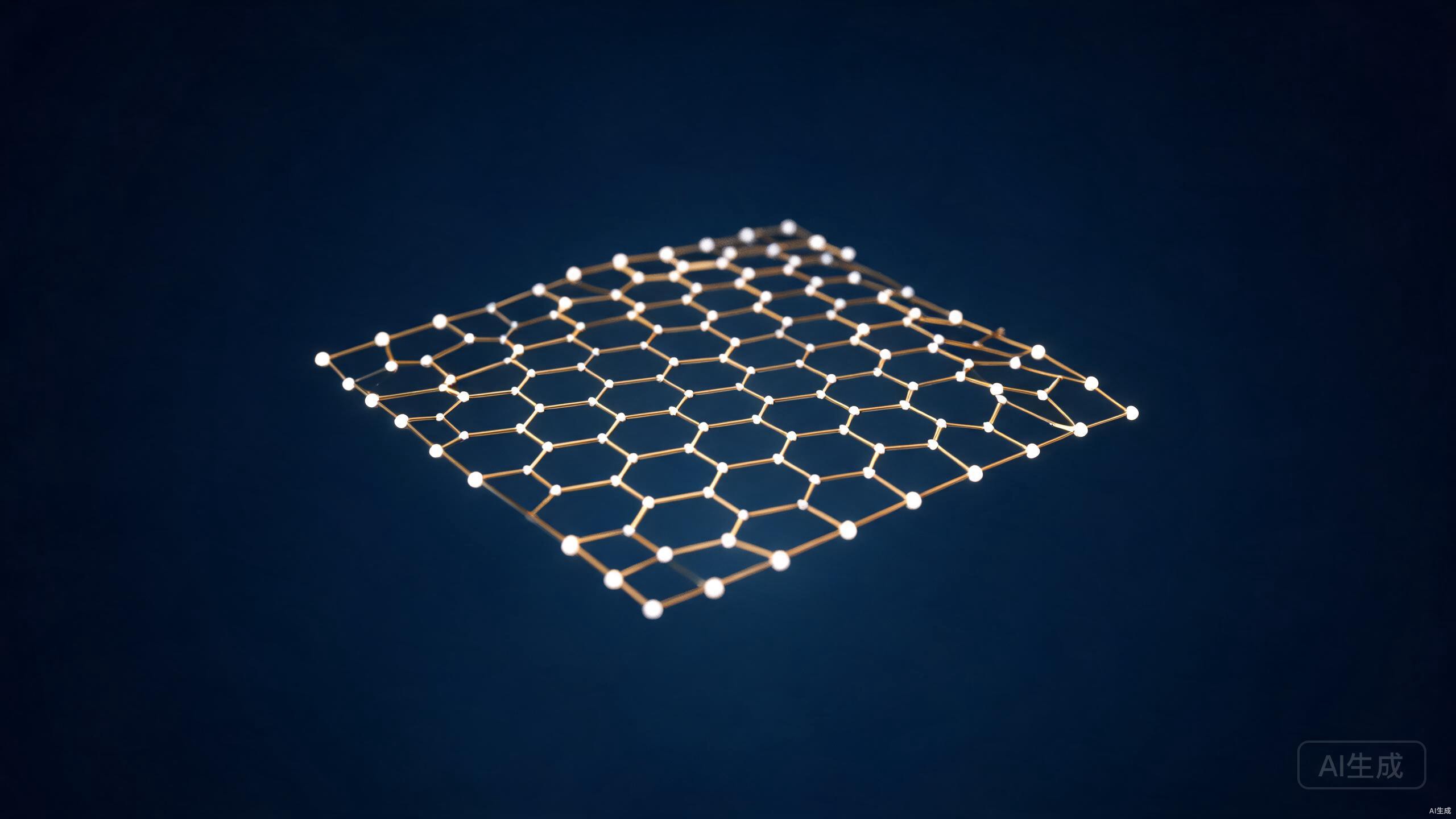
Graphene is a single atomic layer of sp2-hybridized carbon arranged in a honeycomb lattice. Its value comes from structure, not buzzword status: layer count, stacking order, defect density, dispersion, and engineering context all determine performance.
Reference Signals
Graphene is best understood as a single atomic layer of sp2-hybridized carbon with properties shaped by structure, stacking, and engineering context rather than by the word graphene alone.
What Is Graphene? Quick Answer
Graphene is a single layer of carbon atoms arranged in a two-dimensional hexagonal lattice.
It is the fundamental structural layer that makes up graphite. The difference is not the carbon. The difference is how the carbon atoms are arranged.
What Is Graphene? Key Takeaways
- Graphene is one atom thick, with sp2-hybridized carbon bonds forming a honeycomb sheet.
- Graphite is many graphene sheets stacked together.
- Real-world performance depends on layer count, defects, dispersion, and system engineering.
- Graphene matters most when it is engineered as a continuous, measurable material rather than a loose label.
- In far-infrared applications, graphene can function as a controlled emitter layer.
- Industrial use depends on manufacturing consistency, integration quality, and standards.
1. Graphene Definition: What Exactly Is Graphene?
To define graphene precisely:
Graphene is a single layer of carbon atoms bonded together in a two-dimensional hexagonal lattice structure.
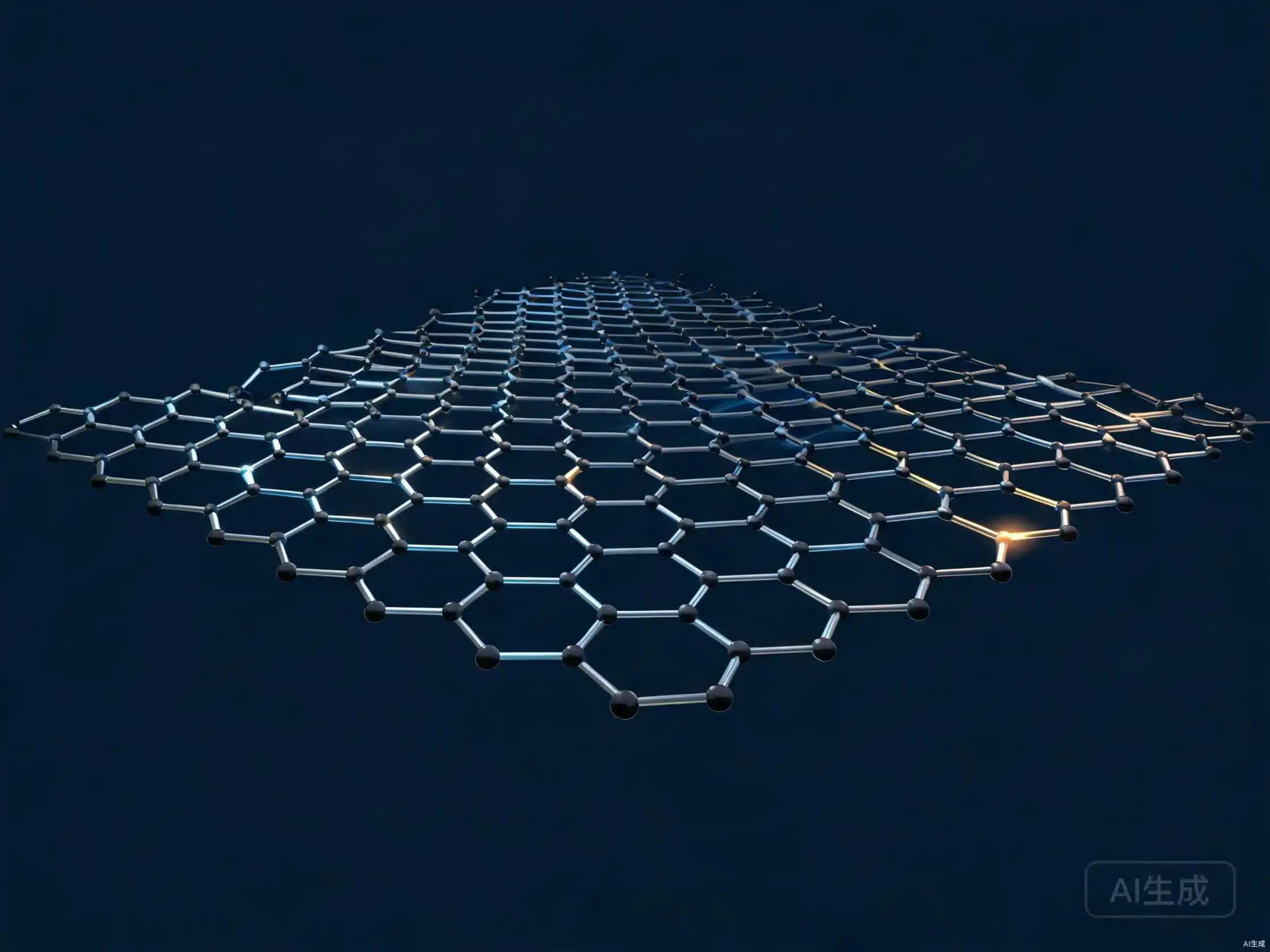
Each carbon atom is connected to three neighboring carbon atoms through strong covalent bonds, creating a stable honeycomb arrangement.
Unlike traditional carbon materials that exist in three-dimensional structures, graphene is essentially a two-dimensional material with a thickness of only one carbon atom.
This atomic simplicity creates extraordinary properties.
A useful way to understand graphene is:
- Graphite: many stacked graphene layers
- Graphene: a single atomic carbon layer
Graphene is therefore not a completely different element from graphite. It is the fundamental structural layer that makes up graphite.
2. Graphene Atomic Structure: Why Is Graphene Unique?
The special characteristics of graphene come from its atomic structure.
Each carbon atom in graphene uses sp2 hybridization, forming three strong sigma bonds with surrounding carbon atoms. The remaining electron forms a delocalized pi-electron system across the graphene sheet.
That electron structure enables:
- efficient electrical transport
- high carrier mobility
- strong mechanical bonding
- unique interaction with electromagnetic energy
The result is a material that combines lightweight structure, mechanical strength, electrical performance, and thermal functionality within a single atomic layer.
3. Graphene vs Graphite: What Is the Difference?
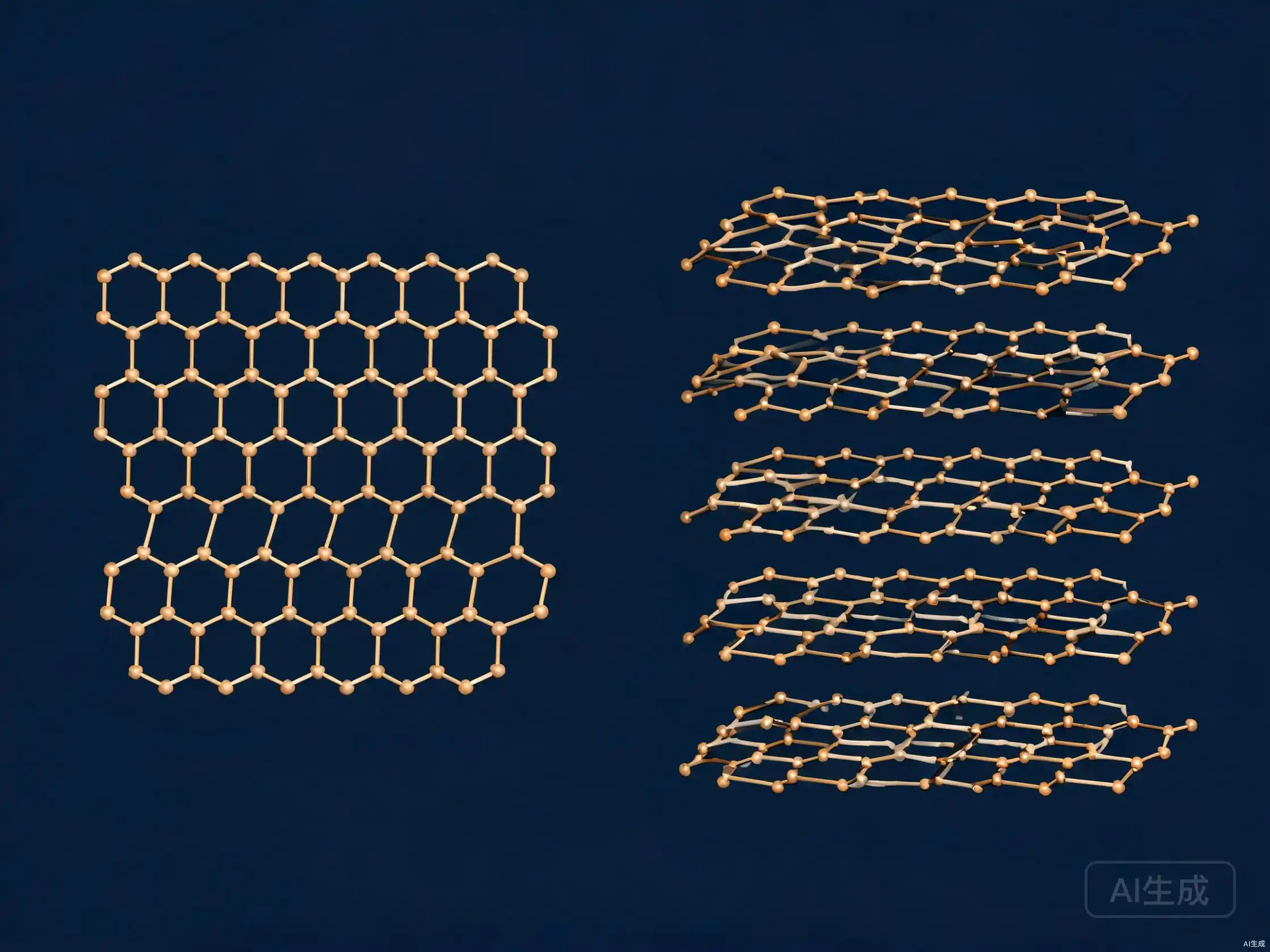
| Material | Structure | Characteristics |
|---|---|---|
| Graphene | Single carbon layer | 2D structure, high conductivity, high strength |
| Graphite | Many graphene layers stacked together | Traditional carbon material used in pencils and batteries |
| Carbon nanotube | Rolled graphene sheet | One-dimensional carbon structure |
| Carbon fiber | Carbon-based composite fibers | High-strength structural material |
The difference is not the carbon itself. The difference is how carbon atoms are arranged.
A single graphene layer provides properties that disappear or change when many layers are stacked together.
4. Key Graphene Properties
Graphene is considered one of the strongest known materials at the atomic scale.
Mechanical Strength
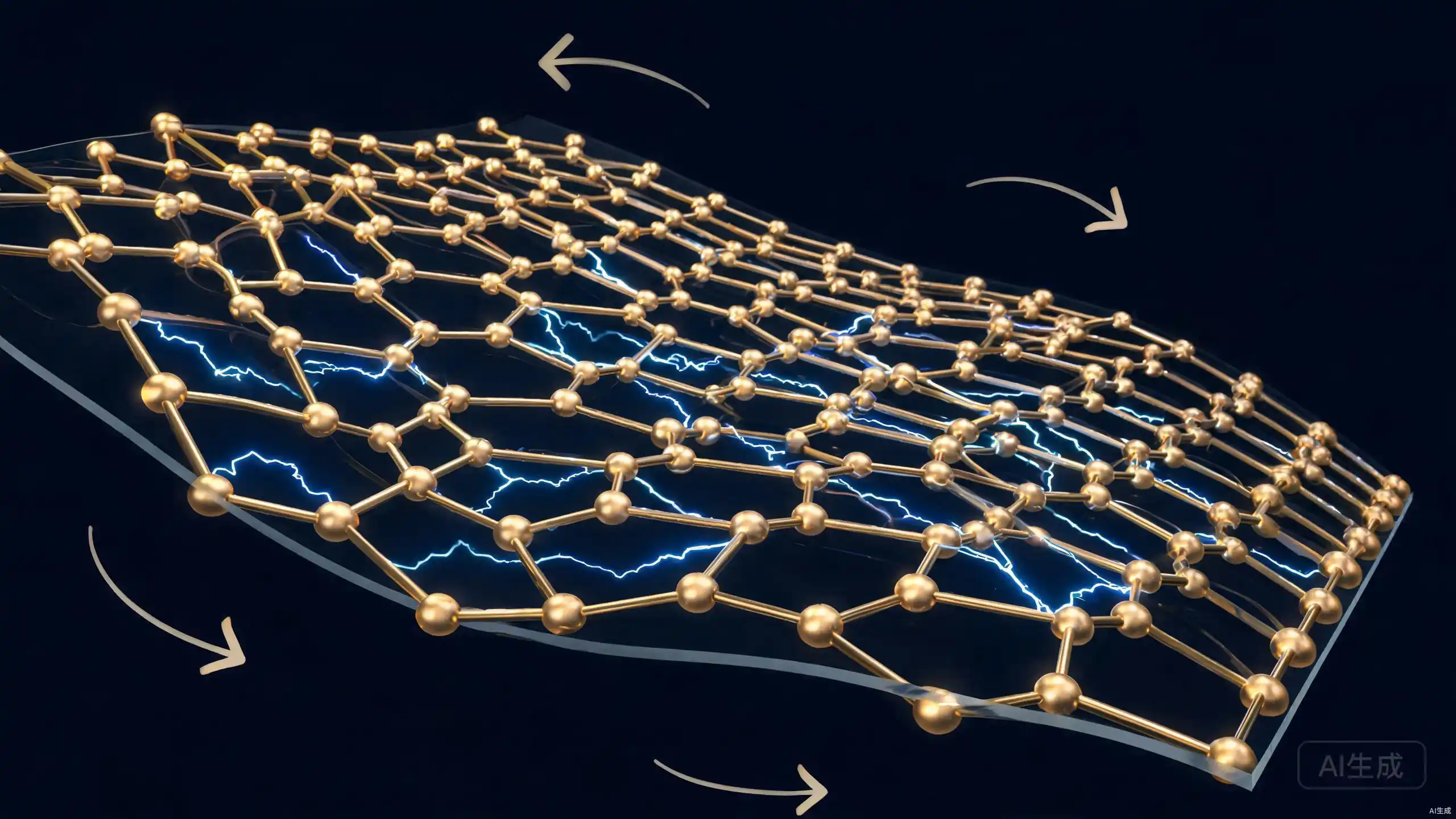
Its carbon-carbon bonds create a highly stable lattice structure with extremely high tensile strength, excellent flexibility, and lightweight characteristics.
Electrical and Thermal Behavior
The delocalized electrons within graphene allow efficient electron movement, giving it high electrical conductivity and excellent charge transport capability. Graphene also has exceptional thermal characteristics. Depending on how it is engineered and integrated, it can contribute to thermal management, heat dissipation, electrothermal conversion, and infrared emission technologies.
5. What Is Graphene Used For? Industrial Applications
Major application areas include:
Energy Storage
Widely studied in lithium-ion batteries, supercapacitors, and next-generation energy storage systems.
Electronics and Semiconductors
Attracted research interest in flexible electronics, sensors, transparent conductive materials, and advanced semiconductor technologies.
Composite Materials
Enhancing traditional materials by improving mechanical strength, electrical performance, and thermal characteristics.
Smart Textiles and Flexible Technologies
Graphene-based conductive inks and films enable printed electronics, flexible heating systems, and functional textiles.
If you want the textile-specific layer, see What Is Graphene Fabric?.

6. From Graphene Research to Industrial Applications: The IKKEM Innovation Pathway
Although graphene was discovered as a remarkable laboratory material, commercial success depends on solving engineering challenges:
- scalable production
- material consistency
- functional integration
- quality standards
- industrial manufacturing
The Tan Kah Kee Innovation Laboratory (IKKEM) is one example of how graphene research moves from fundamental science toward practical applications.
Established in 2019 as one of Fujian Province’s innovation laboratories, IKKEM focuses on strategic research areas including advanced energy materials, future technologies, and graphene-related materials.
The laboratory connects:
Fundamental Research -> Material Engineering -> Pilot Manufacturing -> Industrial Applications
7. Graphene Industrialization at IKKEM
One important commercialization direction within the IKKEM ecosystem is graphene-based conductive ink technology.
Unlike traditional conductive materials, graphene conductive inks enable flexible printing processes, integration with textiles, and lightweight electronic structures.
The technology has progressed from laboratory research toward pilot-scale manufacturing and industrial applications.
This demonstrates an important transition:
Graphene is moving from a scientific discovery into an engineered functional material.
Another industrial direction is graphene flexible electrothermal technology.
Through graphene material engineering, flexible films can convert electrical energy into controlled thermal radiation.
This technology pathway supports applications in flexible heating systems, wearable technologies, and thermal management solutions.
The development of industry standards is also important for commercialization. Standardization helps define testing methods, performance evaluation, and manufacturing requirements, allowing graphene technologies to move from research environments toward broader markets.
8. Graphene Far-Infrared Technology: A New Research Frontier
Beyond conventional graphene applications, researchers are exploring how engineered graphene materials interact with energy.
At IKKEM, Academician Zheng Nanfeng’s research team has developed graphene-based far-infrared materials and flexible heating technologies.
The research direction focuses on:
- graphene far-infrared materials
- graphene heating films
- energy conversion mechanisms
- interactions between physical energy and biological systems
Through material engineering, graphene can be designed not only as a structural material but also as an energy-conversion platform.
When a graphene film is engineered for far-infrared emission, it converts electrical energy into a specific spectral output - not just warmth, but radiation with a defined wavelength distribution and measurable emissivity.
This is not a marketing claim. It is a physical property, and it can be measured, certified, and verified by third-party laboratories.

If you want the platform-level definition first, read What Is Far Infrared? and the broader Graphene Far Infrared Technology hub.
If you want the biology side of the story, see Cellular Energy Beyond ATP and Oxidative Stress and Recovery.
For XIHE, the important shift is from “does it sound advanced?” to “what is the source actually doing, and can it be documented?”
Scientific Note
Open-access reviews consistently describe graphene as a single or few-atom-thick carbon sheet with sp2 hybridization and a honeycomb lattice. They also note that stacking order changes the behavior of multilayer graphene and graphite-like structures.
That is why the simplest explanation is still the most useful:
- graphene is the single-layer building block
- graphite is the stacked form
- structure, stacking, and defects determine performance
For readers who want the science behind that statement, see:
- Structure of graphene and its disorders: a review
- Graphene Properties, Synthesis and Applications: A Review
- Synthesis and Functionalization of Graphene Materials for Biomedical Applications: Recent Advances, Challenges, and Perspectives
Founder’s Note
I did not enter the graphene industry because it was a promising market. I entered it because I learned, in a very personal way, what it means to lose your health. When I recovered, I made a quiet promise: if I ever had the chance to build something that could help people hold on to their health before they lost it, I would do it.
That chance came in the form of graphene - not as a commodity, but as a physical platform. A material that, when engineered with enough precision, can deliver a specific wavelength of energy to the body.
We are not selling a device or a film. We are asking whether a precisely engineered physical environment can support the body’s own capacity for repair - and trying to answer that question with data, not adjectives.

The Future of Graphene
Graphene has moved through several stages: scientific discovery, material engineering, industrial manufacturing, and now advanced functional applications.

Its future will depend on the ability to combine material science, engineering, manufacturing capability, and application-specific design - all supported by transparent, verifiable performance standards.
From energy storage to flexible technologies and emerging biophysical applications, graphene continues to evolve.
Not as a single breakthrough, but as a platform technology that rewards those who treat it with rigor, measure it with honesty, and apply it with purpose.
Conclusion
Graphene is more than a new carbon material.
It represents a new way of engineering matter at the atomic level - one that demands precision, rewards transparency, and ultimately serves human health when applied with integrity.
The journey from a single carbon layer discovered in a laboratory to advanced functional technologies integrated into people’s lives is not complete.
But it has begun.
And the next chapter will be written not by those who talk about graphene the loudest, but by those who engineer it with the most care.
EVIDENCE QUESTIONS
What is graphene?
Graphene is a single layer of carbon atoms arranged in a two-dimensional honeycomb lattice. Its sp2-hybridized structure gives it unusual mechanical, electrical, and thermal behavior.
Is graphene the same as graphite?
No. Graphite is made from many graphene layers stacked together. Graphene refers to the single-layer building block.
Why is graphene considered special?
Because its atomic arrangement creates a combination of strength, flexibility, conductivity, and thermal behavior that is difficult to find in one material.
What is graphene used for?
Graphene is studied and used in energy storage, electronics, sensors, composites, flexible technologies, printed layers, and far-infrared engineering.
Are all graphene materials the same?
No. Graphene performance changes with layer count, defect density, flake size, dispersion quality, and how the material is integrated into a system.
How is graphene connected to far infrared technology?
Engineered graphene films can act as measurable far-infrared emitters. That is why graphene is part of XIHE's broader engineering and recovery context.
CONTINUE EXPLORING
What Is Far Infrared?
Far infrared is a region of the electromagnetic spectrum beyond visible red light. Learn how wavelength, emissivity, material properties, and measurement standards define far infrared technology.
What Is Graphene Fabric? Next-Generation Textile Technology for Heated Jackets and Outdoor Apparel
What is graphene fabric? It is a textile category that uses graphene through fibers, coatings, printed layers, or heating systems. This page explains the difference between passive graphene textiles and active graphene heating-film apparel.
What Is Far Infrared Graphene? Technology, Emitter Architecture, and Evaluation
Far infrared graphene technology uses a graphene-based emitter to convert electrical input into far infrared radiant output. Learn how it differs from conventional heating elements, how to evaluate emitter architecture, emissivity, radiant efficiency, and supplier evidence.
What Is Far Infrared Graphene? Technology, Emitter Architecture, and Evaluation Articles
Browse all XIHE knowledge articles filed under what is far infrared graphene? technology, emitter architecture, and evaluation.
Are Heated Eye Masks Safe? What Buyers Should Check First
Are heated eye masks safe? The practical answer depends on temperature control, session duration, face-contact materials, charging design, and whether the product is disposable or reusable.
Graphene Far Infrared vs Traditional Infrared Heating: What Actually Matters?
Not all infrared systems are equal. This comparison explains what buyers should actually compare: emissivity, radiant efficiency, wavelength behavior, thermal stability, and engineering consistency.