Why Heated Pads Fail: Wire Heaters vs Graphene Heating Film
Why do so many heated pads feel bulky, uneven, or slow? Compare wire-heater pads with graphene heating film through heating architecture, conformity, thermal response, durability, and OEM design logic.
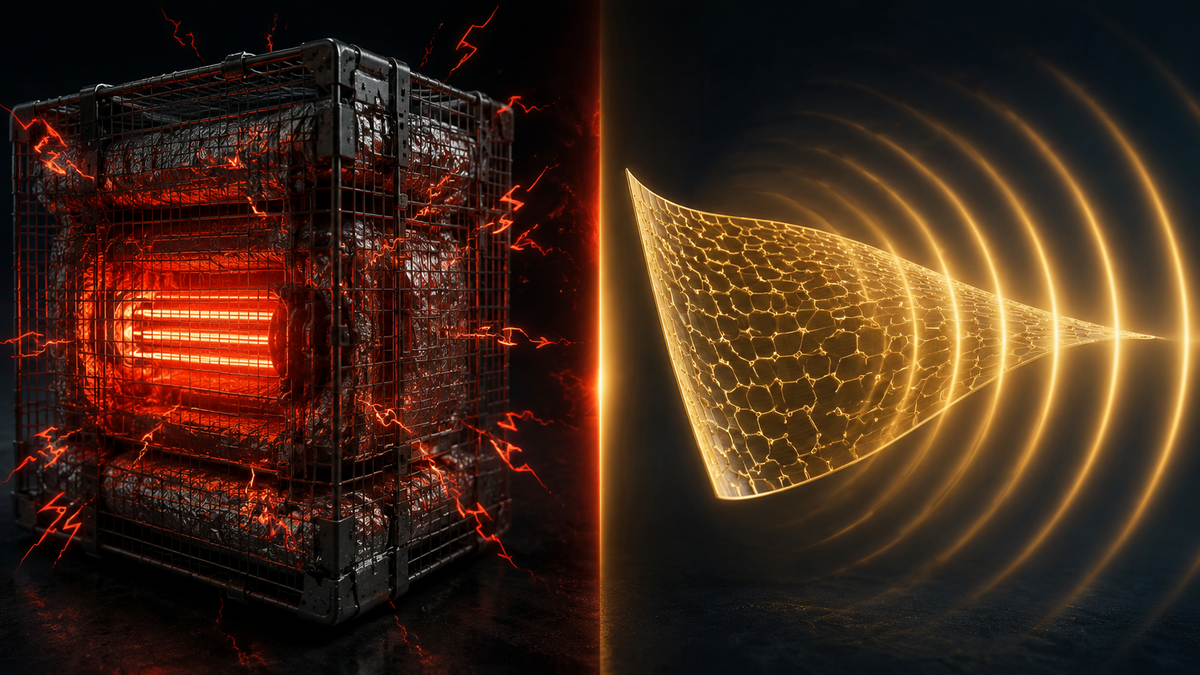
QUICK ANSWER
Many heated pads fail at the experience level because they still rely on routed wire architectures, segmented heating zones, and bulky protective layers. Graphene heating film changes the comparison by moving the active layer toward a thinner, more conformable, and broader heating surface that can be evaluated through film architecture, thermal response, and supplier evidence.
Reference Signals
The main limitation of many heated pads is architectural, not conceptual. Wire-based systems often create bulk, discrete heat paths, slower response, and posture constraints, while graphene heating film can support flatter integration and a different user-experience ceiling.
Why Heated Pads Fail: Wire Heaters vs Graphene Heating Film Quick Answer
Many heated pads do not fail because heat is a bad idea.
They fail because the internal architecture creates a compromised user experience.
A traditional wire-heater pad often has to manage:
- routed electrical paths
- stitched or segmented heating zones
- protective build-up around the active element
- posture limitations when the pad is bent or compressed
Graphene heating film changes the comparison because the active layer can become flatter, broader, and easier to integrate close to the form factor itself.
That is why the better question is not only which pad gets warm?
It is which heating architecture creates a better pad?
Why Heated Pads Fail: The Limits of Wire-Heating Architecture
The common user complaints are familiar:
- it feels bulky
- one area gets warmer than another
- it takes too long to respond
- it does not sit naturally against the body
- it feels fragile when folded or leaned on
These are not always failures of temperature.
They are often failures of structure.
The pad may technically produce warmth.
But the user is still interacting with:
- thickness
- stiffness
- unevenness
- awkward positioning
That is why so many heated pads end up being tolerated rather than loved.
Wire Heaters vs Graphene Heating Film: Compare the Internal Architecture
The useful comparison is not premium pad vs cheap pad.
It is wire-led architecture vs film-led architecture.
| Comparison question | Wire-heater pad | Graphene heating film pad |
|---|---|---|
| What creates the active warmth? | Routed wire or discrete heating path | Flatter film-based heating layer |
| Where does bulk come from? | Routing, stitching, insulation, protection | Film stack and outer pad build |
| How is warmth distributed? | Path-led or segmented | Broader surface-led coverage |
| What limits comfort? | Stiffness and hot-zone logic | Depends more on overall pad construction |
| What creates the stronger OEM story? | Commodity pad logic | Material-led upgrade and thin integration story |
This shift matters because it moves the buyer from generic product comparison to structural evaluation.
Wire Heating Pads vs Graphene Film Pads: Why They Behave Differently
1. Wire pads are constrained by routed geometry
A wire-based pad has to build around the heating path.
That means the product often inherits the logic of the internal circuit:
- where the wire runs
- how it bends
- how it is protected
- how evenly it can distribute warmth
This creates a very practical ceiling for comfort and conformity.
2. Film pads can shift the active layer closer to the surface geometry
Graphene heating film matters because the active layer can behave more like a thin surface system than a routed embedded wire.
This changes the design problem from:
how do we protect the heater path?
to:
how do we integrate a thin active layer into a comfortable pad format?
3. The product experience changes because the material logic changes
When the active layer is flatter and more conformable, several things can improve:
- the pad can feel closer to the body
- the heating area can become more continuous
- the profile can become thinner
- the format can be easier to adapt to wearable and targeted body-area products
This is exactly why heating pad is no longer just a warmth category.
It is a material-architecture category.
Wire Heaters vs Graphene Heating Film
| Evaluation Factor | Traditional Wire-Heater Pad | XIHE Graphene Film Logic |
|---|---|---|
| Heating element | Routed wire or stitched resistive path | Flexible graphene heating film |
| Thickness pressure | Added by wiring and protective layers | Reduced when the active layer is flatter |
| Heat distribution | Often segmented or path-led | Better suited to broader surface coverage |
| Bend conformity | Limited by wire geometry | Better aligned with body-contact formats |
| Response behavior | Depends on routed layout and thermal mass | Benefits from thin film architecture |
| Product story | Generic heated pad | Material-led recovery or comfort format |
| OEM differentiation | Commodity competition | Stronger engineering and sourcing narrative |
| Evidence path | Brand-dependent | XIHE anchors include 0.88 emissivity and 68% radiation conversion |
The point is not that every film pad is automatically better than every wire pad.
The point is that the old pad category is still constrained by an old internal logic.
Why This Matters for XIHE
XIHE already has products that sit adjacent to this demand pattern:
- portable targeted warm-comfort formats
- body-area wearables
- graphene heating film for OEM integration
That means heated pad search intent is not random traffic for the brand.
It is a Trojan entry point.
Users start with a pad problem.
But the deeper answer often leads to:
- graphene film
- wearable conformity
- thinner integration
- better supplier documentation
That is the bridge from search language to XIHE’s real platform language.
Buyer Questions That Matter More Than Marketing Claims
If a team is evaluating a next-generation heated pad or wearable support format, these are the questions worth asking first:
- Is the heating element wire-led or film-led?
- How much of the pad thickness comes from protecting the active element?
- Is the heating coverage broad or segmented?
- How does the pad behave when bent, leaned on, or worn close to the body?
- What durability and integration data exist?
- Is the supplier selling a commodity warmer or an engineered heating platform?
These questions create a much better buying conversation than generic benefit language.
Bottom Line
Many heated pads fail at the experience level because they still inherit the compromises of routed wire architecture.
Graphene heating film matters because it offers a different structural pathway:
- less bulk pressure
- broader surface heating logic
- better conformity potential
- a stronger platform story for OEM products
That is why the future of the category is not only hotter pads.
It is better architecture.
Scientific Disclaimer
This page is for product, material, and OEM evaluation only.
It does not provide medical advice and does not claim that one heating architecture treats disease or guarantees a health outcome.
What to Read Next
EVIDENCE QUESTIONS
Why do some heated pads feel bulky or uneven?
Bulk and uneven warmth often come from the internal architecture. Routed wires, stitched zones, protective layers, and discrete heating paths can all make a pad feel less natural and less uniform.
Is graphene heating film better than a wire heating pad?
Not in every case. Wire heaters remain common and cost-effective. Graphene heating film becomes more attractive when the buyer wants thinner construction, better conformity, broader heating coverage, and a stronger material-level product story.
What is the best heating element for a heating pad?
There is no universal best option. The right answer depends on whether the product needs lower bulk, better bend compliance, faster response, improved uniformity, or lower-cost wire-led construction.
What should OEM buyers ask before choosing a heated-pad supplier?
Ask what the active heating architecture is, how heat is distributed, how the pad behaves under bending or body contact, what durability evidence exists, and whether the supplier can show real integration data rather than generic warmth claims.
CONTINUE EXPLORING
How to Evaluate Far Infrared Heating Film: 6 Metrics That Matter
A practical buyer's guide to evaluating far infrared heating film using six metrics: emissivity, radiative efficiency, wavelength behavior, thermal stability, substrate quality, and third-party verification.
Custom Graphene Heating Film — Flexible Heating Elements for OEM/ODM Integration
Custom flexible graphene heating film for OEM/ODM integration — large-area edge-compensated thermal distribution qualified on 240-point 1.0×2.4 m panels, NIQS-certified 0.88 emissivity, 10-piece MOQ, 5–240 V design, from prototype to mass production.
What Is Far Infrared Graphene? Technology, Emitter Architecture, and Evaluation
Far infrared graphene technology uses a graphene-based emitter to convert electrical input into far infrared radiant output. Learn how it differs from conventional heating elements, how to evaluate emitter architecture, emissivity, radiant efficiency, and supplier evidence.
What Is Far Infrared Graphene? Technology, Emitter Architecture, and Evaluation Articles
Browse all XIHE knowledge articles filed under what is far infrared graphene? technology, emitter architecture, and evaluation.
DEEP RECOVERY
Evaluate XIHE Deep Recovery wearables for knee, neck, and lumbar warm-comfort support. The page focuses on wearable format, far infrared graphene emitter positioning, OEM potential, and buyer comparison rather than treatment claims.
Are Heated Eye Masks Safe? What Buyers Should Check First
Are heated eye masks safe? The practical answer depends on temperature control, session duration, face-contact materials, charging design, and whether the product is disposable or reusable.