Why Energy Matters for Health
Energy matters for health because every form of maintenance, repair, signaling, and adaptation depends on usable ATP. Learn why health is partly an energy-allocation problem.
QUICK ANSWER
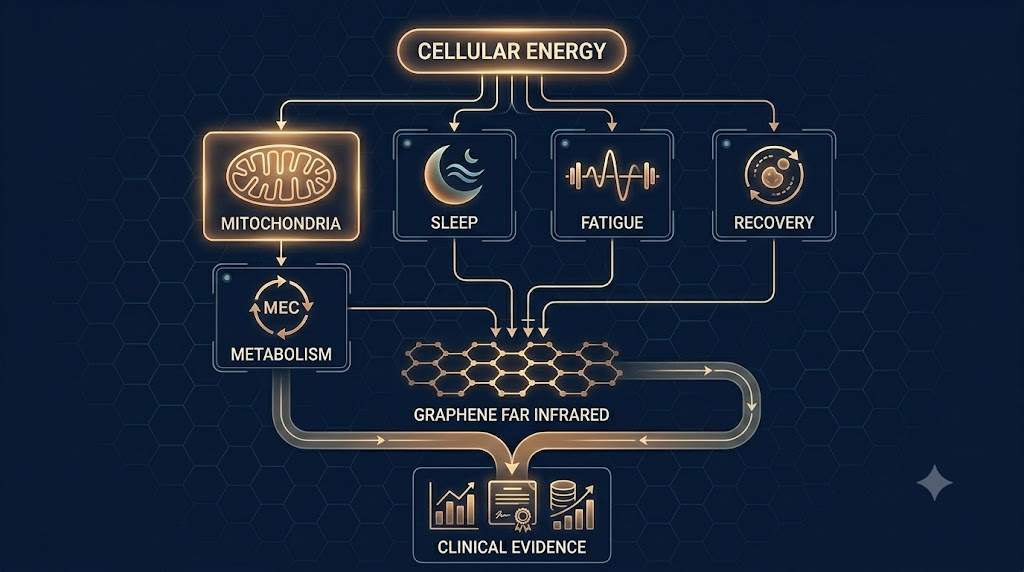
Energy matters for health because biological systems can only maintain order, repair damage, and adapt to stress when enough usable ATP is available for the work. Health is not just chemistry or structure; it is also the energetic ability to sustain function over time.
Reference Signals
Quick Answer
Energy matters for health because every living system has to pay a biological cost to stay organized.
Cells need usable ATP to:
- maintain structure
- transmit signals
- repair damage
- regulate inflammation
- adapt after stress
Without enough usable energy, function becomes harder to sustain.
Cause: Why Health Is Often Described Without Energy
Health conversations often focus on:
- nutrients
- symptoms
- hormones
- biomarkers
- structure
All of those matter.
But they still require a working energy layer.
No repair program runs for free.
No signaling network is free.
No adaptation is free.
That is why cellular energy belongs near the center of health biology.
Solution: View Health as Maintained Order
The body is not static.
It is constantly maintaining order against:
- entropy
- workload
- injury
- inflammation
- environmental change
That maintenance requires ATP.
So one useful way to think about health is:
health = structure + signaling + energy availability + recovery capacity
Mechanism: Where Energy Shows Up in Health
1. Maintenance
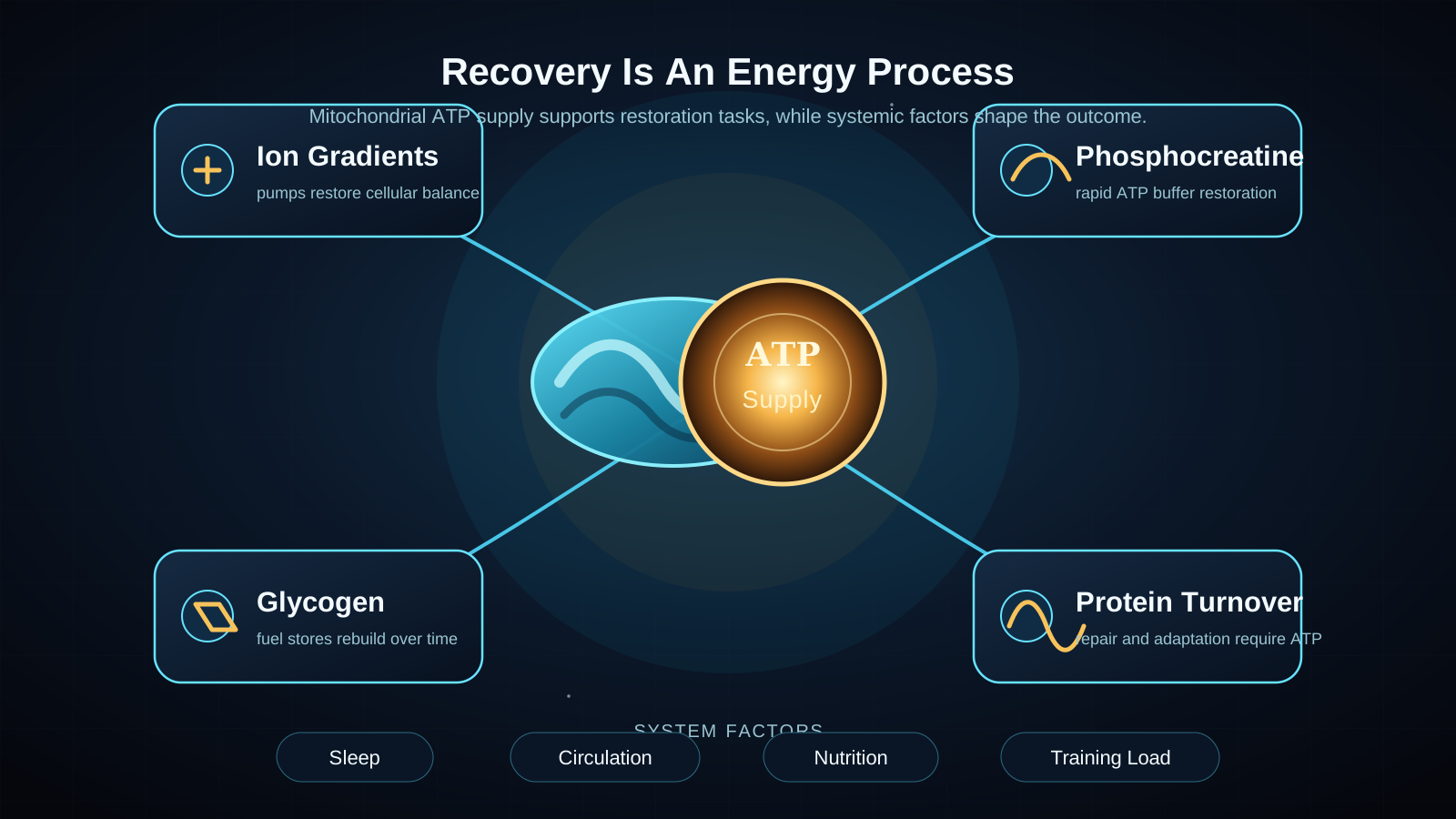
Cells use ATP to preserve membrane gradients, protein quality, transport systems, and internal organization.
2. Repair
After stress, exercise, illness, or daily wear, the body needs energy to rebuild and restore tissue.
3. Adaptation
Learning, training adaptation, immune adjustment, and resilience all depend on energy-consuming biological work.
4. Regulation
Healthy function also means keeping systems balanced:
- inflammatory signaling
- autonomic tone
- sleep-wake timing
- metabolic flexibility
These are regulation problems as much as structural ones.
Why Energy Problems Can Feel So Broad
Because ATP sits underneath so many forms of work, energy strain can show up across many domains:
- slower recovery
- reduced focus
- lower exercise tolerance
- poorer stress tolerance
- less resilience after disruption
That does not mean ATP is the only explanation.
It means energy is a common denominator across many outcomes.
Why Low Energy Does Not Equal One Diagnosis
This distinction is important.
Low energy can reflect:
- poor sleep
- high inflammatory demand
- emotional stress
- heavy workload
- illness
- circadian disruption
- mitochondrial inefficiency
So “energy matters for health” does not mean every symptom has one metabolic answer.
It means biology cannot adapt well without usable energy.
Where XIHE Fits
XIHE’s framing around physical biology depends on this foundation.
If health involves repair, regulation, and adaptation, then the energy layer matters.
The responsible scientific question is not whether a device replaces biology.
It is whether a defined physical input may interact with part of that biological environment in a measurable and evidence-driven way.
What to Read Next
- Energy Supply vs Energy Demand
- What Influences Energy Production?
- Why Mitochondrial Efficiency Matters
- What Is ATP?
- Far Infrared Graphene Hub
Scientific Disclaimer
This article is for scientific education only.
It does not provide medical advice or diagnose the cause of low energy or poor health.
EVIDENCE QUESTIONS
Why is energy important for health?
Because maintenance, repair, signaling, immune balance, and adaptation all require usable ATP. Without enough energy, biological work becomes harder to sustain.
Does low energy always mean disease?
No. Low energy can reflect many layers including sleep, stress, workload, inflammation, recovery burden, and metabolic strain. It should not be reduced to one cause.
Is health partly an energy-allocation problem?
Yes. The body constantly decides where ATP goes first. When demand is high, some lower-priority functions may receive less support.
What should I read next?
The next useful page is the supply-versus-demand model, because it shows why energy capacity and energy workload have to be understood together.
CONTINUE EXPLORING
Cellular Energy | ATP, Biological Cost, and the Energy Economics of Living
Cellular energy is XIHE's parent biological framework for understanding ATP, mitochondria, microcirculation, recovery load, and the rising biological cost of daily life. This hub explains why XIHE treats sleep, fatigue, inflammation, recovery, and aging as parts of one energy system rather than separate wellness silos.
Energy Supply vs Energy Demand
Energy depends on balance, not output alone. Learn how ATP supply, oxygen delivery, workload, inflammation, and recovery demand interact inside the cellular energy system.
Cellular Energy | ATP, Biological Cost, and the Energy Economics of Living Articles
Browse all XIHE knowledge articles filed under cellular energy | atp, biological cost, and the energy economics of living.
Recovery | How Far Infrared Supports ATP, Repair, and Active Restoration
Explore how far infrared supports recovery through ATP demand, tissue repair, circulation, inflammatory resolution, and sleep-related restoration under measurable conditions. This hub turns recovery language into endpoint-led reading paths rather than generic heat or comfort claims.
Far Infrared and Mitochondrial ATP Pathways
A research note on why ATP appears in far infrared discussions, what PubMed-indexed literature suggests, and where the evidence boundary still sits.
Cellular Energy and Aging
Aging is partly an energy story. Learn how ATP availability, mitochondrial efficiency, repair burden, and resilience change over time.