Why Can't I Focus?
Focus depends on brain energy, not motivation alone. Learn how ATP demand, sleep, stress, and cognitive load affect attention and mental clarity.
QUICK ANSWER
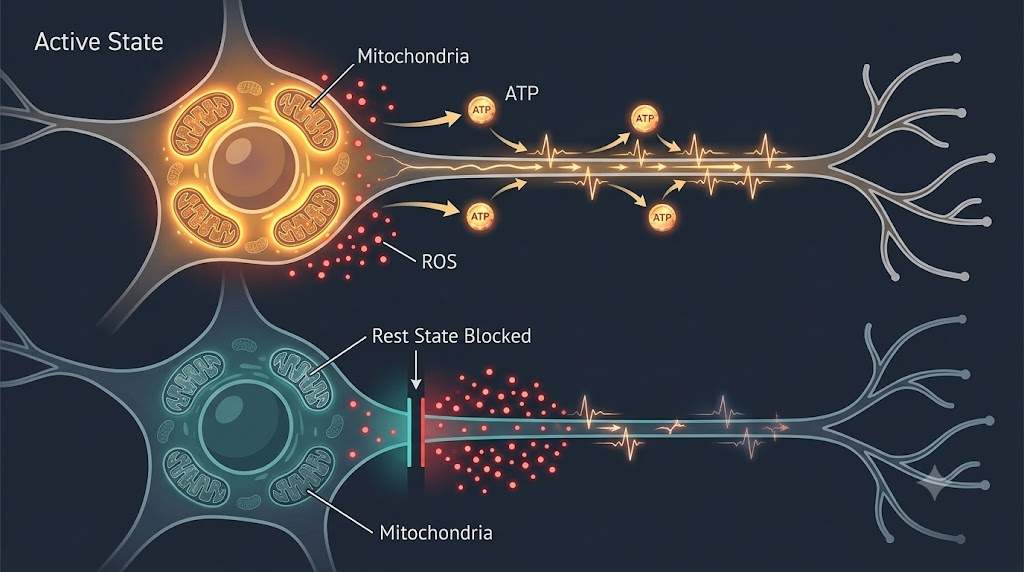
Focus can decline when the brain's energy demand outpaces the system's ability to maintain stable signaling. Attention is not powered by willpower alone; it depends on ATP availability, sleep quality, stress load, oxygen delivery, and the energy cost of sustained neural activity.
Reference Signals
Quick Answer
Focus is not only a mindset issue.
It is also an energy issue.
The brain needs ATP to:
- maintain ion gradients
- transmit signals
- stabilize attention networks
- switch between tasks
- suppress distractions
When energy demand stays high and recovery is incomplete, focus often gets worse.
Cause: Why Poor Focus Is Often Misread
People usually explain poor focus through:
- discipline
- motivation
- screen time
- distraction
Those matter.
But they do not tell the whole biological story.
The brain is a high-demand organ.
It must keep large signaling networks running continuously.
That has a real energy cost.
Solution: Treat Focus as a Brain Energy Question
A better question is not only why am I distracted?
It is does my brain have the stability and usable energy needed to sustain attention?
| Layer | Why it matters for focus |
|---|---|
| ATP availability | Supports membrane pumps and signaling |
| Sleep quality | Restores recovery capacity and network stability |
| Stress load | Raises background demand and can fragment attention |
| Oxygen delivery | Supports high-output ATP production |
| Cognitive workload | Sustained attention itself costs energy |
This makes focus easier to understand and much harder to reduce to blame.
Mechanism: Why Attention Has an Energy Cost
1. Neurons are always active
The brain does not switch off between thoughts.
It constantly maintains membrane gradients and signal readiness.
That ongoing maintenance requires ATP.
2. Attention requires selection and suppression
To focus on one thing, the brain has to strengthen some signals and suppress others.
That is active regulation.
It is not free.
3. Mental work raises demand over time
Long periods of cognitive load can raise the total biological cost of concentration.
This is why focus often fades after:
- long meetings
- sustained screen work
- poor sleep
- stress-heavy days
Why Sleep and Stress Change Focus So Much
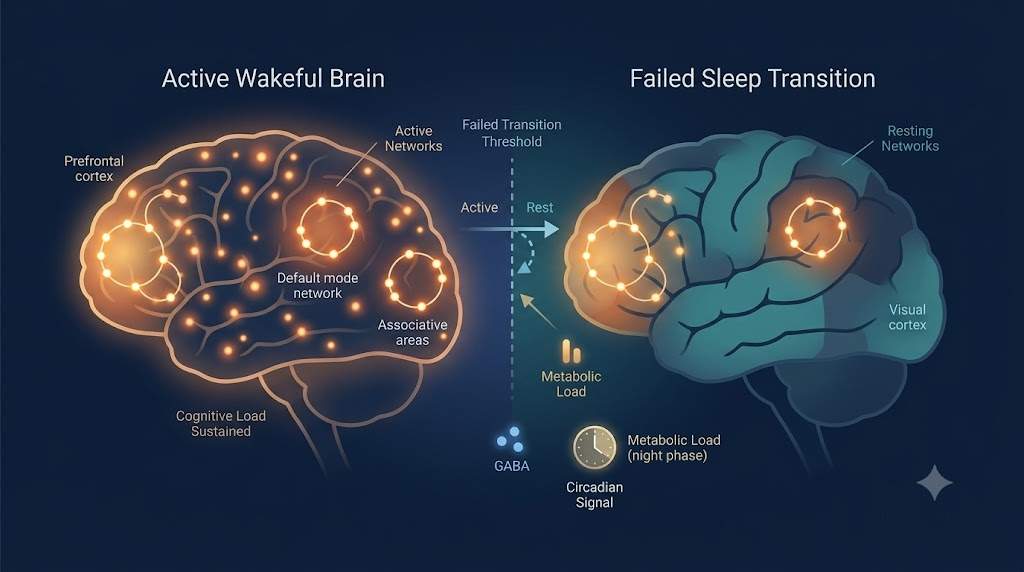
Sleep supports recovery of the systems that make focus possible.
Stress raises background demand.
When those two move in the wrong direction together, attention often becomes less stable.
This does not mean every focus problem is metabolic.
It means the brain’s energy environment matters.
Why Brain Fog and Poor Focus Often Travel Together
Brain fog and low focus are not identical.
But they often overlap because both can reflect difficulty maintaining high-quality neural work under load.
That overlap is one reason cellular energy becomes relevant to cognitive performance language.
Where XIHE Fits
XIHE should talk about cognitive performance carefully.
The honest framing is not that a device “creates focus.”
The honest framing is that focus depends on a biological environment that includes energy supply, recovery, sleep, and nervous-system state.
That is the right scientific frame for any discussion about physical biology and cognition.
What to Read Next
- Mitochondria
- Why Do I Wake Up Tired?
- Why Energy Matters for Health
- What Is Cellular Energy? ATP, Demand, and Recovery
- Far Infrared Graphene Hub
Scientific Disclaimer
This article is for scientific education only.
It does not diagnose ADHD, sleep disorders, burnout, depression, or any medical cause of poor concentration.
EVIDENCE QUESTIONS
Can low focus be related to energy?
Yes. Focus requires stable neural signaling, ion transport, and network coordination, all of which depend on usable energy and recovery quality.
Is focus only a sleep problem?
No. Sleep is important, but focus can also be affected by cognitive load, stress, inflammation, oxygen delivery, and overall energy demand.
Does the brain use a lot of ATP?
Yes. The brain is an energetically expensive organ because it must maintain signaling, gradients, and communication networks continuously.
What should I read next?
The next useful page is why brain workers feel like their brain never stops, because it extends this topic into recovery and nervous-system load.
CONTINUE EXPLORING
Cellular Energy | ATP, Biological Cost, and the Energy Economics of Living
Cellular energy is XIHE's parent biological framework for understanding ATP, mitochondria, microcirculation, recovery load, and the rising biological cost of daily life. This hub explains why XIHE treats sleep, fatigue, inflammation, recovery, and aging as parts of one energy system rather than separate wellness silos.
Mitochondria | The Energy Conversion Engine of Cellular Energy
Mitochondria are the biological conversion systems that turn nutrients and oxygen into usable cellular energy. This hub explains how mitochondria fit within XIHE's Cellular Energy Framework, where energy conversion connects metabolism, ATP production, oxidative balance, recovery, and evidence-bounded far infrared research into mitochondrial and cellular endpoints without confusing mechanism language with direct product proof.
Cellular Energy | ATP, Biological Cost, and the Energy Economics of Living Articles
Browse all XIHE knowledge articles filed under cellular energy | atp, biological cost, and the energy economics of living.
Sleep | How Far Infrared May Support Restoration, Recovery, and Energy Reset
Sleep is a biological restoration process tied to ATP recovery, circadian rhythm, glymphatic clearance, and metabolic reset. This hub explains where far infrared may support the sleep environment without turning it into a sleep-treatment claim.
Far Infrared and Mitochondrial ATP Pathways
A research note on why ATP appears in far infrared discussions, what PubMed-indexed literature suggests, and where the evidence boundary still sits.
Cellular Energy and Aging
Aging is partly an energy story. Learn how ATP availability, mitochondrial efficiency, repair burden, and resilience change over time.