Why Does the Body Need ATP?
The body needs ATP because cells cannot perform biological work without it. Learn why ATP powers movement, signaling, repair, transport, and survival.
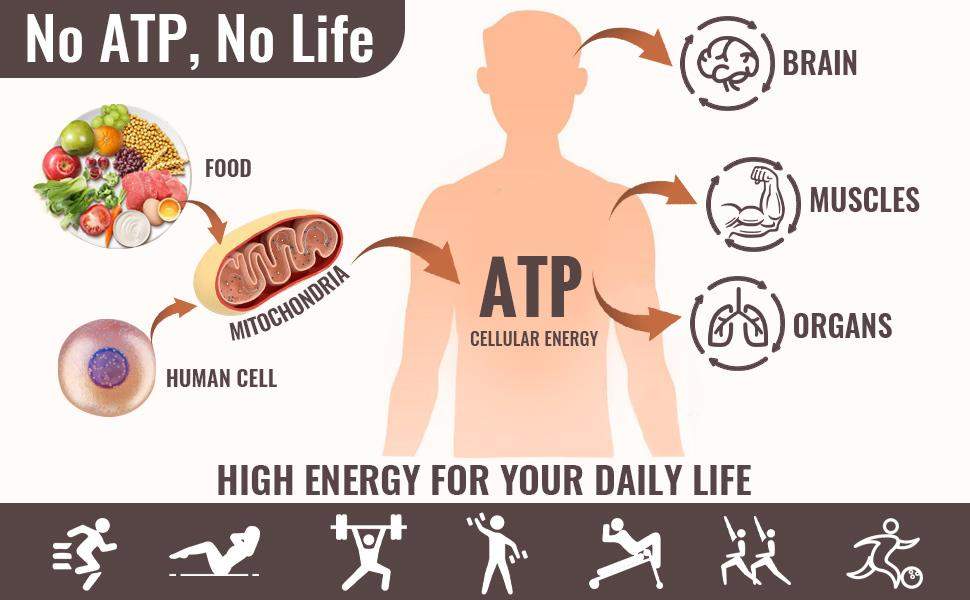
QUICK ANSWER
The body needs ATP because ATP is the immediate usable energy currency cells spend on biological work. Without continuous ATP production, cells cannot maintain ion gradients, contract muscle, transmit signals, synthesize molecules, or repair tissue.
Reference Signals
Quick Answer
The body needs ATP because cells cannot do useful work without it.
ATP is the molecule used to:
- move ions across membranes
- contract muscle
- transmit signals
- build proteins
- repair tissue
- maintain cellular order
Without ongoing ATP supply, cells lose function quickly.
Cause: Why ATP Matters More Than “Energy” as a Vague Word
People often talk about energy in a general way.
Biology is more exact.
Cells do not spend motivation.
They do not spend calories directly.
They spend ATP.
That is why ATP is the real working unit of biological energy.
Solution: Ask What the Body Is Constantly Paying For
The body is always paying an energy cost.
Even at rest, cells are:
- maintaining ion gradients
- turning over proteins
- managing signaling
- repairing wear and tear
- controlling temperature
- supporting immune surveillance
ATP is what pays that bill.
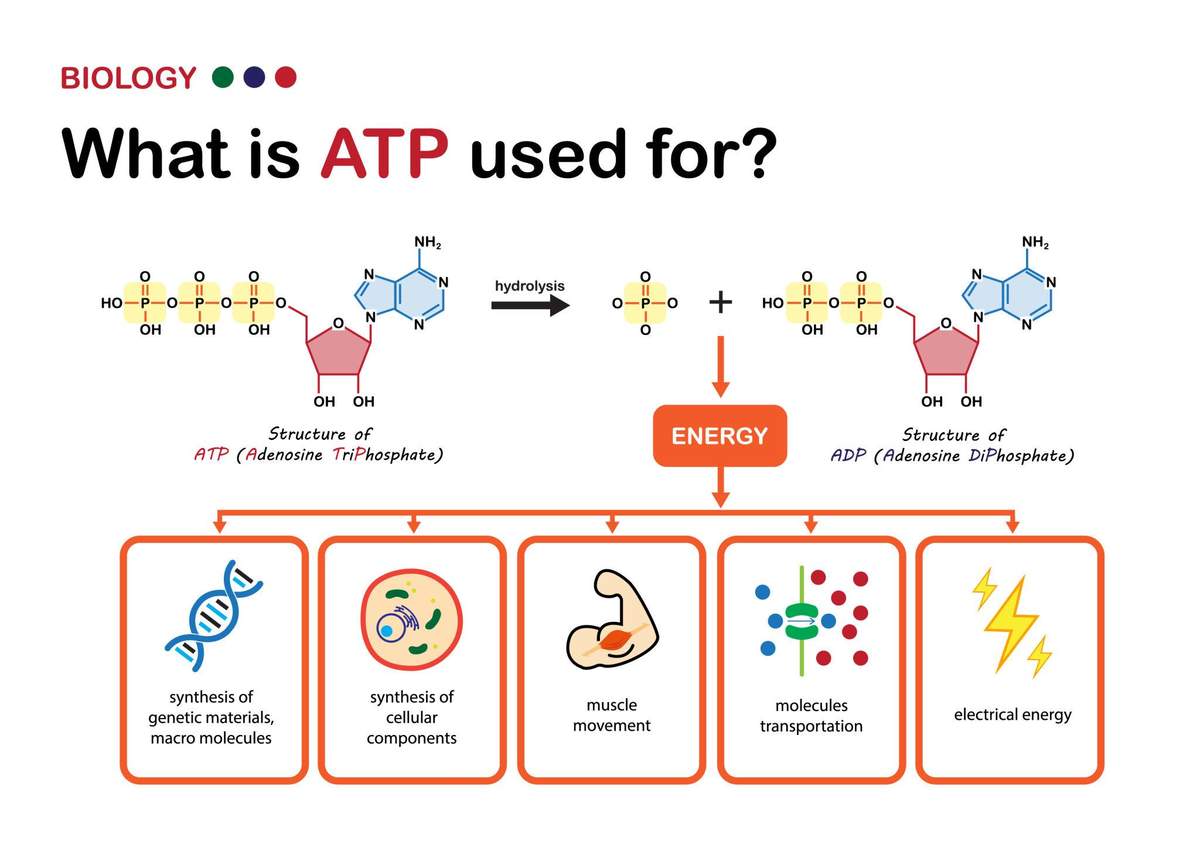
Mechanism: What ATP Is Used For
1. Membrane transport
Cells must keep different ions on different sides of the membrane.
That requires ATP-powered pumps.
Without them, electrical stability and cellular organization break down.
2. Movement
Muscle contraction depends on ATP.
So do many forms of intracellular transport and structural rearrangement inside the cell.
3. Signaling
Nervous system communication, receptor responses, and intracellular signaling all rely on ATP-dependent processes.
4. Synthesis and repair
Cells need ATP to build proteins, support biosynthesis, and repair damage after stress or use.
ATP Is Needed All the Time, Not Occasionally
This is one of the most important ideas.
The body does not keep a huge ATP warehouse.
It keeps a small rapidly cycling pool.
That means ATP has to be regenerated continuously.
This is why mitochondria and energy pathways matter so much.
The need is not occasional.
It is constant.
Why High-Demand Tissues Reveal ATP Problems First
Some tissues spend ATP faster than others.
The most obvious examples are:
- brain
- nerve
- muscle
- heart
These tissues may show strain earlier because they require continuous, high-quality ATP turnover.
When ATP supply and demand drift apart, the earliest effects may look like:
- brain fog
- slower recovery
- lower endurance
- reduced resilience
Why ATP Is Not the Same as Feeling Energetic
ATP is essential.
But it is not the whole story.
A person’s subjective energy also depends on:
- sleep quality
- oxygen delivery
- inflammation
- hormones
- nervous system state
This distinction matters because it keeps the ATP concept precise.
Where XIHE Fits
XIHE’s science narrative starts with respect for biological fundamentals.
The body needs ATP because ATP is the spendable energy layer behind function, repair, and adaptation.
Only after that is clear does it make sense to investigate whether an external physical input may interact with a biological environment that is already governed by ATP economics.
What to Read Next
- What Is ATP?
- How Cells Produce ATP
- Why Mitochondrial Efficiency Matters
- What Is Oxidative Phosphorylation?
- Far Infrared Graphene Hub
Scientific Disclaimer
This article is for scientific education only.
It does not diagnose fatigue, metabolic disorders, or mitochondrial disease.
EVIDENCE QUESTIONS
Why do cells need ATP?
Cells need ATP because ATP provides the immediate energy used for transport, signaling, movement, synthesis, and maintenance of internal order.
What happens if cells do not have enough ATP?
If ATP supply falls too low, cells struggle to maintain ion gradients, signaling stability, repair processes, and other essential functions required for survival.
Is ATP only important for muscles?
No. ATP is required throughout the body, including in brain signaling, membrane pumps, immune activity, biosynthesis, and tissue repair.
What should I read next?
The next useful page is what ATP is, because it explains ATP as a molecule and how the body continuously regenerates it.
CONTINUE EXPLORING
Cellular Energy | ATP, Biological Cost, and the Energy Economics of Living
Cellular energy is XIHE's parent biological framework for understanding ATP, mitochondria, microcirculation, recovery load, and the rising biological cost of daily life. This hub explains why XIHE treats sleep, fatigue, inflammation, recovery, and aging as parts of one energy system rather than separate wellness silos.
What Is ATP? Cellular Energy Explained in Simple Terms
ATP is the immediate energy currency cells use for biological work. Learn what ATP stands for, how cells make ATP, why the body constantly regenerates it, and where oxidative phosphorylation fits.
Cellular Energy | ATP, Biological Cost, and the Energy Economics of Living Articles
Browse all XIHE knowledge articles filed under cellular energy | atp, biological cost, and the energy economics of living.
Mitochondria | The Energy Conversion Engine of Cellular Energy
Mitochondria are the biological conversion systems that turn nutrients and oxygen into usable cellular energy. This hub explains how mitochondria fit within XIHE's Cellular Energy Framework, where energy conversion connects metabolism, ATP production, oxidative balance, recovery, and evidence-bounded far infrared research into mitochondrial and cellular endpoints without confusing mechanism language with direct product proof.
Far Infrared and Mitochondrial ATP Pathways
A research note on why ATP appears in far infrared discussions, what PubMed-indexed literature suggests, and where the evidence boundary still sits.
Cellular Energy and Aging
Aging is partly an energy story. Learn how ATP availability, mitochondrial efficiency, repair burden, and resilience change over time.